
HT214ATC
Pros
- Two scales in one instrument
- No batteries required
- ATC for temperatures of 10–30 °C
- Scale divisions of 0.2%
- Case and basic accessories included
Cons
- Results must be read manually
- Requires regular calibration
- Does not replace laboratory analysis
HT214ATC: Salinity and sugar content through one eyepiece
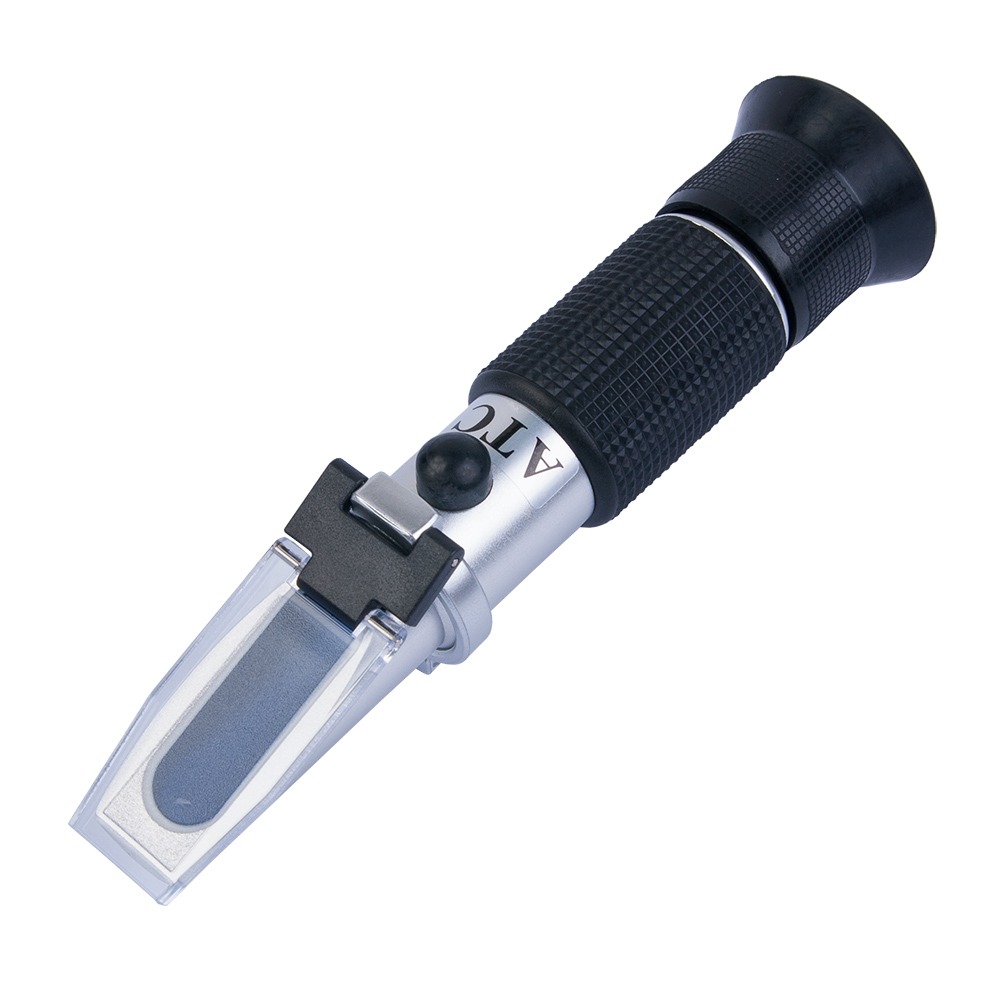
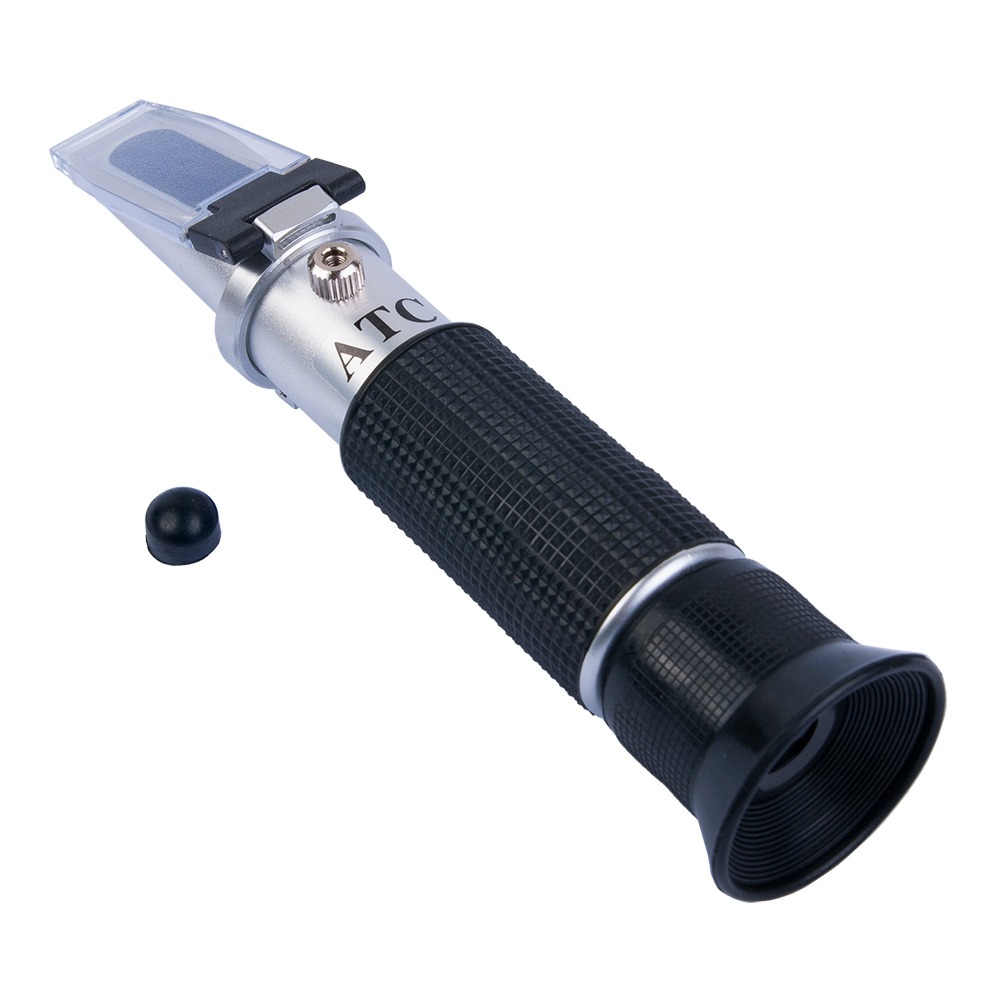
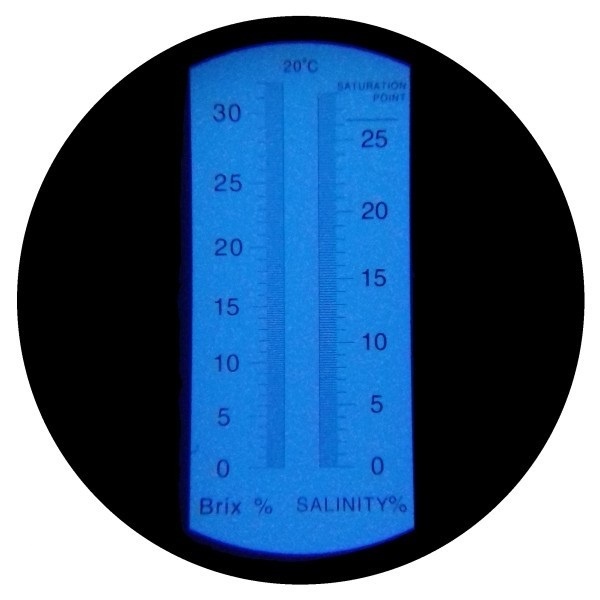
The HT214ATC is a handheld optical refractometer with two scales: one for salinity and one for sugar content. It measures salt concentration in solutions from 0–28% and Brix from 0–32%. The instrument is useful in the kitchen, for home preserving, winemaking and brewing, as well as for preparing brines and checking juices, wort, compotes or fermented mash. The process is refreshingly straightforward: a few drops of the sample, some light and a look through the eyepiece, with no batteries, apps or requests to “update the firmware.”
Two scales for different tasks
The SALINITY scale shows the proportion of salt in a liquid, while the BRIX scale shows the approximate concentration of dissolved substances, calibrated against sucrose. For pure sugar solutions, Brix directly corresponds to sugar content: for example, 15 °Bx means approximately 15 g of sucrose per 100 g of solution.
In juices, wort, sauces or other complex products, Brix is best treated as a useful indicator of the total concentration of soluble substances, not as a definitive laboratory analysis of sugar alone. This is especially important for fermented beverages: alcohol affects the refraction of light, so once fermentation begins, accurate calculations require a correction to the readings or a different measurement method.
How to use it
Open the transparent prism cover, use the pipette to place 2–3 drops of the sample on the prism surface, and close the cover without trapping air bubbles. Then point the refractometer toward a bright light source, look through the eyepiece and turn it until the image is in sharp focus. The boundary between the light and dark areas will cross one of the two scales, giving you the reading.
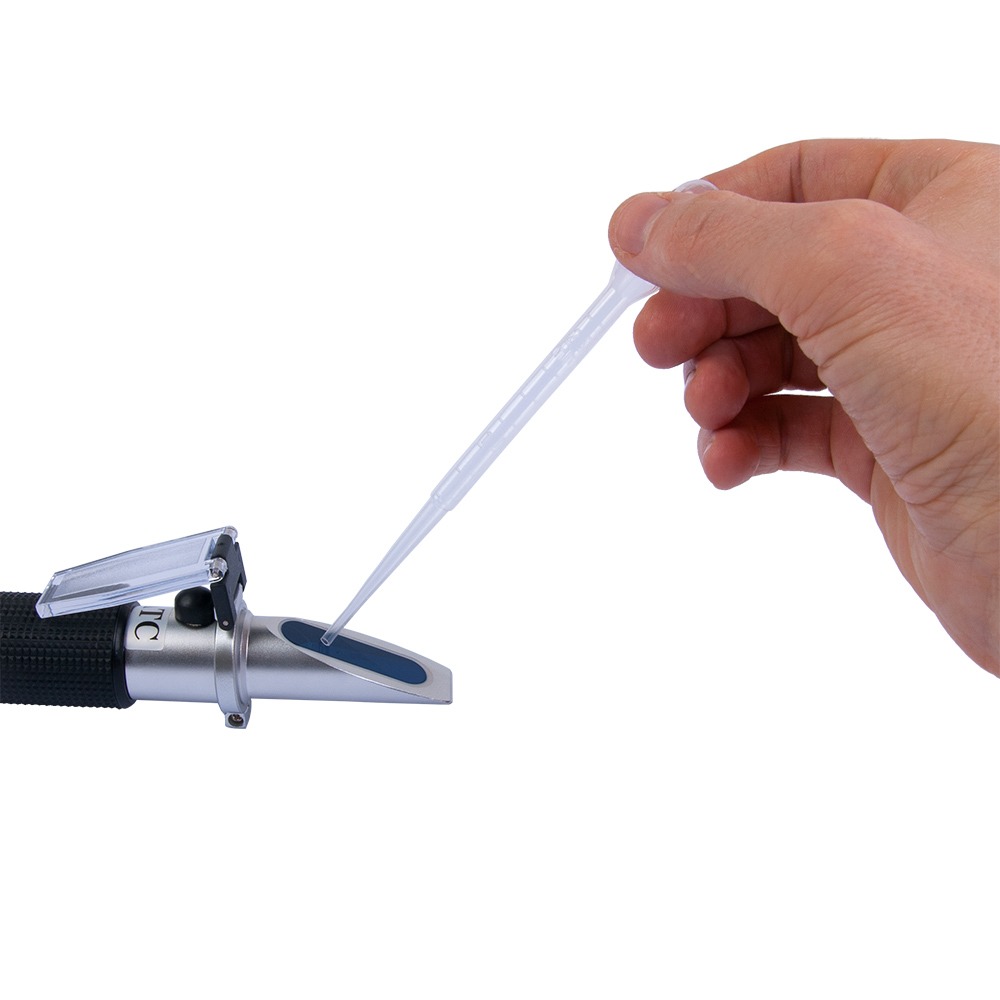
It's a good idea to calibrate the instrument with distilled water before first use and periodically thereafter. Apply the water to the clean prism: the boundary should be at the zero mark. If not, adjust it with the small screwdriver included. After each measurement, rinse the prism with water and wipe it with a soft cloth: dried syrup or brine can turn a precise instrument into a generator of creative numbers.
ATC: Helpful compensation, not magic
The HT214ATC has automatic temperature compensation over a range of 10–30 °C. This helps reduce error if the sample temperature differs slightly from the standard temperature. However, avoid measuring freshly boiled syrup or ice-cold brine: let the liquid cool down or warm up to approximately room temperature, and give the instrument a few seconds to reach the same temperature as the sample.
Design and included accessories
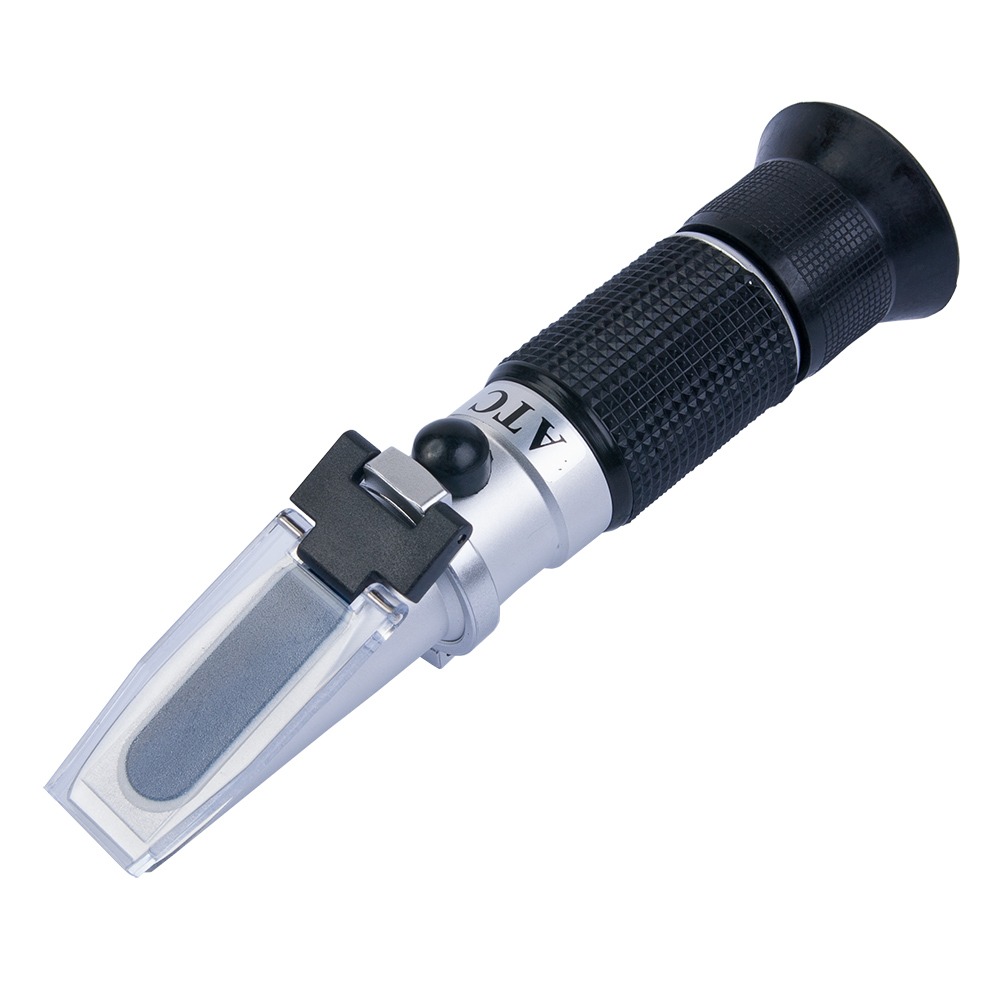
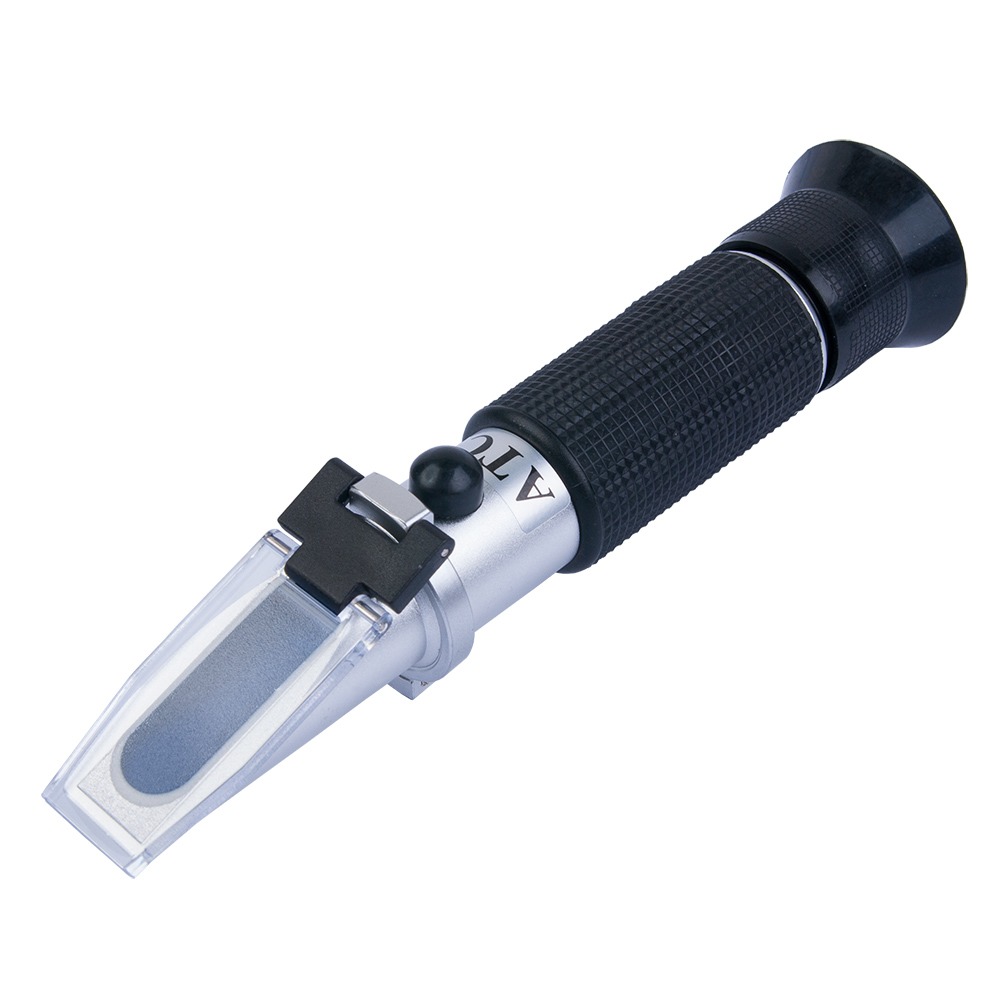
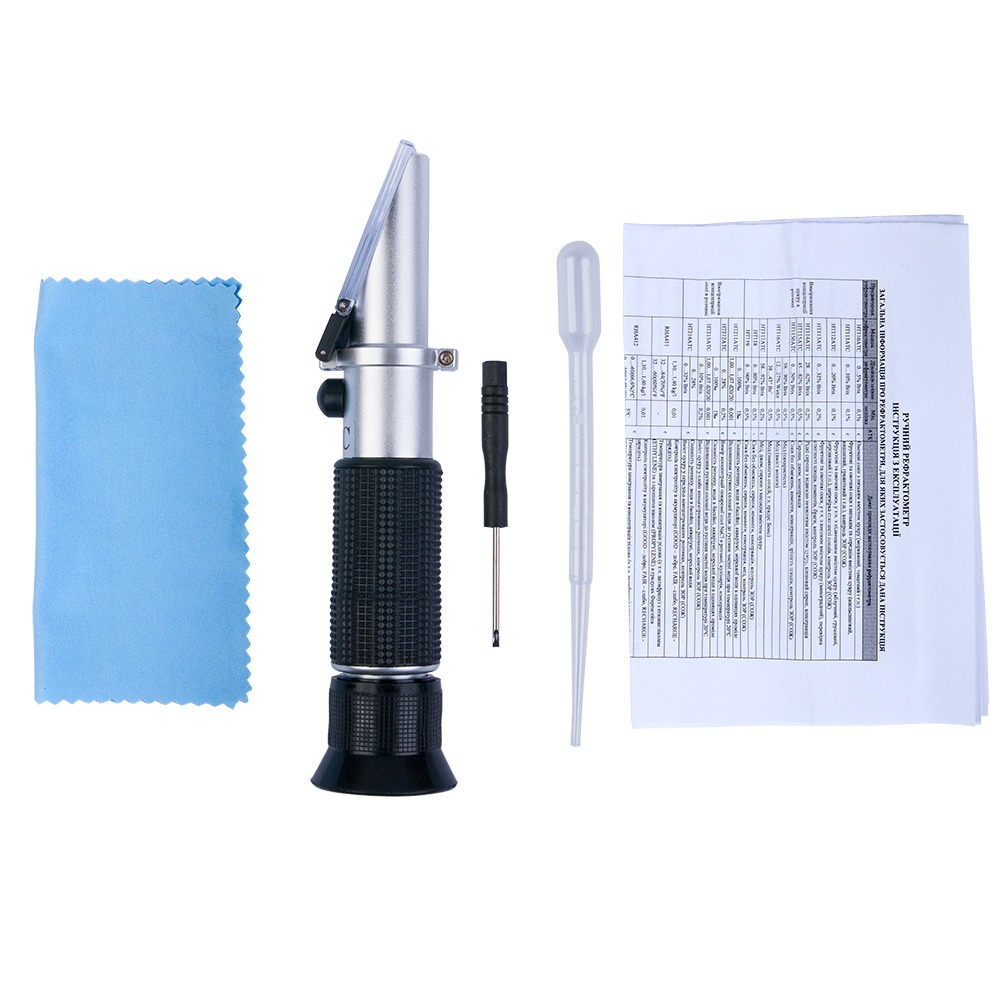
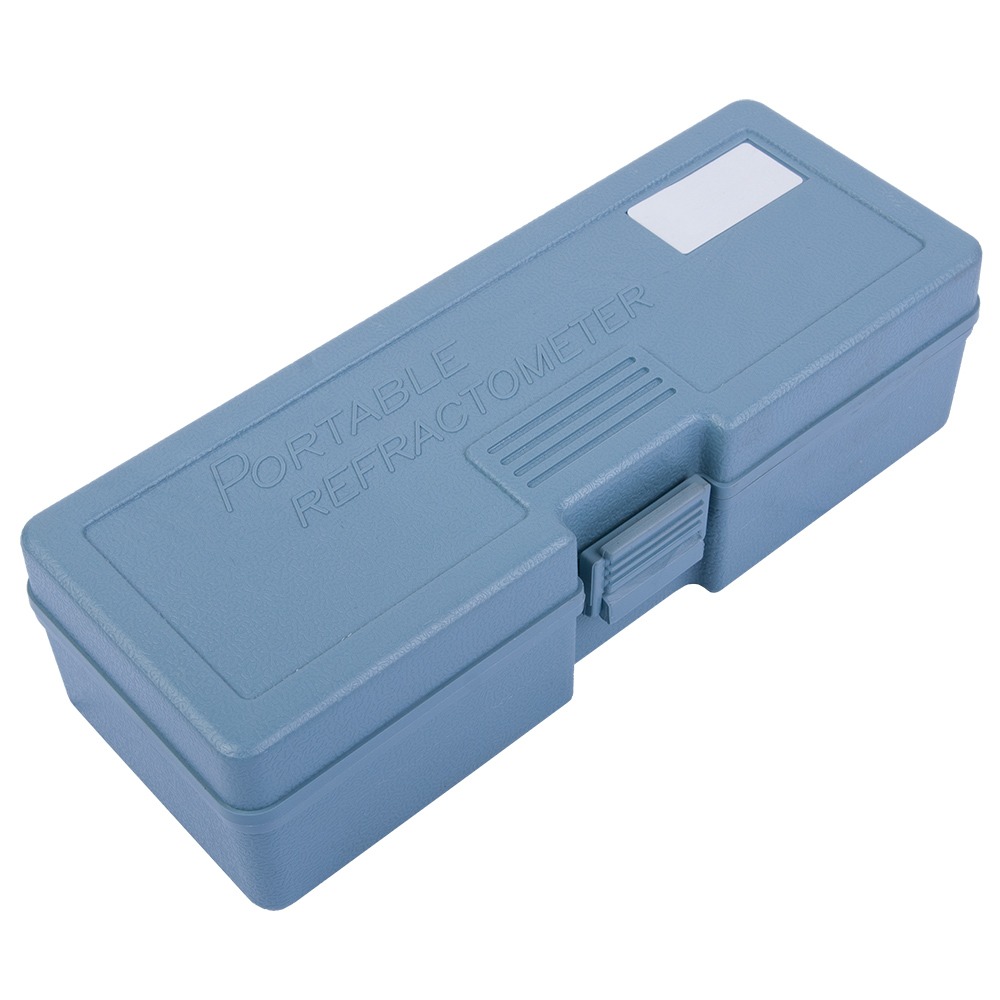
The refractometer has a compact body approximately 17.5 cm long, a ribbed rubber grip for a secure hold, an adjustable eyepiece and a hinged prism cover. It weighs approximately 100 g, making it convenient for checking products or aqueous solutions on the go. The kit includes a pipette for sampling, a cleaning cloth, a calibration screwdriver, instructions and a plastic storage case.
Who is it for?
The HT214ATC is a practical choice for anyone who needs to quickly check salinity or sugar content without electronics. It is especially useful for cooks, home preservers, beginner brewers and winemakers, as well as for checking brines and process liquids. If you need a record of measurements, automatic calculations or the most precise analysis of complex mixtures, consider digital refractometers and laboratory methods instead.