HT511ATC
Delivery and payment
Choose your city or town to see the price with delivery there and when you can get it.
Pickup points
- Branch
- Parcel locker
Pros
- Instant readings without batteries
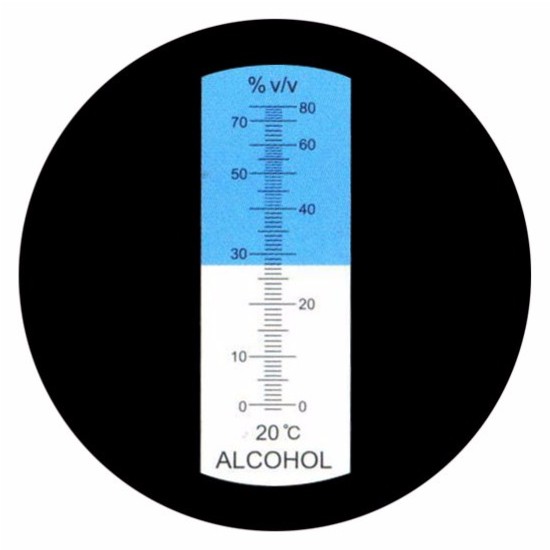
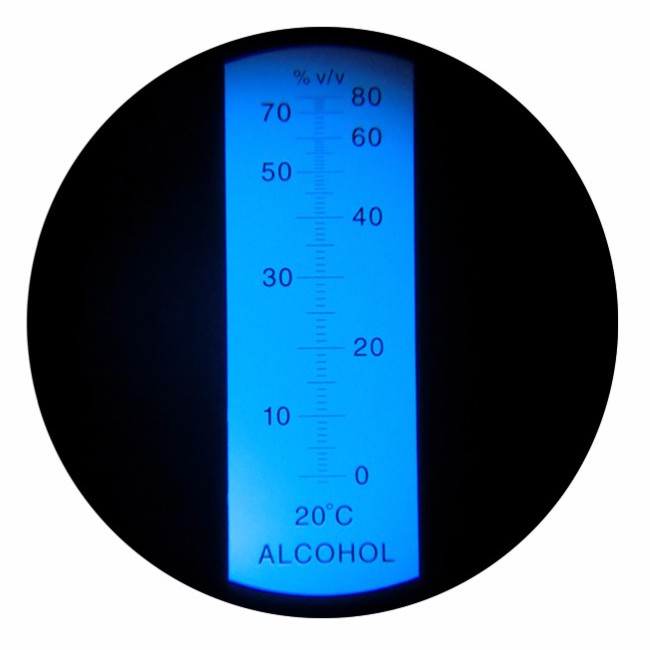
- 0–80 % vol scale
- ATC within 10–30 °C
- Only a few drops required
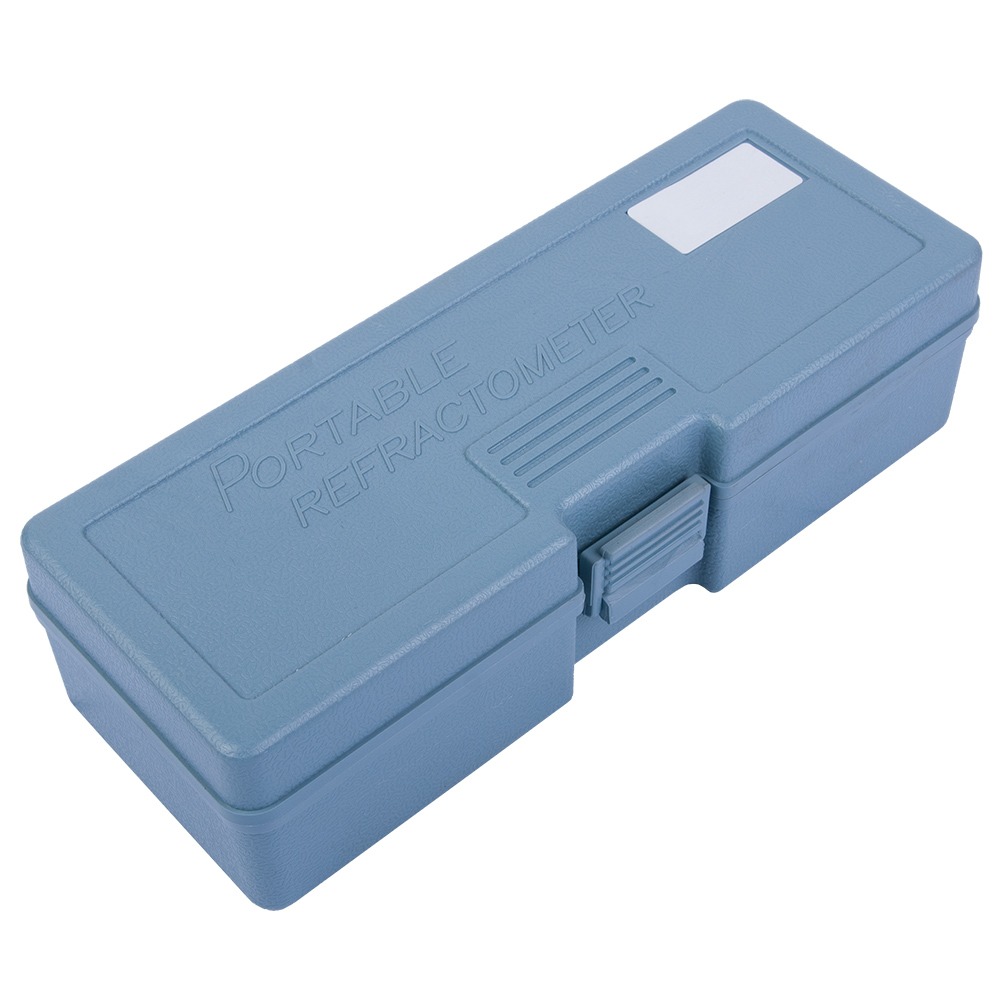
- Case and accessories included
Cons
- Not for sweet drinks
- Requires periodic calibration
- Scale divisions are 1 %
HT511ATC: pocket-sized alcohol strength testing
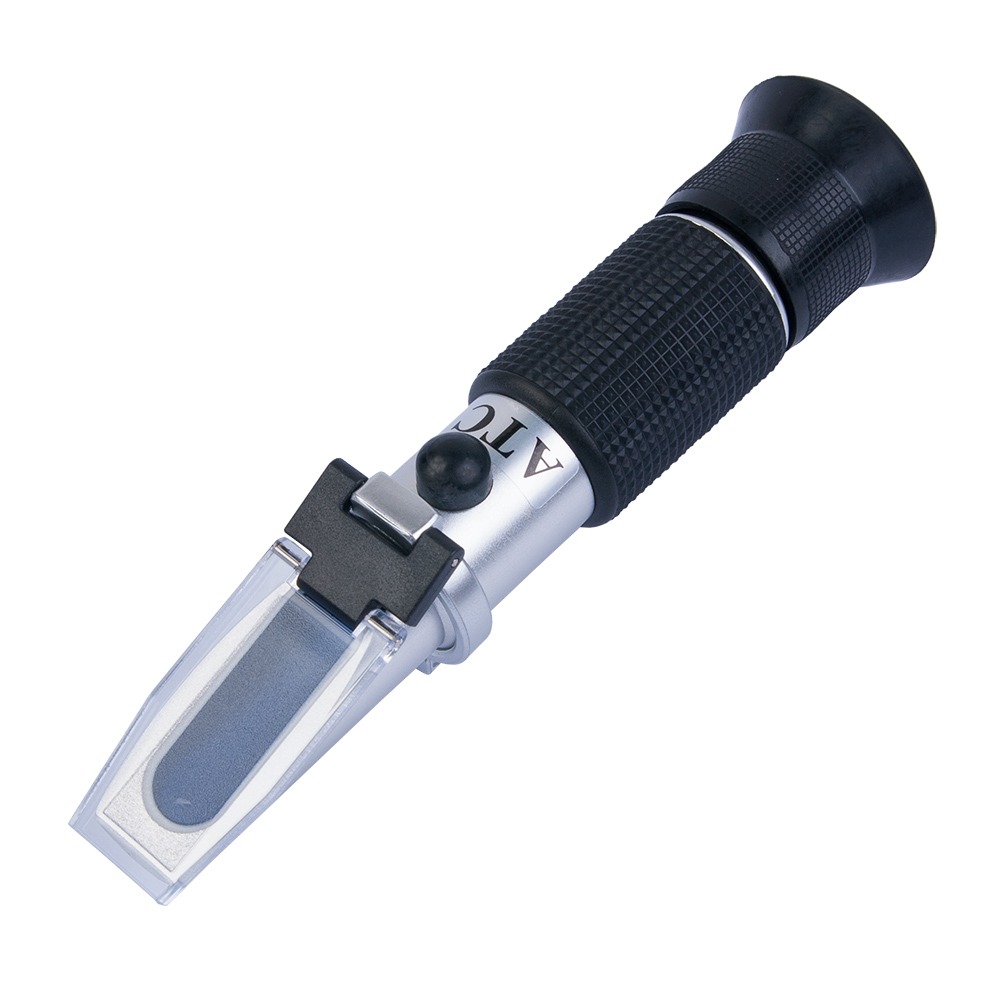
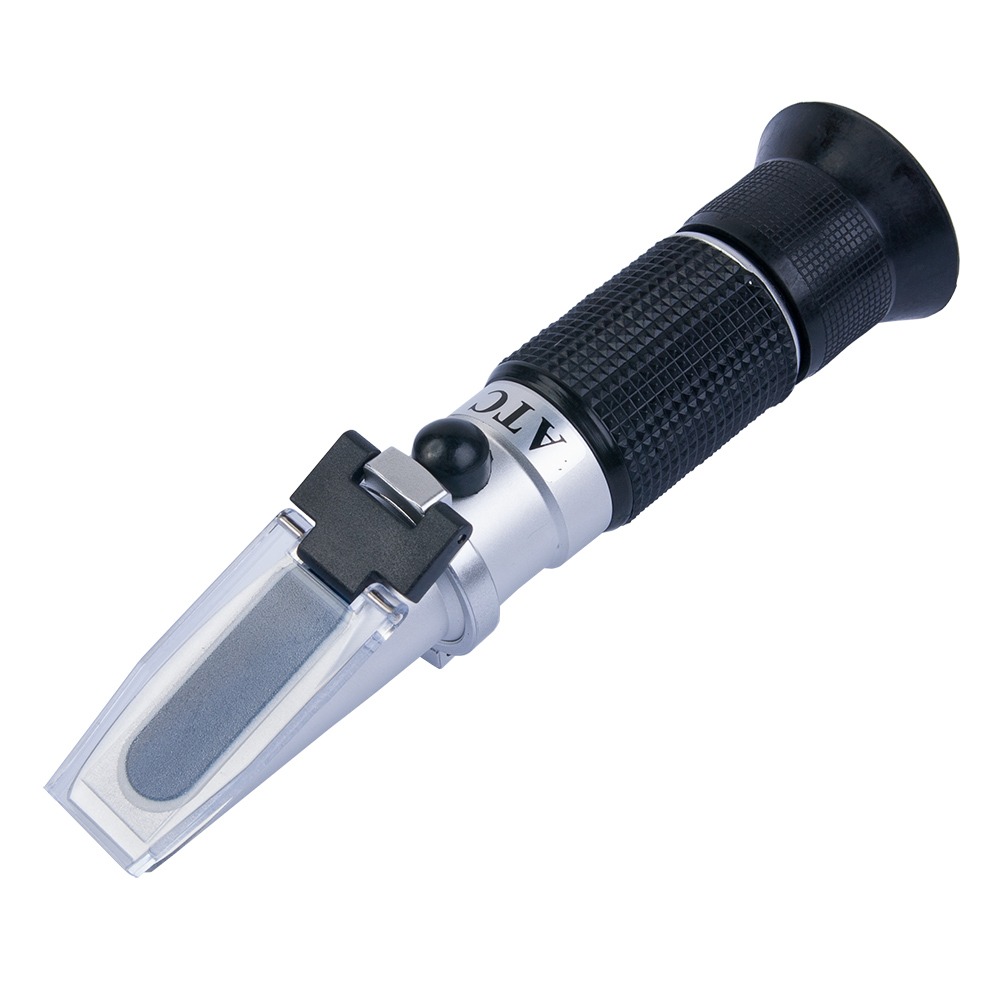
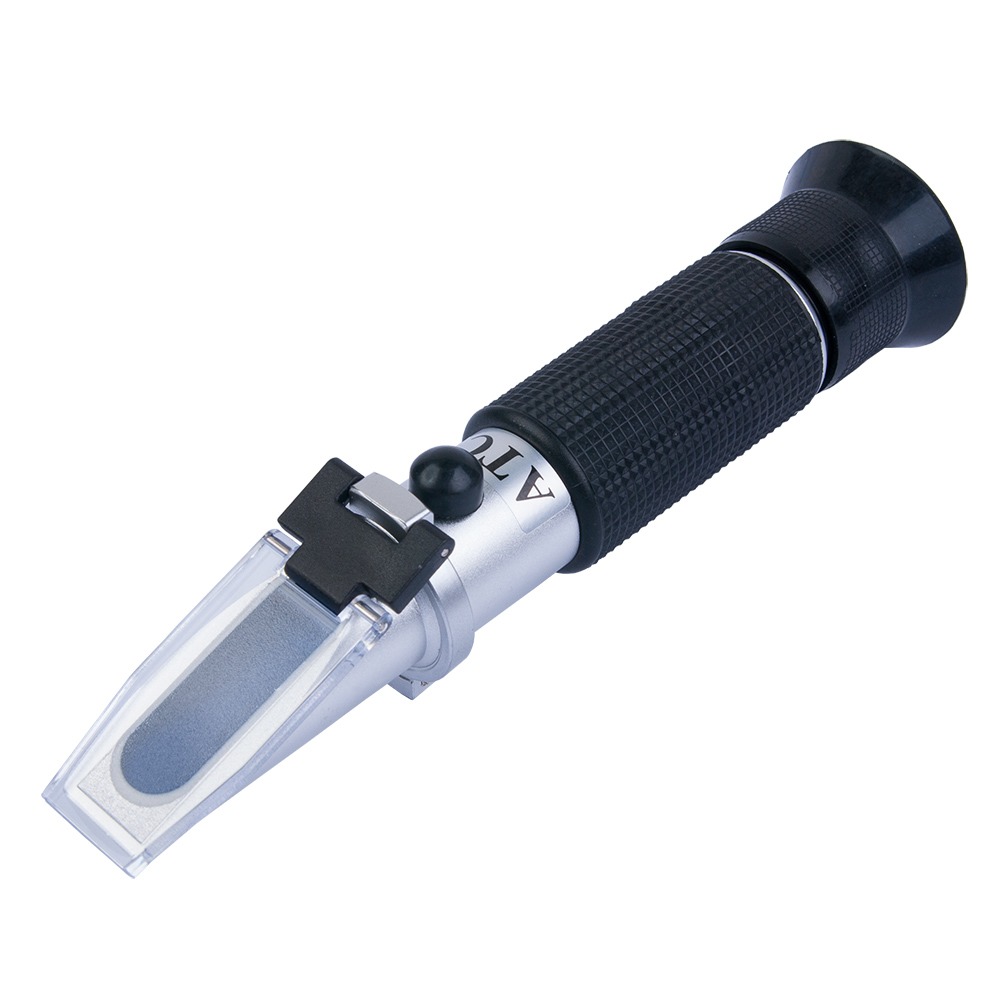
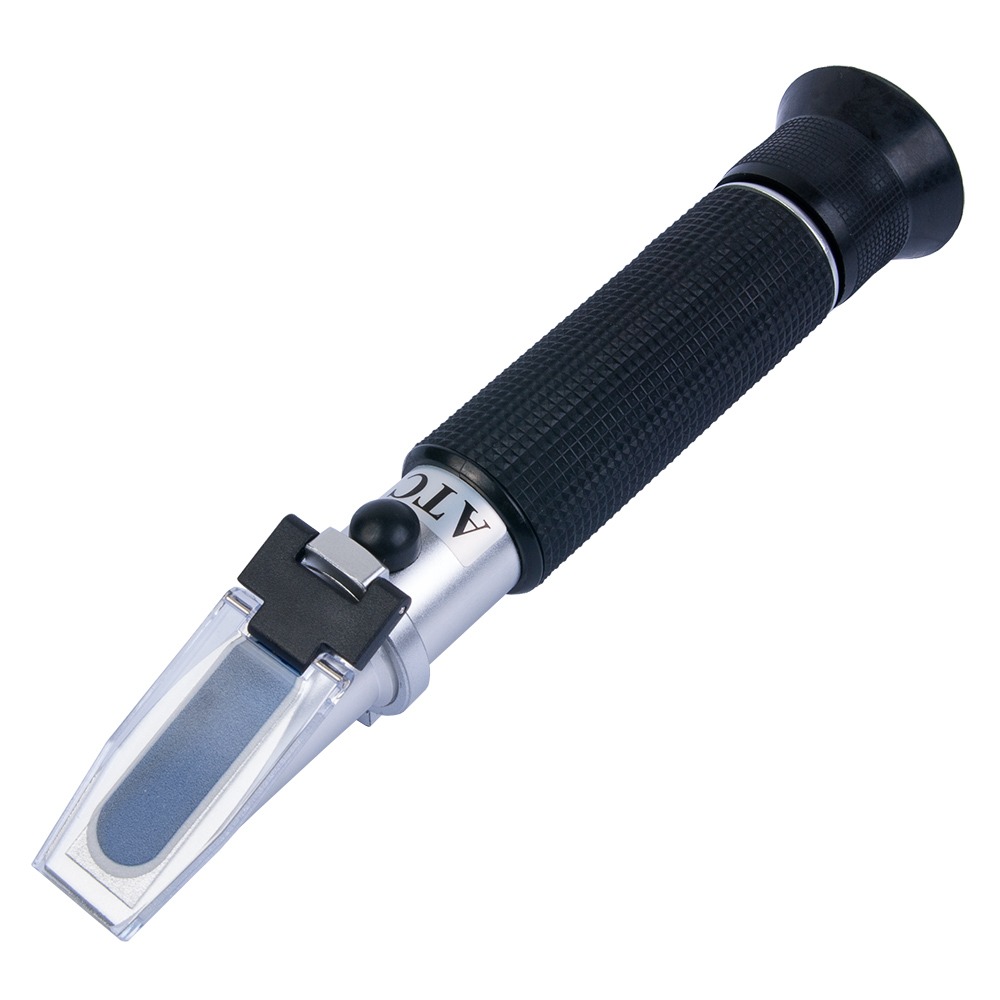
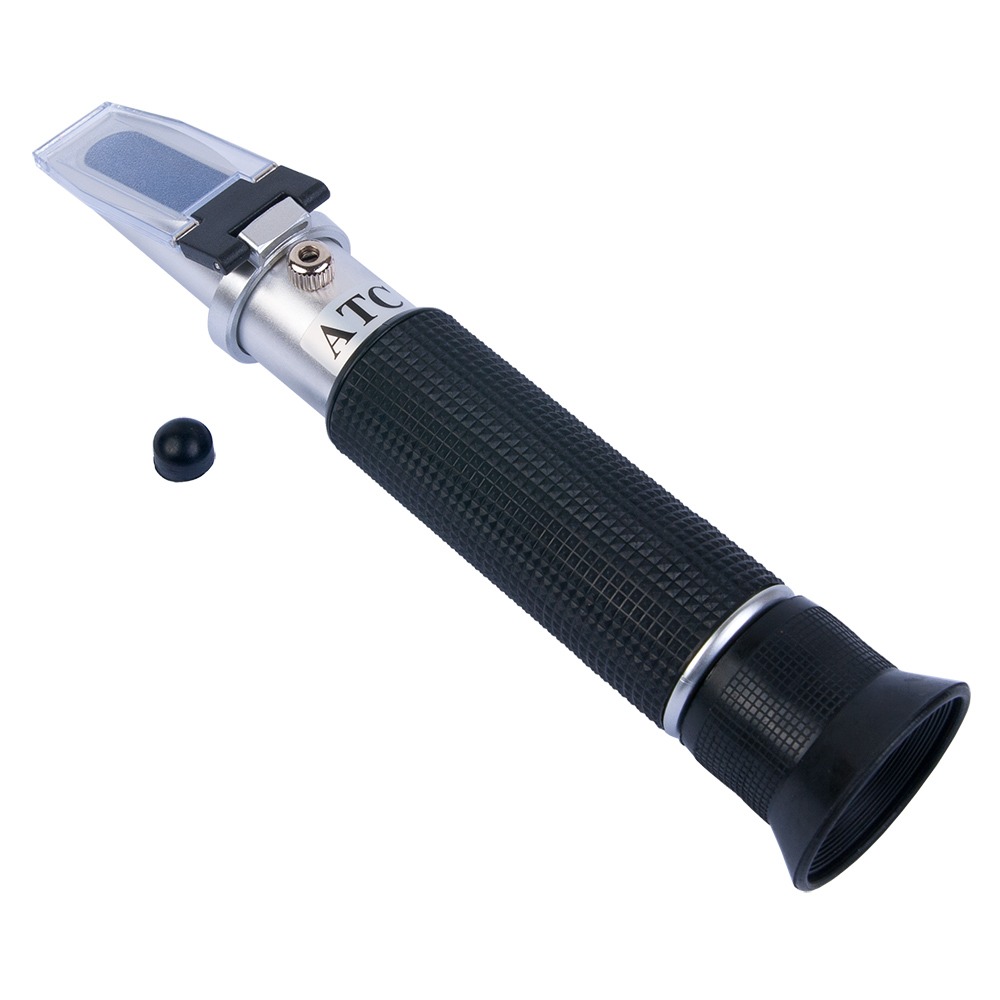
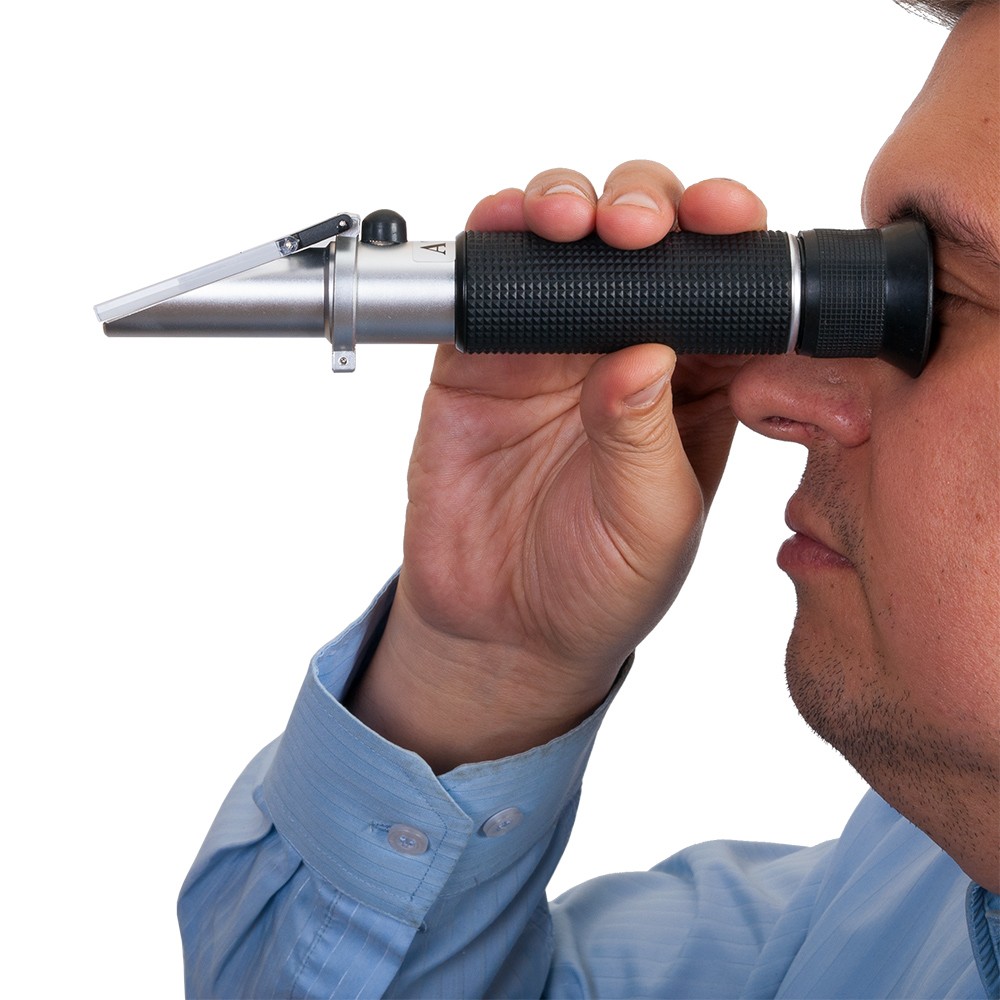
The HT511ATC is a handheld optical refractometer for quickly determining alcohol content by volume in clear water-alcohol solutions. It requires no batteries, charging or complicated steps: simply apply a few drops of the sample to the prism and look through the eyepiece toward the light. The boundary between the blue and light fields shows the alcohol strength on the ALCO scale.
The device measures from 0 to 80 % vol in 1 % increments. It is a convenient tool for checking vodka, clear distillates, alcohol solutions and alcohol-based sanitizers. The compact body with its textured rubber grip sits comfortably in the hand, and the hard case lets you safely transport the refractometer and its accessories.
What it measures
The HT511ATC scale is designed for ethanol in water, meaning pure or nearly pure clear water-alcohol mixtures. The reading is displayed as a percentage by volume, or % vol. The device is especially useful when you don't want to fill an entire graduated cylinder for an alcoholmeter: here, 2–3 drops are enough.
That said, the refractometer should not be considered a universal analyzer for all alcoholic drinks. Sugar, colorants, acids, extracts, carbonation and large amounts of other dissolved substances change how light is refracted and distort the result. Sweet fruit liqueurs, liqueurs, wine, beer, cider and infused spirits with additives are therefore not suitable for direct measurement. If a drink has a more complex composition, the number on the scale may look convincing, but it is not necessarily correct.
ATC: fewer corrections, but not magic
ATC stands for automatic temperature compensation. It helps the refractometer work more accurately within a range of 10–30 °C, without manually adjusting readings using temperature tables. This is useful for everyday work indoors, in a workshop or in a production setting.
However, it is best to bring a very hot or freshly chilled sample to room temperature first. Before measuring, it is also worth waiting a few seconds for the drop on the prism and the device itself to reach the same temperature. ATC makes life easier, but it doesn't override physics, which unfortunately remains unforgiving.
How to use and calibrate it
The refractometer should be calibrated before first use and periodically thereafter. Apply distilled water to the clean, dry prism, close the transparent cover, point the device toward a bright light and look through the eyepiece. Use the calibration screwdriver to set the boundary between the blue and light fields exactly at the 0 % mark.
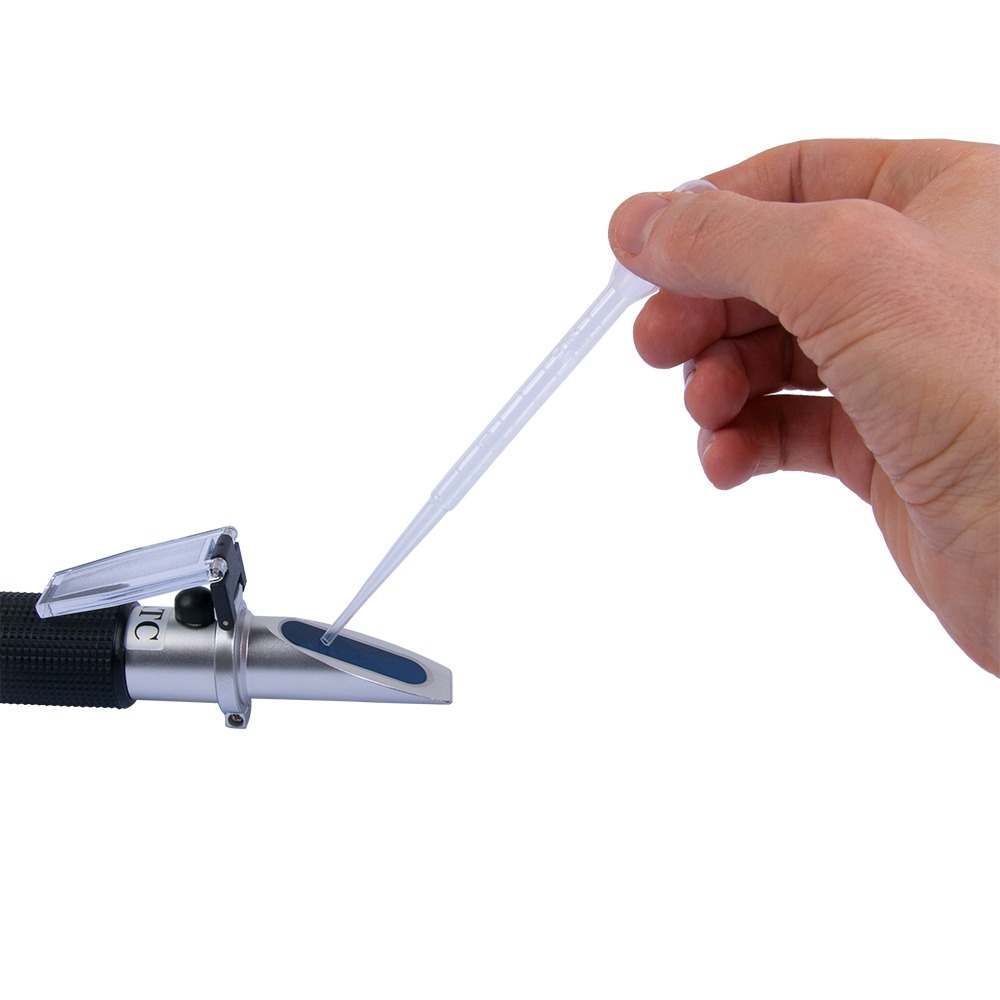
To take a measurement, wipe the prism, apply the sample with the dropper, gently lower the cover without trapping air bubbles, point the eyepiece toward a light source and adjust the focus. The result is the value where the boundary between the colored fields meets the scale. After use, promptly wipe the prism and cover with a soft cloth: clean optics are not a luxury, but the key to repeatable measurements.
A thoughtful starter kit
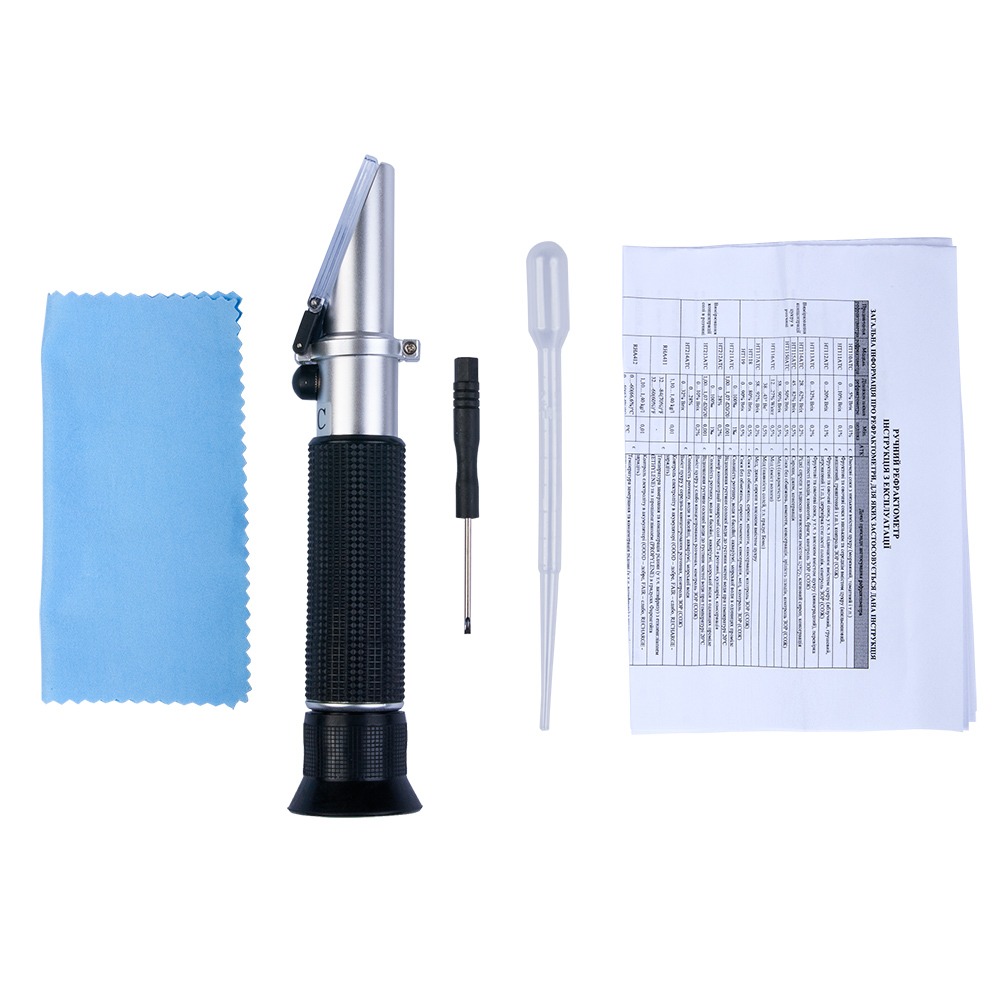
The HT511ATC comes with a sampling dropper, calibration screwdriver, cleaning cloth, instructions and a protective plastic case. Everything you need to get started is already in the kit: there is no need to look for batteries separately, because the device doesn't need them at all.
Conclusion
The HT511ATC is a practical choice for anyone who needs to quickly check the alcohol strength of clear water-alcohol solutions within 0–80 % vol. Its strengths include its compact size, battery-free operation, easy-to-read scale, automatic temperature compensation and small sample requirement. The main rule is simple: calibrate with distilled water, keep the prism clean and don't try to measure a sweet liqueur as though it were an ordinary alcohol solution.