HT512ATC
Delivery and payment
Choose your city or town to see the price with delivery there and when you can get it.
Pickup points
- Branch
- Parcel locker
Pros
- Dual Brix and Alco scales
- Works without batteries
- ATC for temperatures of 10–30 °C
- Only a few drops of sample needed
- Case and accessories included
Cons
- Alcohol scale provides an estimate only
- Requires periodic calibration
- Not for finished spirits
HT512ATC for quick must checks before fermentation
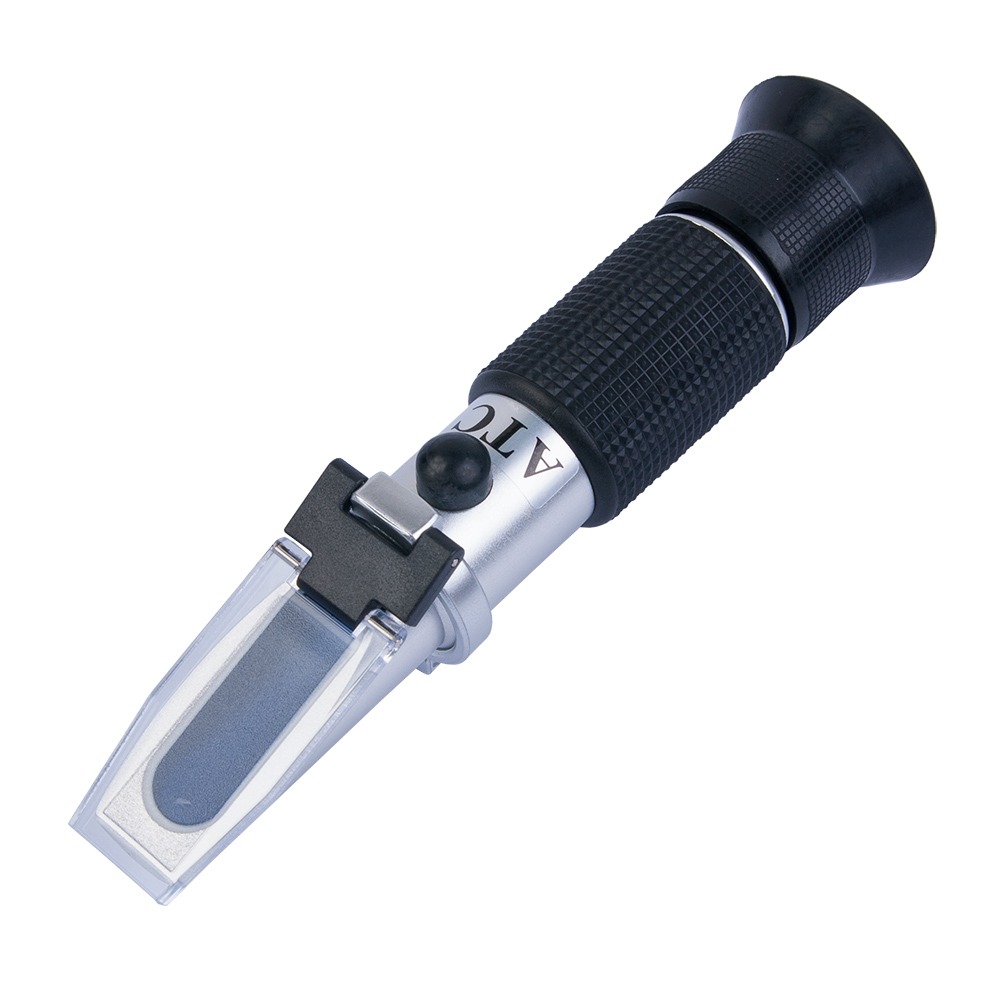
The HT512ATC is a handheld optical refractometer for home winemaking. In just a few seconds, it helps you assess the sugar content of grape juice, must, fruit juice, or a sugar solution on the Brix scale, while showing the approximate potential alcohol content of the future wine alongside it. No batteries, electronics, or complicated menus: place a few drops of the sample on the prism and look through the eyepiece. The boundary between the light and blue areas shows the result.
The instrument is useful for winemakers who want to know whether their grapes have accumulated enough sugar, whether the must needs adjusting, and what alcohol content to expect after complete fermentation. It's a simple tool for regular checks, not a laboratory instrument that demands its own table and a dramatic lab coat.
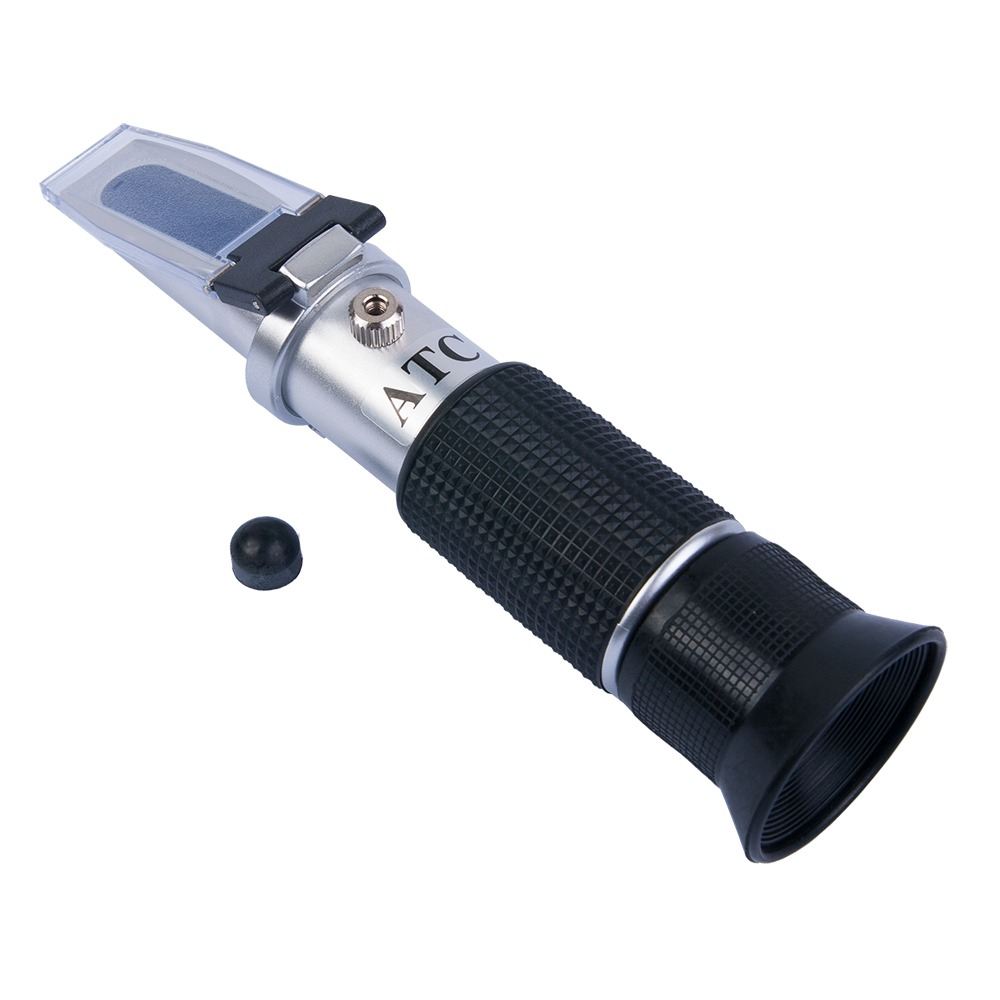
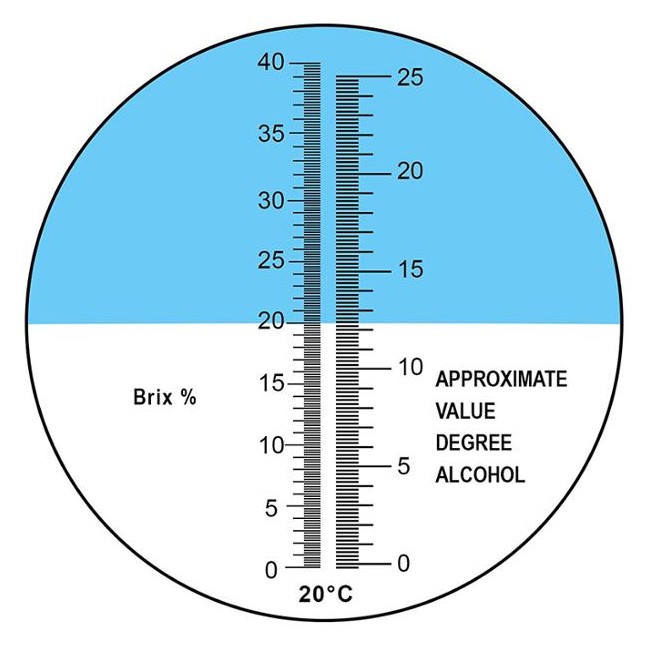
Two scales for sugar and potential alcohol content
The main HT512ATC scale covers 0–40% Brix in 0.2% increments. Brix indicates the concentration of dissolved substances, primarily sugars, in a sample. For grape must, it's a convenient indicator of sugar content and fermentation potential.
The second scale, 0–25% Alco, does not measure the actual alcohol content of finished wine. It converts the initial sugar content into an approximate potential alcohol content that the must can reach after complete fermentation. Use it before active fermentation begins: alcohol already present in the drink affects light refraction and distorts a direct reading.
How to use it
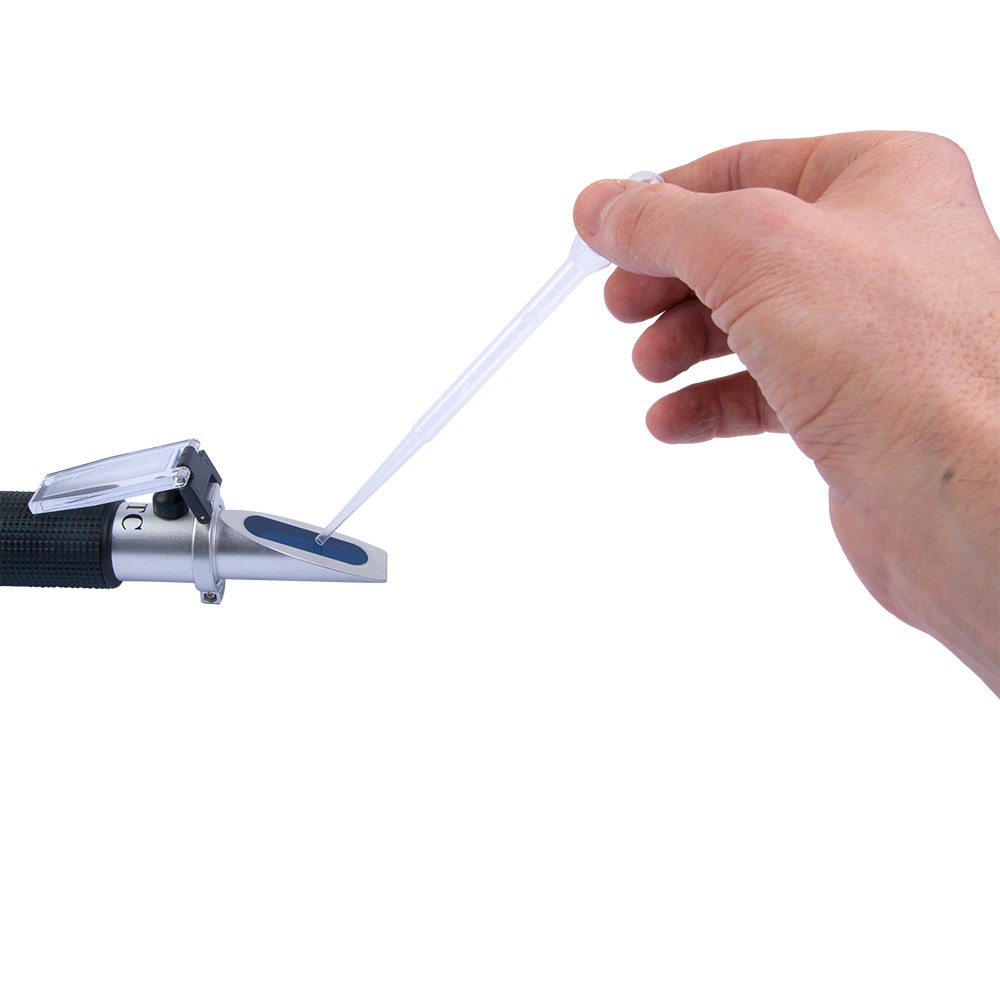
Calibrate the refractometer with distilled water before the first measurement and from time to time thereafter. Apply 2–3 drops to the clean prism, close the transparent cover, wait about half a minute, and point the instrument toward bright natural light. Through the eyepiece, the boundary between the blue and white fields should cross the 0 mark. If it doesn't, adjust it using the included screwdriver under the protective rubber cap.
To measure must, repeat the same steps with a sample free of pulp, bubbles, and large particles. Close the cover so the liquid spreads evenly across the prism, look through the eyepiece, and read the value at the boundary between the colors. After use, wipe the prism with a soft cloth: dried sweet juice doesn't improve any instrument's accuracy.

Automatic temperature compensation and a convenient design
The model features ATC, or automatic temperature compensation, for operation within 10–30 °C. It reduces the effect of temperature on readings, but it doesn't replace common sense: it's best to give a sample that's too hot or cold a little time to reach the temperature of the instrument itself.
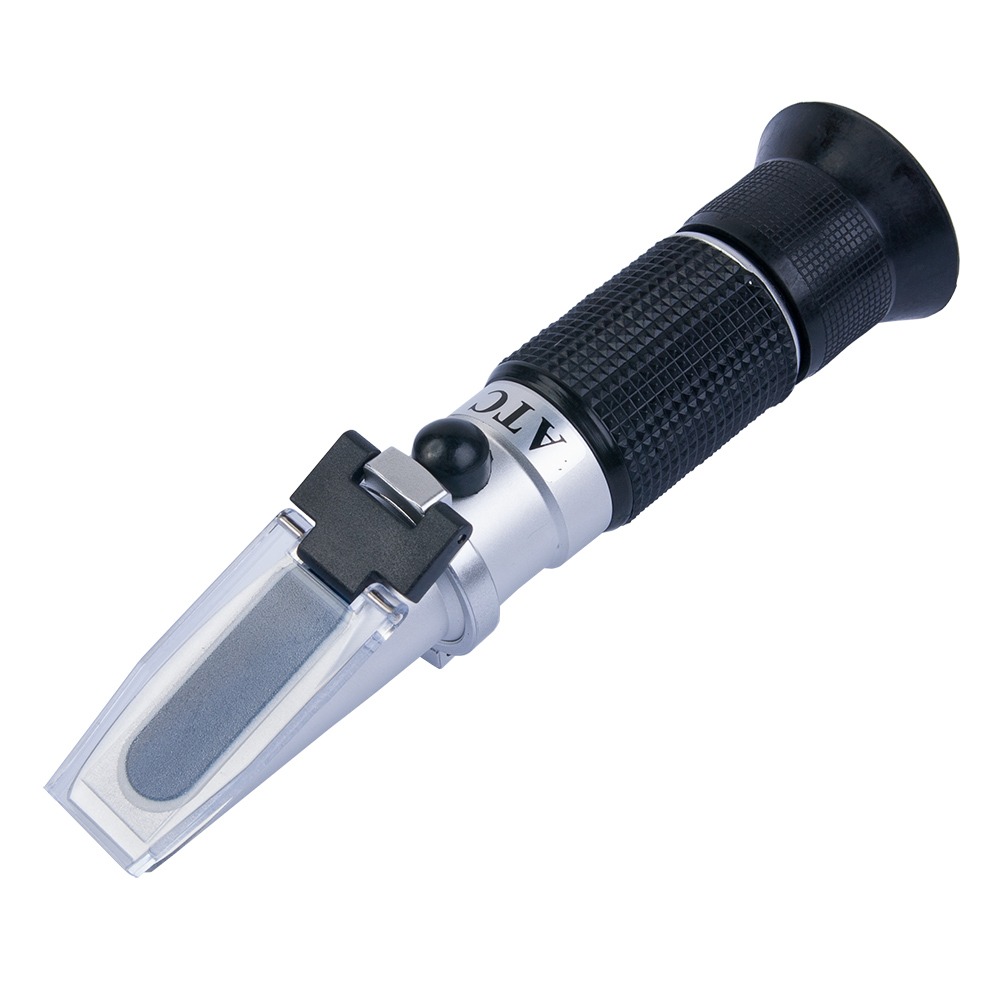
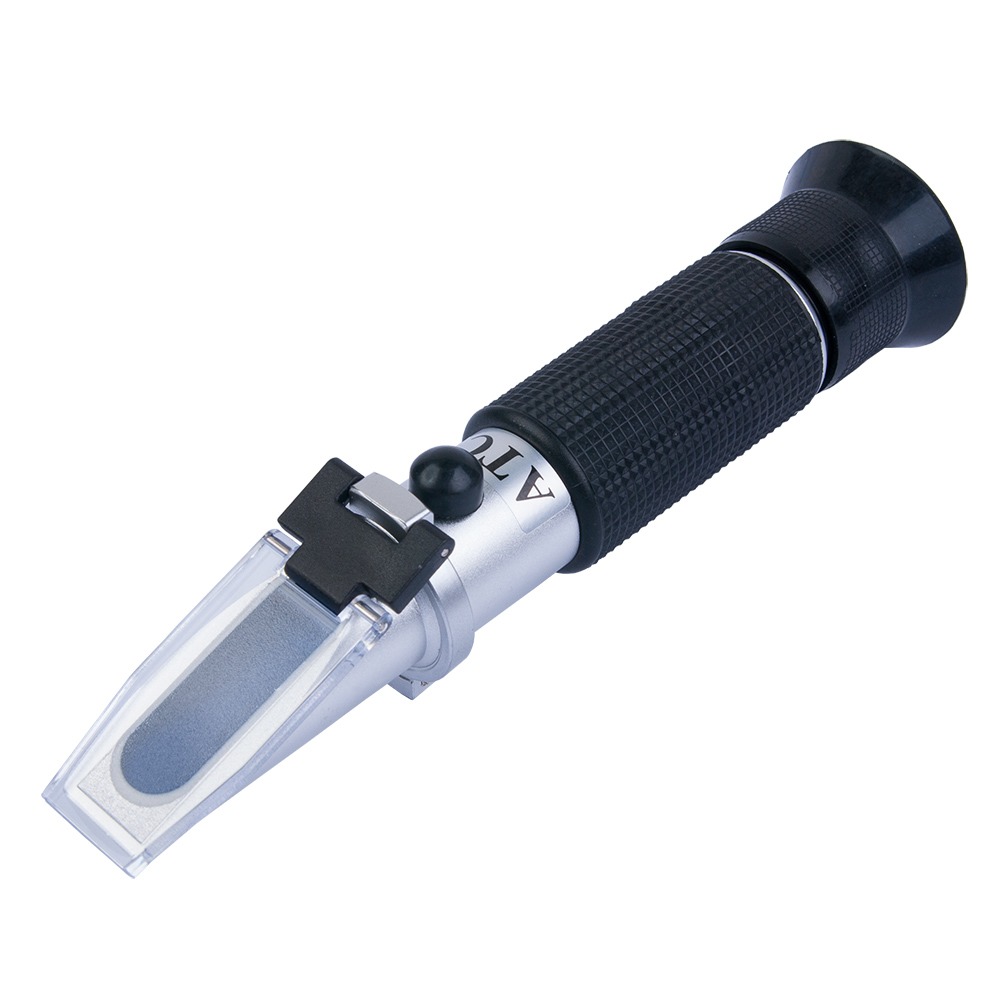
The body is compact, with a ridged rubber grip for a secure hold and a soft eyepiece with manual focus adjustment. The transparent hinged cover presses the sample against the prism, protects the optical surface, and helps form an even, thin layer of liquid for a correct reading.
Everything you need is included
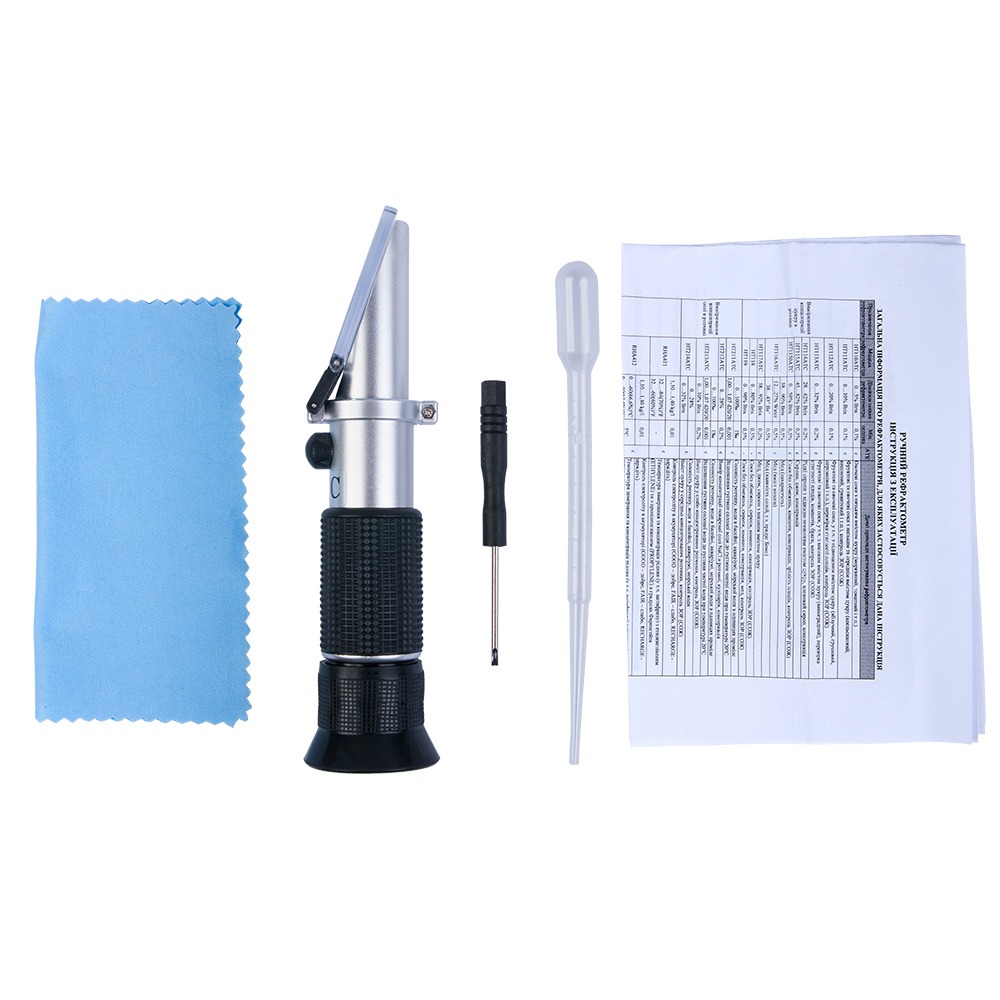
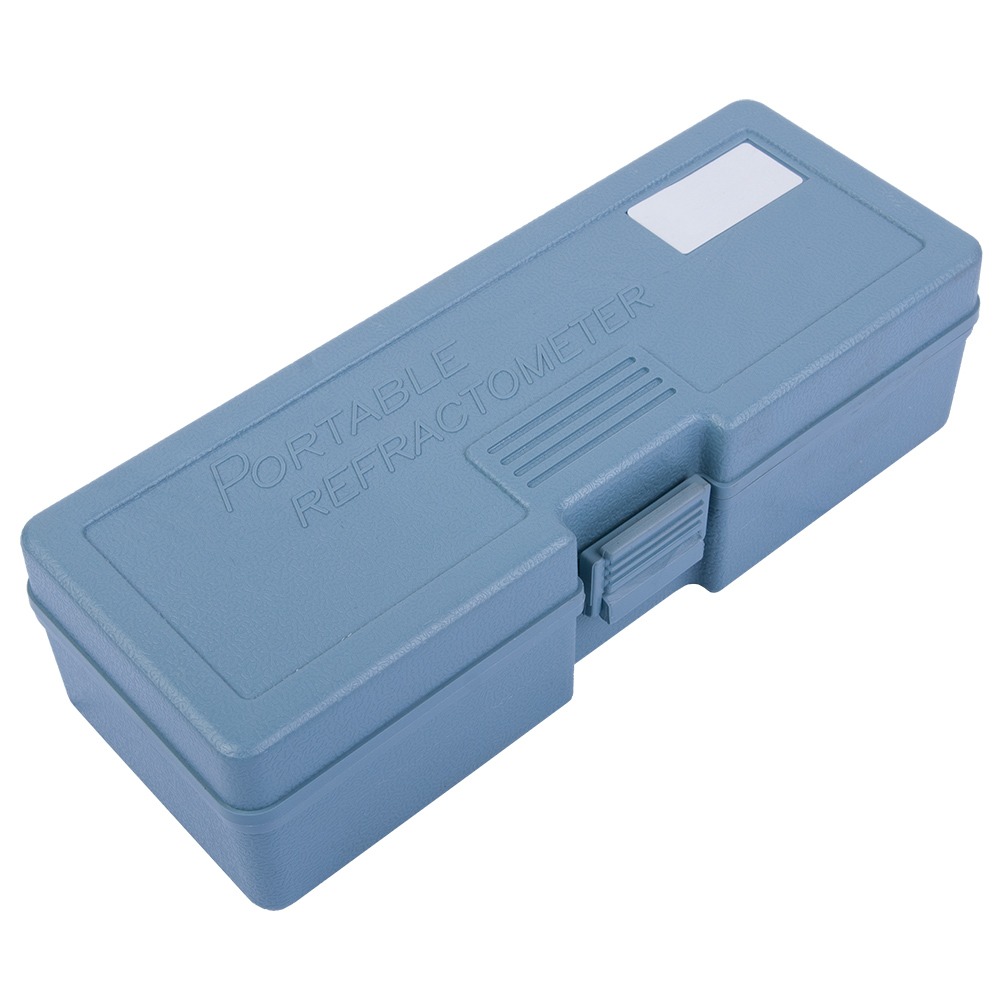
The HT512ATC comes with a sampling pipette, a calibration screwdriver, a cleaning cloth, instructions, and a hard plastic case. The case is especially handy if the refractometer travels between the kitchen, pantry, vineyard, and wherever something promising happens to be fermenting.
Who is the HT512ATC for?
It's a good choice for home winemakers, gardeners, and anyone making wine, cider, fruit infusions at the must stage, or other drinks with controlled sugar content. The refractometer lets you quickly compare batches of grapes and check starting parameters before fermentation without using much of the sample.
However, the HT512ATC is not intended for accurately determining the actual alcohol content of fermented wine, beer, or other alcoholic drinks. Its strength is quickly and clearly showing the initial sugar content and potential of the must, not replacing a specialized alcohol meter or a laboratory analysis of the finished drink.