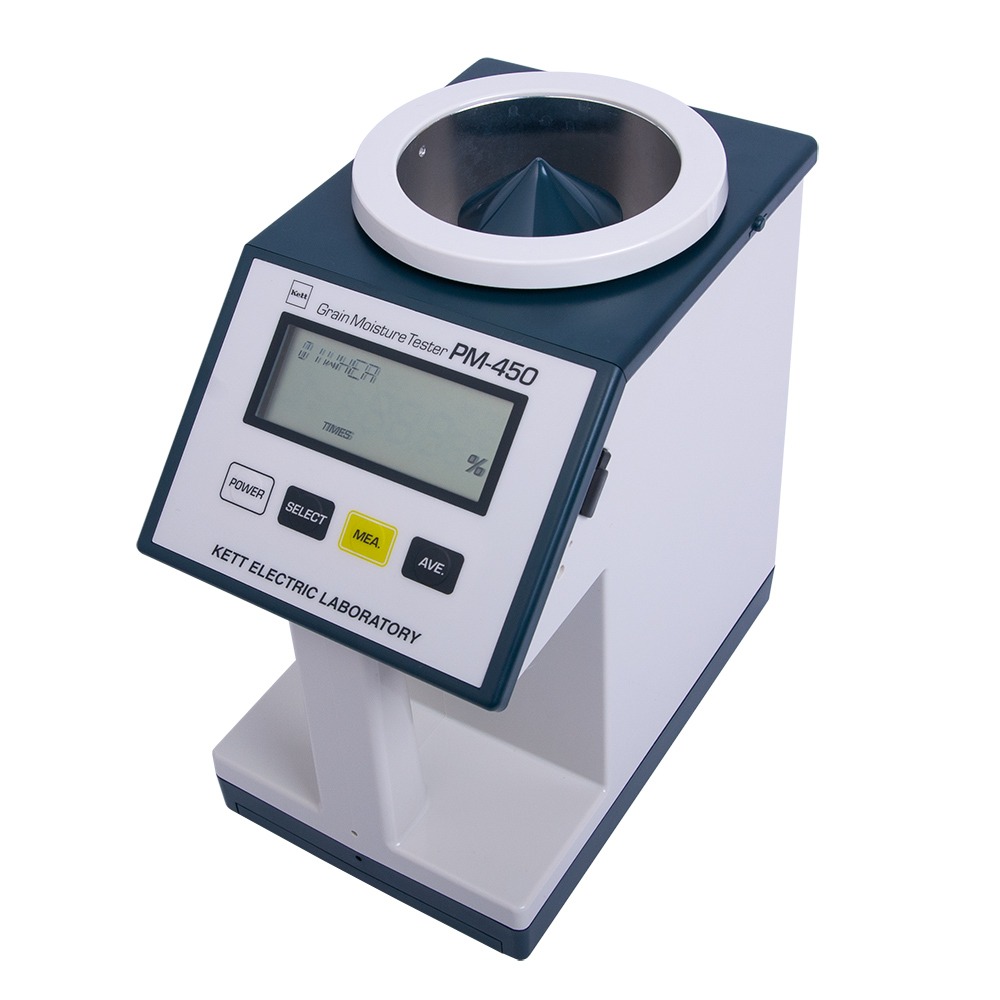
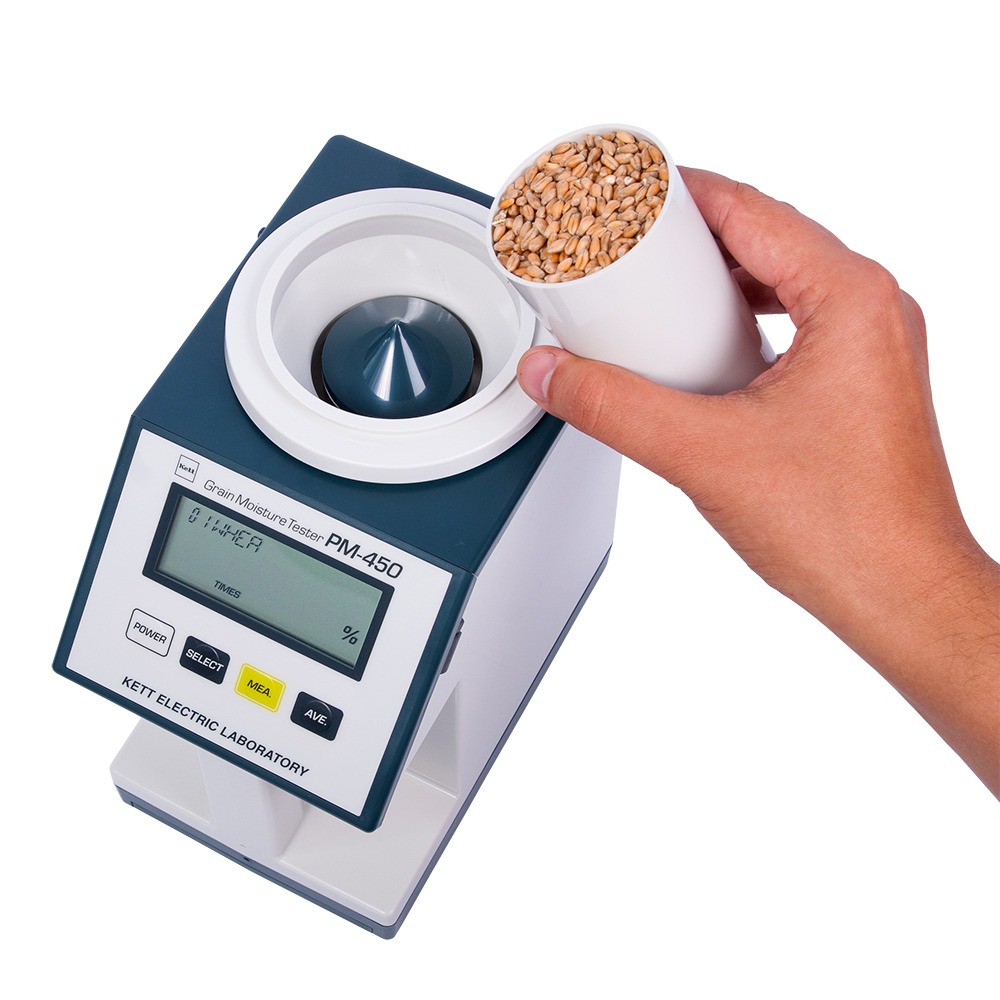
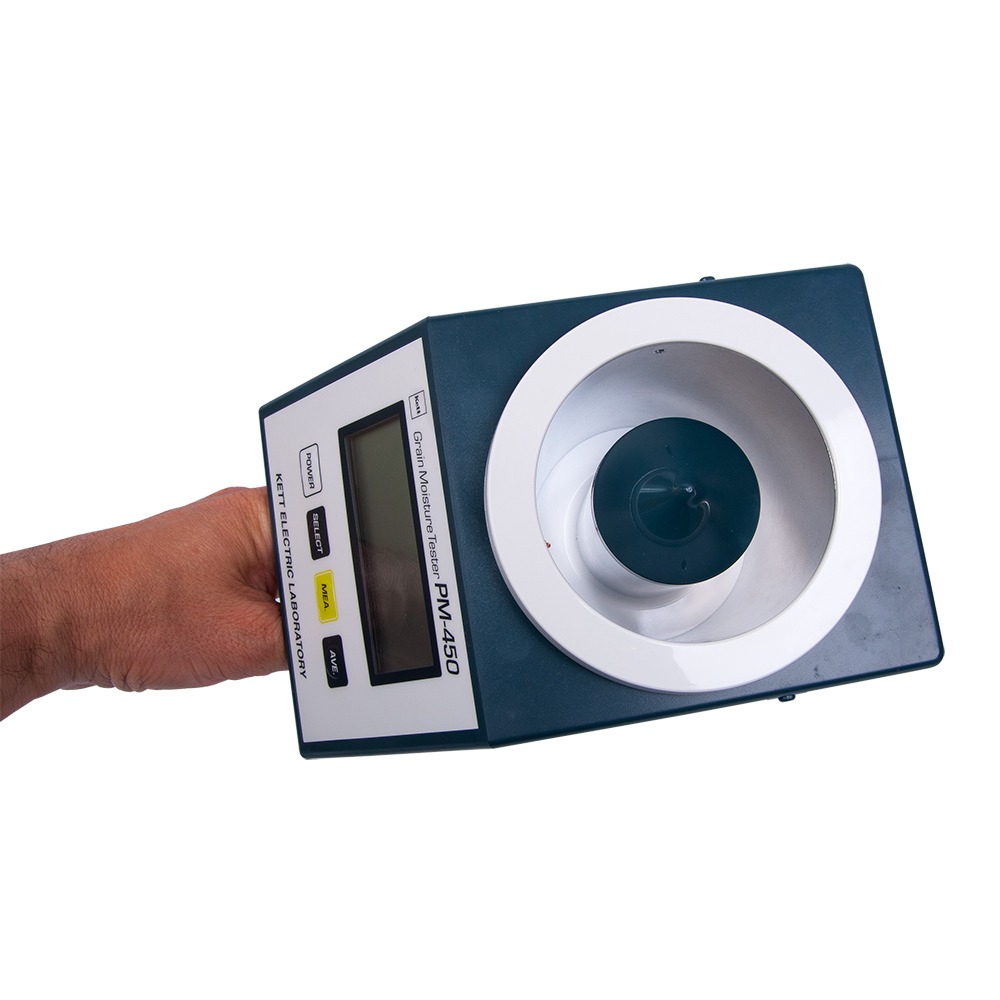
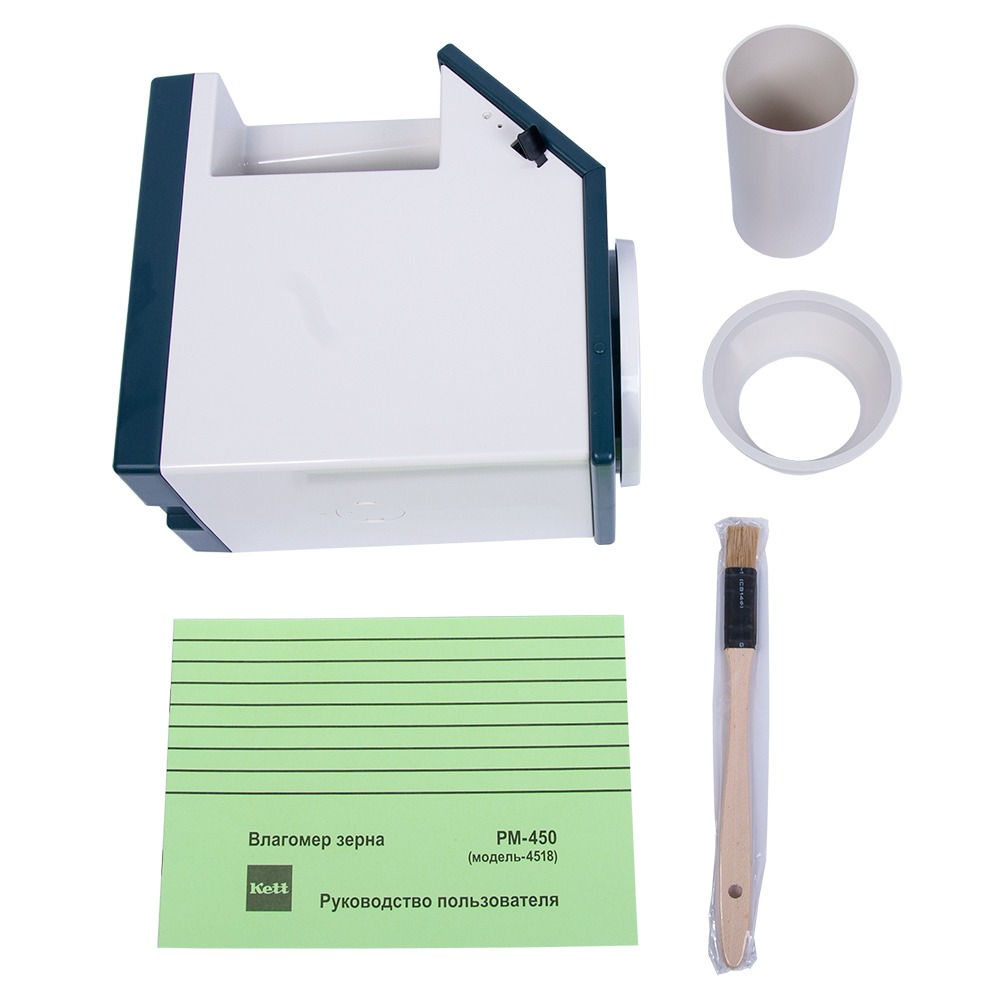
KETT PM-450 Grain Moisture Meter with Scales
Delivery and payment
Choose your city or town to see the price with delivery there and when you can get it.
Pickup points
- Branch
- Parcel locker
Pros
- Built-in scale for correction
- Quick one-touch measurement
- Automatic temperature correction (thermistor)
- Fixed sample volume of 240 ml
- Crop memory and averaging
Cons
- Requires a level, stable surface
- Sensitive to wind and vibrations
- Different versions have different calibrations
KETT PM-450: a moisture meter that calculates instead of guessing
The KETT PM-450 is a portable moisture meter for grain, seeds, and more, with an integrated scale. The idea is simple: capacitive instruments that measure dielectric properties are highly sensitive to sample packing density and temperature. The PM-450 accounts for both of these tricky factors right away: it weighs the sample and measures the temperature inside the instrument before displaying the moisture content.
The result is fewer surprises like “it was 13.8% yesterday and 15.2% today, even though it’s the same grain.”

How it measures: the “magic” without the magic
The instrument measures dielectric permittivity using the capacitive method at 50 MHz. You pour the product into a fixed-volume measuring chamber (240 ml), and the PM-450 automatically:
1) zeroes the scale (tares it), 2) reads the sample weight (for density correction), 3) reads the temperature (using a thermistor), and 4) calculates moisture content using the stored calibration curve for the selected product.
Speed and use (at the grain elevator, in the warehouse, or in the field)
A typical measurement goes like this:
— Select the crop (product number),
— Press the measurement button (the instrument tares itself),
— Pour the sample evenly into the center of the chamber (it’s important for the sample to settle in an even layer),
— After a few seconds, read the moisture percentage on the screen.
There’s one detail many people overlook before getting an inaccurate reading: the integrated scale needs calm conditions. Place the instrument on a level surface, away from drafts and fans, and free from vibration (for example, not on a running engine or compressor).
Calibration: “28 crops” and what’s usually included
The PM-450 comes in different versions and configurations, and the calibration list may vary. If your configuration specifies 28 calibrations, it most often includes the following products (channels 01–28):
- Wheat, barley, corn, soybean
- Rapeseed (canola), rye, oats, sorghum
- Sunflower (large/medium/small)
- Rice (long: paddy/polished), rice (short: paddy/polished)
- Almonds, cocoa, hazelnuts
- Pistachios, peanuts, peas
- Parboiled long-grain rice
- Chickpeas, pigeon peas, mung beans
- Cloves, beans, green coffee
Tip: before buying, ask the seller for a photo or screenshot of the “Product List” on the screen or in the manual for your specific version. It’s the quickest way to make sure it covers the crops you need.
For reference, the official list of standard calibrations for the PM450 series is available on the PM450 Calibrations page (the list depends on the production date and version).
Accuracy and common sense
For most grain applications, the PM-450 offers practical accuracy: its stated standard error is up to 0.5% compared with the drying method (for products with moisture content up to 20%). It’s important to understand that at high moisture levels, individual kernels vary more, so repeatability declines. This is normal for any rapid measurement method.
To get the most out of it:
- Take a representative sample (mix it; don’t just take it from the top layer).
- Take 3–5 measurements and use the average (the instrument has an averaging mode).
- Don’t measure ice-cold grain with a warm instrument or vice versa: a large temperature difference can trigger a warning and shift the readings.
Battery power, interface, and everyday convenience
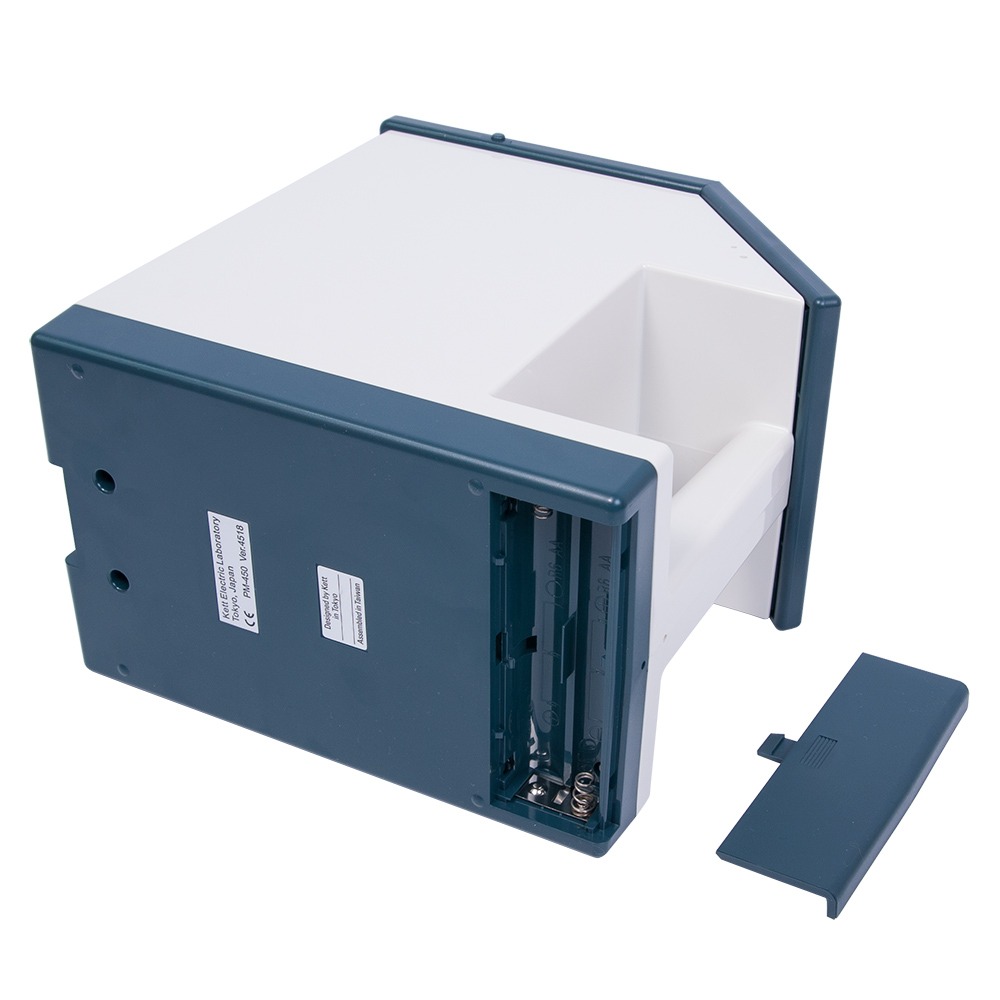
The instrument runs on 4 AA batteries, has an LCD, and is straightforward to operate: turn it on, select the product, measure, and average a series if needed. It also switches off automatically so the batteries don’t run down if you get distracted talking to a driver or the lab.
Who it’s for and who it isn’t
A good fit if you need quick moisture checks with reasonable repeatability, without the hassle of guessing how much to pour and how firmly to pack it.
May not be a good fit if you plan to measure on the move, in the wind, or on the hood of a running tractor: the scale helps with accuracy, but it also requires calm conditions.