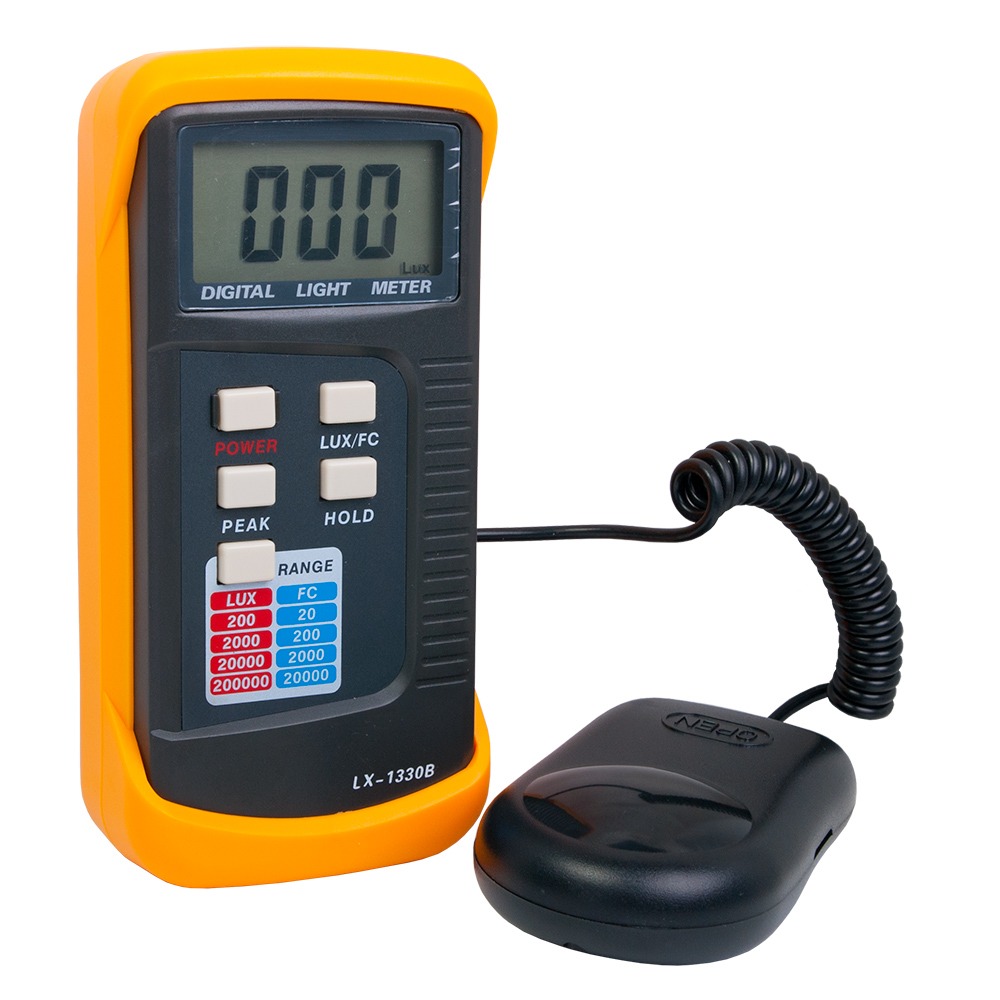
WALCOM LX-1330B Light Meter
Delivery and payment
Choose your city or town to see the price with delivery there and when you can get it.
Pickup points
- Branch
- Parcel locker
Pros
- Range up to 200 000 lx
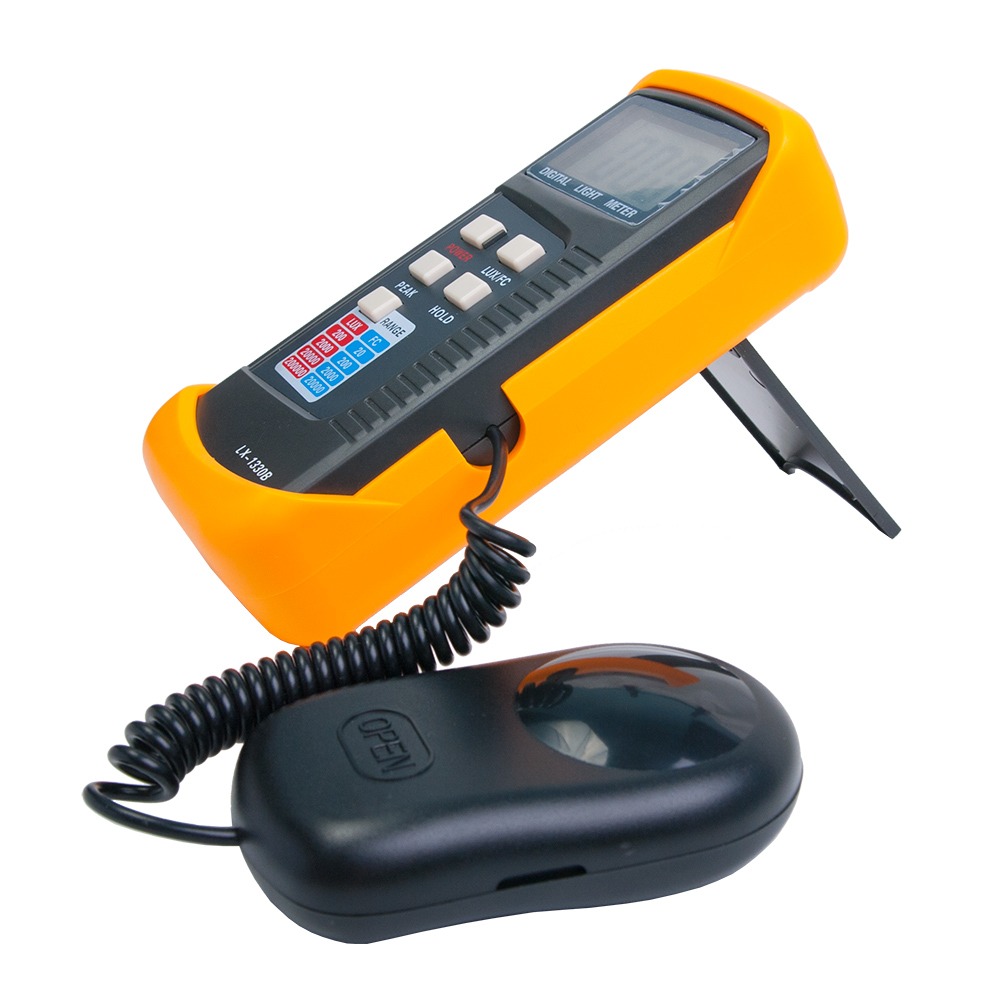
- Remote sensor on a cable
- Lux/FC at the press of a button
- Data Hold and Peak Hold
- Simple, “no menus”
Cons
- No display backlight
- No memory or logging
- ×10/×100 multipliers can be confusing
WALCOM LX-1330B Light Meter: take a reading and get on with your day
The WALCOM LX-1330B is a classic portable light meter with a remote photo sensor that measures illuminance in lux (lx) or foot-candles (fc). It is often used where you need a quick answer to a simple question: “Is there really enough light here, or have we just gotten used to the dimness?” Think offices, workshops, photo studios, warehouses, classrooms, workspaces, display cases and greenhouses.

Ranges: 4 “gears” up to 200 000 lx
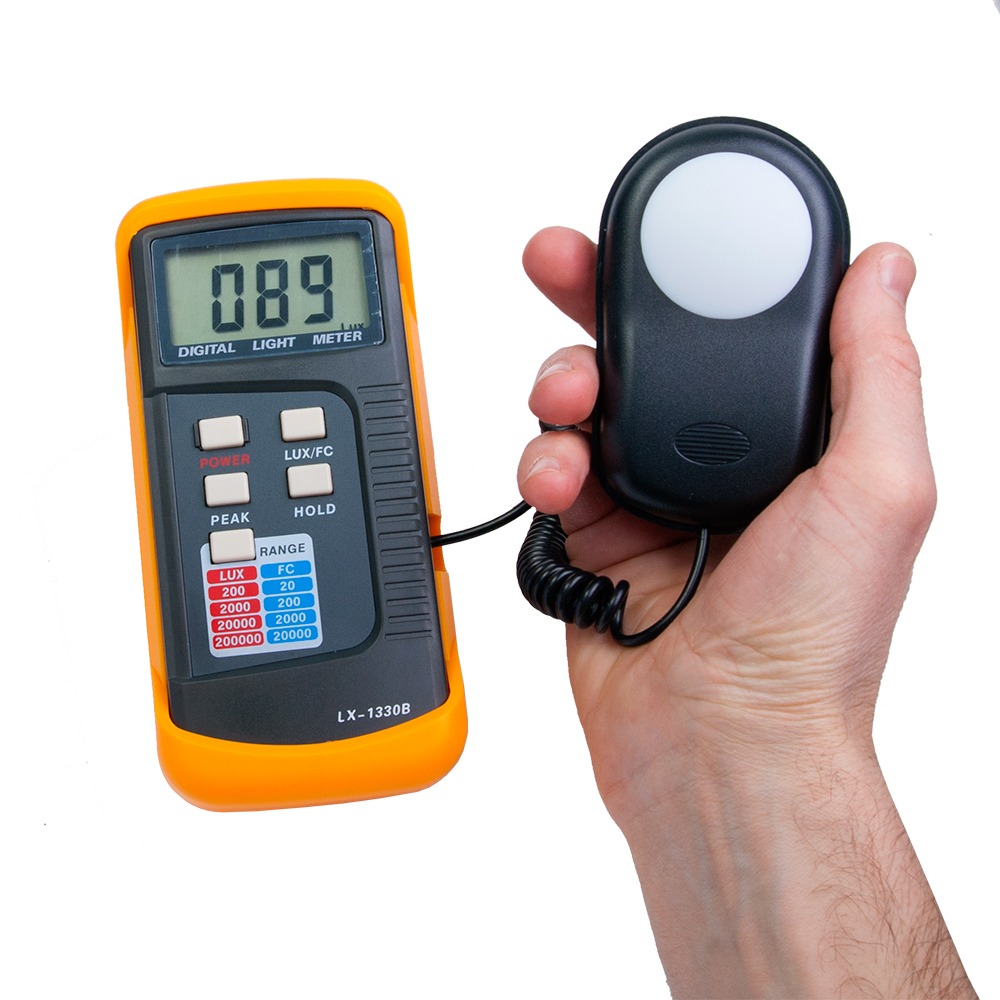
The meter has 4 measurement ranges: 200 / 2 000 / 20 000 / 200 000 lx (and corresponding ranges in fc). That is convenient: there is no need to squeeze both a sunny day and a desk lamp into one setting. Just switch RANGE.
One important detail: the display is a 3½-digit type (up to 1999). Multipliers are therefore used on the higher ranges. In practice, a reading of “1234” on the 20 000 lx range means 12 340 lx (×10), while on the 200 000 lx range it means 123 400 lx (×100). A reminder is usually printed right on the housing, but it can still be confusing the first time.
Remote sensor: the main reason to choose the LX-1330B
The separate sensor on a cable is not just a “nice bonus”; it is what makes light meters like this convenient to use. You can:
- place the sensor on a table, floor or shelf without blocking the light with your hands;
- position the sensor where the meter body cannot fit (a display case, shelving unit or light fixture);
- keep the measurement geometry consistent, especially across a series of readings.
Inside is a silicon photodiode with a correction filter, so the meter is designed to measure illuminance as the human eye sees it (photopic sensitivity), not light for plant photosynthesis.
Buttons and modes you will actually use
Everything is straightforward and old-school: buttons at your fingertips, with no nested menus.
- LUX/FC switches units (lx ↔ fc).
- RANGE selects the range (4 steps).
- HOLD “freezes” the reading on the screen so you can write it down.
- PEAK captures the peak value, useful when light levels fluctuate or you are looking for the brightest spot.
There is also an overrange indicator and auto-zeroing to keep the meter from drifting with small shifts.
Where it works best (example uses)
Office/workspace. Check whether the light at your desk reaches a reasonable level, or whether it is shining in the wrong direction.
Workshop/garage. Find dark areas on the workbench and assess the effect of replacing lamps, lenses or diffusers.
Photo/video. Compare the illuminance from two light sources at the same point, check uniformity across a scene and quickly balance the lighting before a shoot.
Display cases/sales floors. Move the sensor along the shelves to understand why “this product sells and that one does not”: sometimes the reason is simply illuminance that is 2–3 times lower.
An honest note about LEDs and “lux for plants”
Lux is a unit tied to the sensitivity of the human eye. That means:
- for different LED spectra, the same number of lux may be more or less useful for a given task;
- for plants, PPFD/µmol are more appropriate units, and a light meter is mainly suited to relative comparisons, such as one lamp versus another, one hanging height versus another, or uniformity across an area.
If you need perfect accuracy for agronomy, you are looking at PAR meters. If you need to quickly sort out your lighting and compare settings repeatably, the LX-1330B is right at home.
Power and everyday details
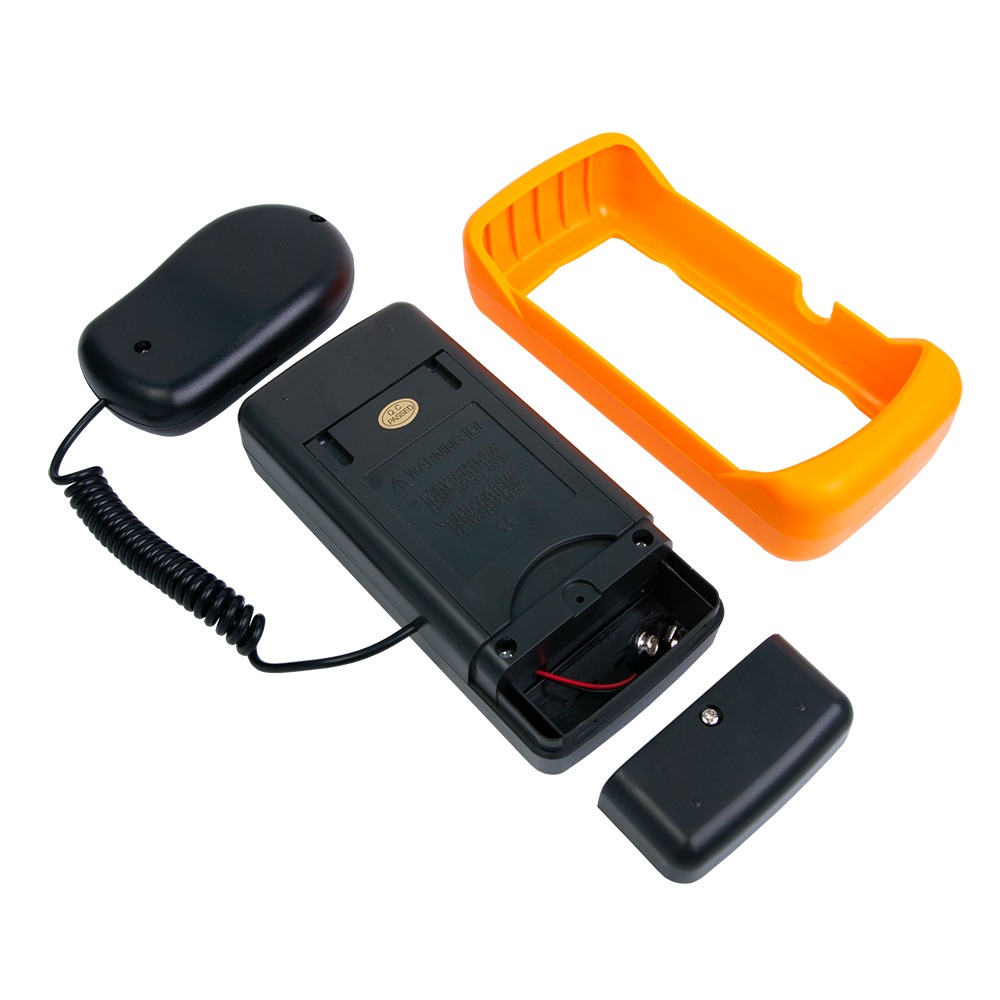
The meter runs on a 9 V 6F22 battery and is generally low-maintenance. The protective rubber bumper is a small detail that helps in real life: instruments get dropped on job sites not because you are clumsy, but because that is how the universe works.
Conclusion
The WALCOM LX-1330B is a good basic light meter with a remote sensor, straightforward controls and a high upper range of up to 200 000 lx. It is not about “smart” features, apps or graphs; it is about quick measurements, repeatability and minimal chances of making a silly mistake, as long as you remember the ×10/×100 multipliers on the higher ranges.