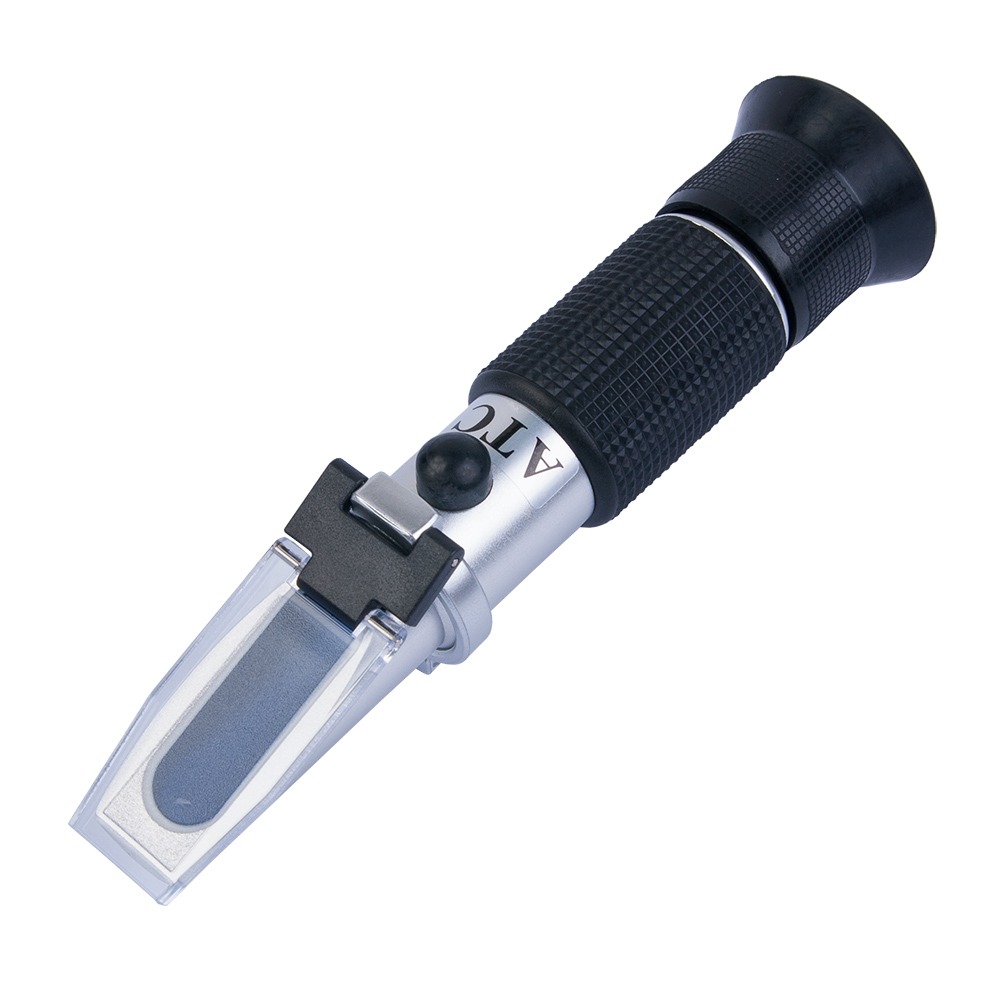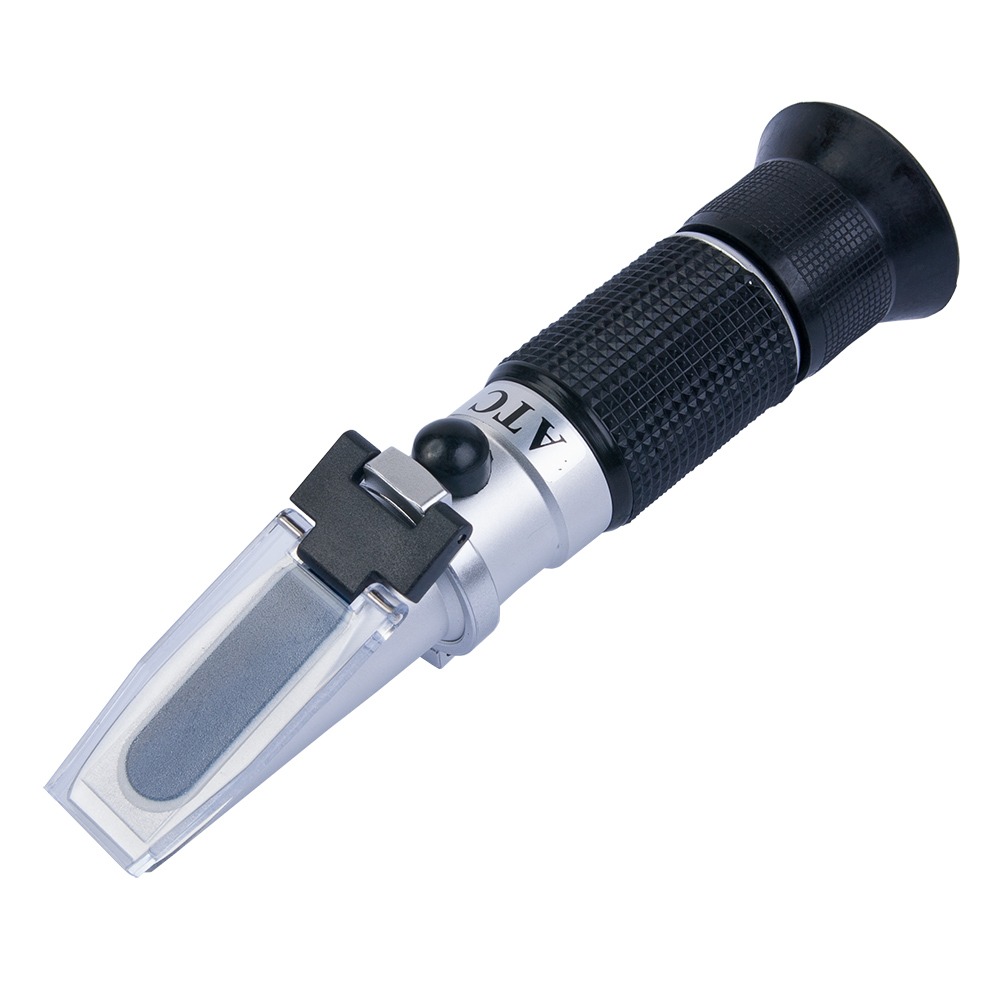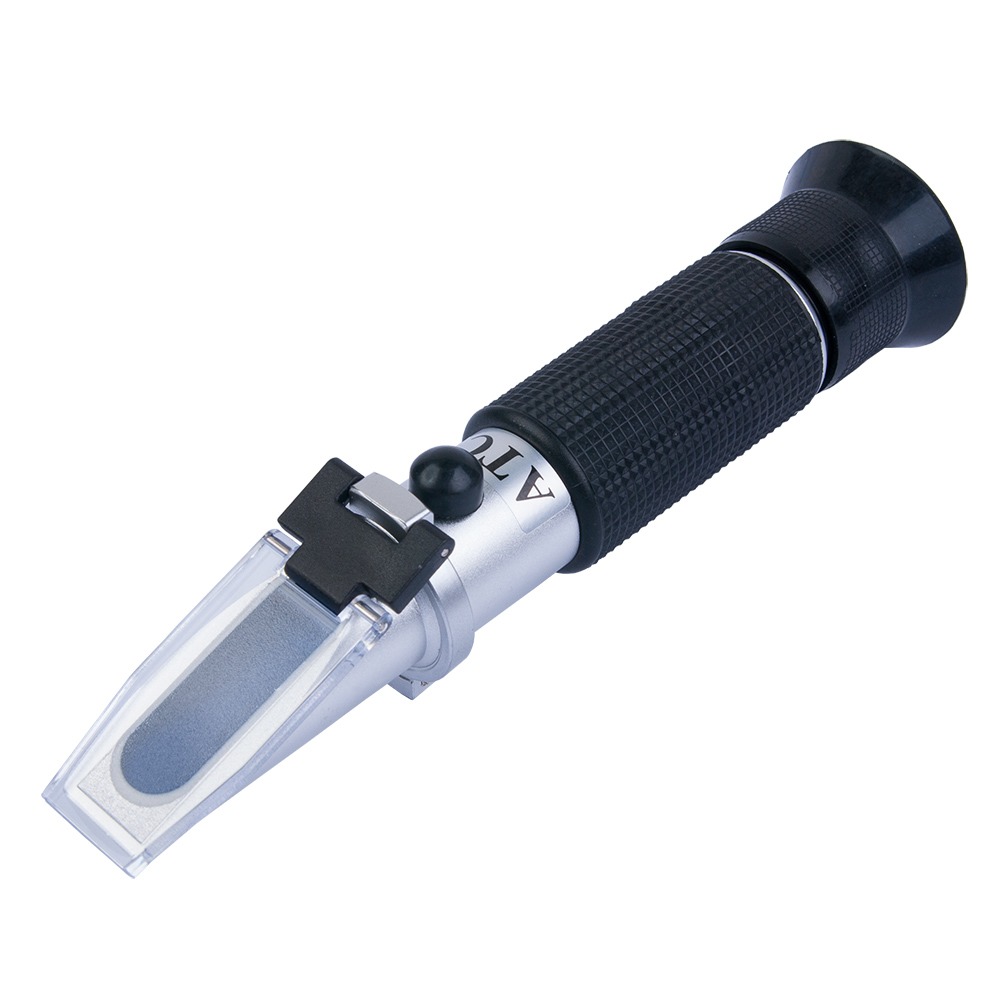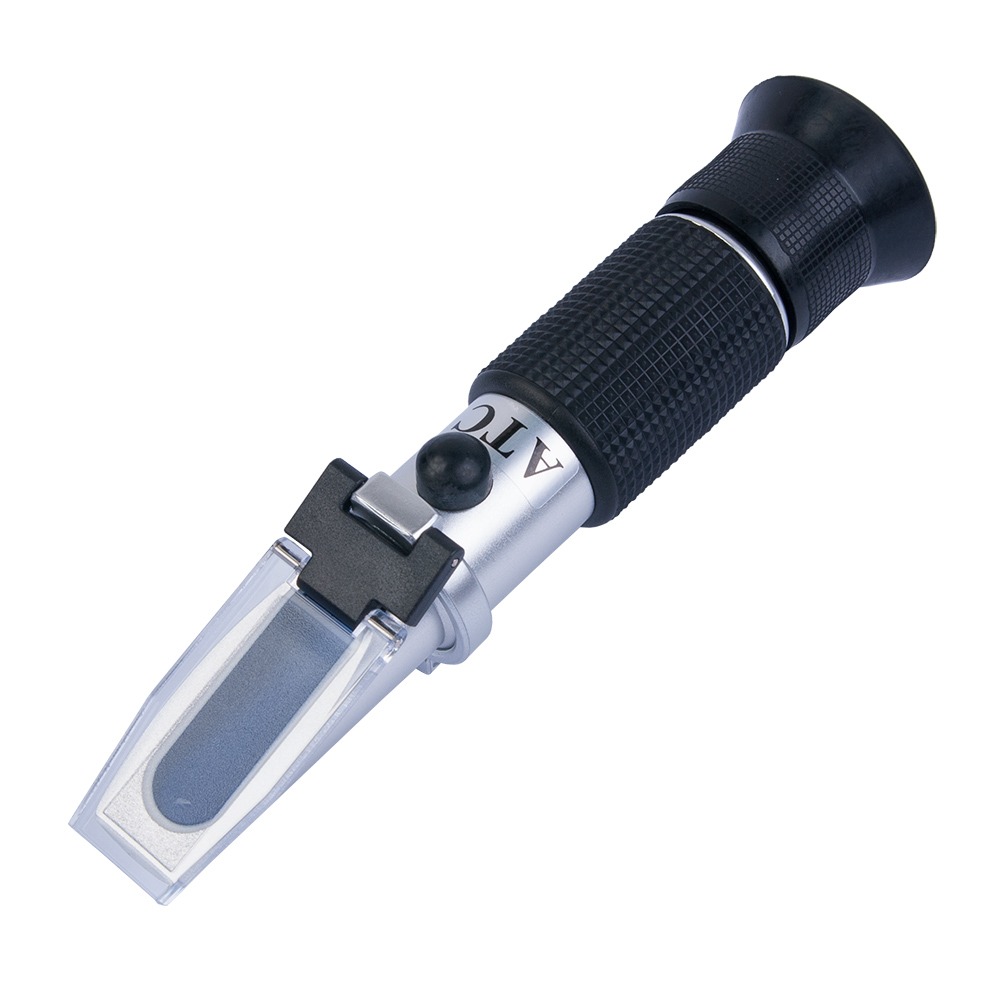

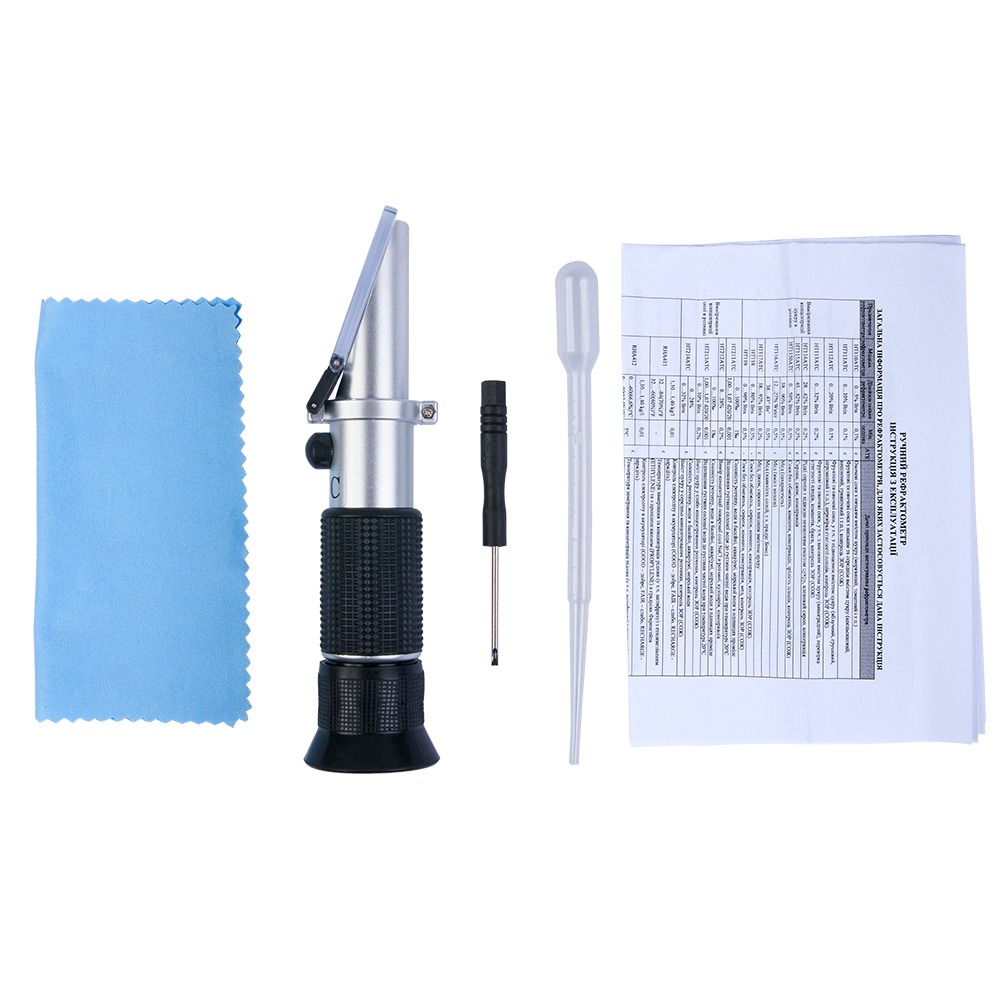
Como HT612ATC Milk Refractometer
Delivery and payment
Choose your city or town to see the price with delivery there and when you can get it.
Pickup points
- Branch
- Parcel locker
Pros
- COMO/SOMO scale for milk
- ATC 10–30 °C
- Works without batteries
- Quick measurement from a single drop
- Lightweight and comfortable to hold
Cons
- Requires periodic calibration
- Reading the scale takes practice
- Does not replace laboratory analysis
What this instrument is and what it measures
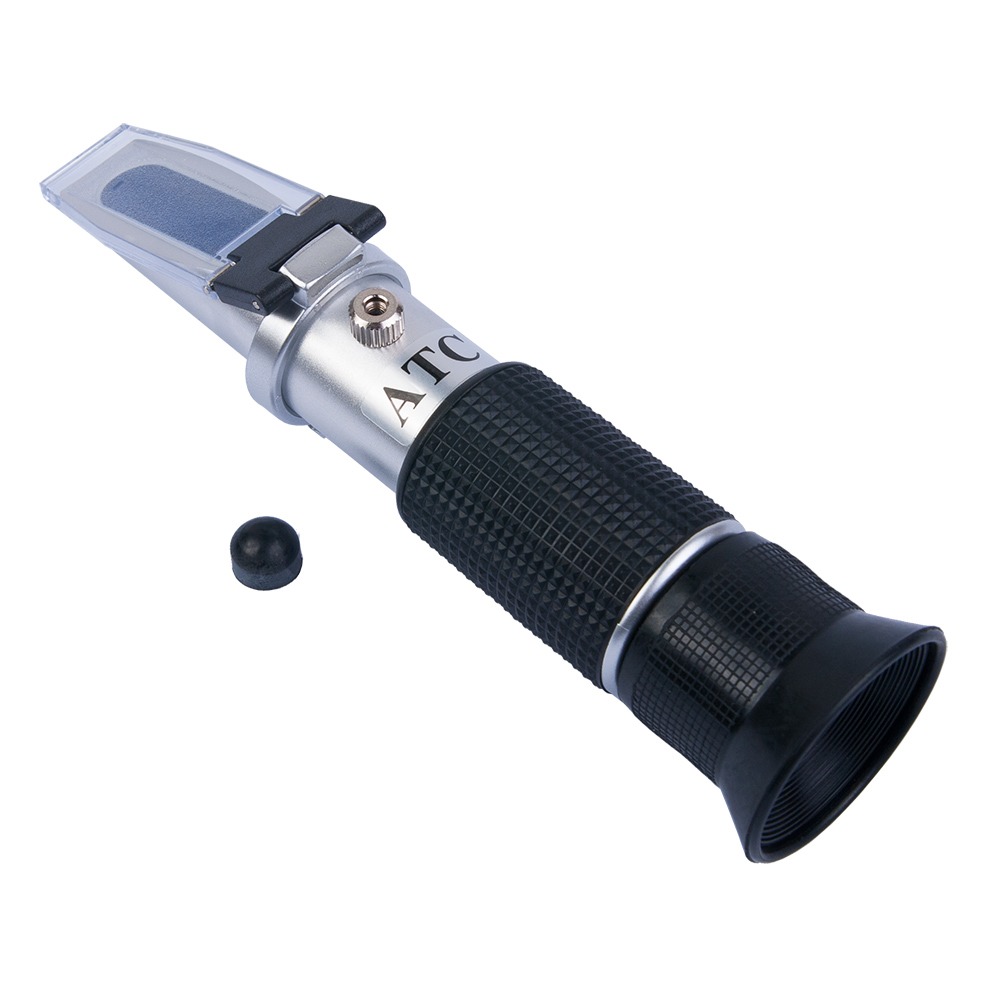
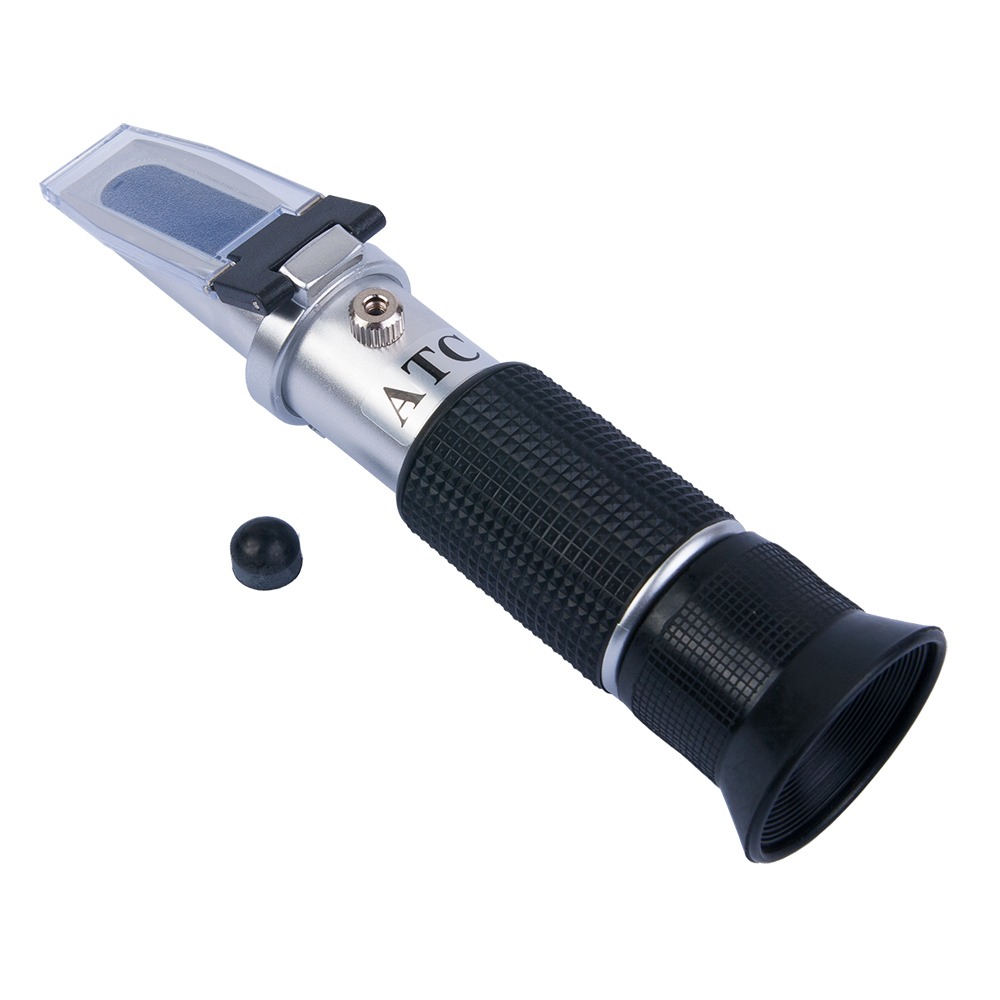
The Como HT612ATC is a handheld optical refractometer for quick milk testing using the
COMO scale (often also called SOMO), an indicator of milk solids-not-fat (SNF)
. Simply put, it estimates how much dissolved nonfat solids are in the milk, which is directly related to raw milk quality, the consistency of products such as cheese, yogurt and kefir, and suspected dilution with water.It is not a magic wand that can determine the full composition of milk at a glance. But it is ideal for quick checks at milk collection points, on farms or in small processing facilities: one drop, a few seconds, and you have a reading on the scale.
Who needs it and why
The HT612ATC is most often used where many measurements need to be made in succession:
- farms and agricultural operations: daily milk quality checks;
- milk collection points: quick initial screening of questionable batches;
- small processing facilities and cheesemakers: keeping recipes consistent from batch to batch;
- laboratories: quick preliminary checks.
Bonus: many descriptions also mention using this type of instrument for broths and solutions where concentration needs to be estimated in a similar way.
How to use it: 60 seconds without a lab
The measurement process is straightforward enough for field use:
- Mix the milk sample to eliminate any cream layer or separation.
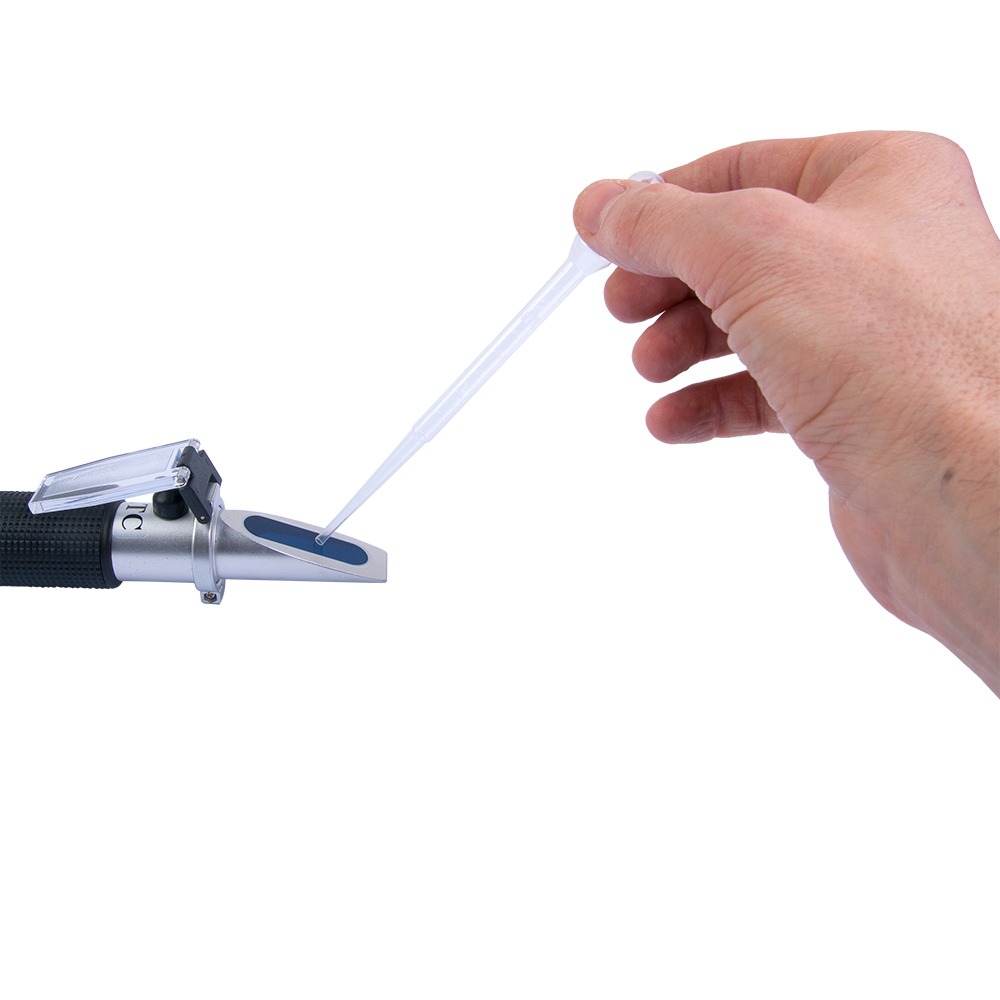
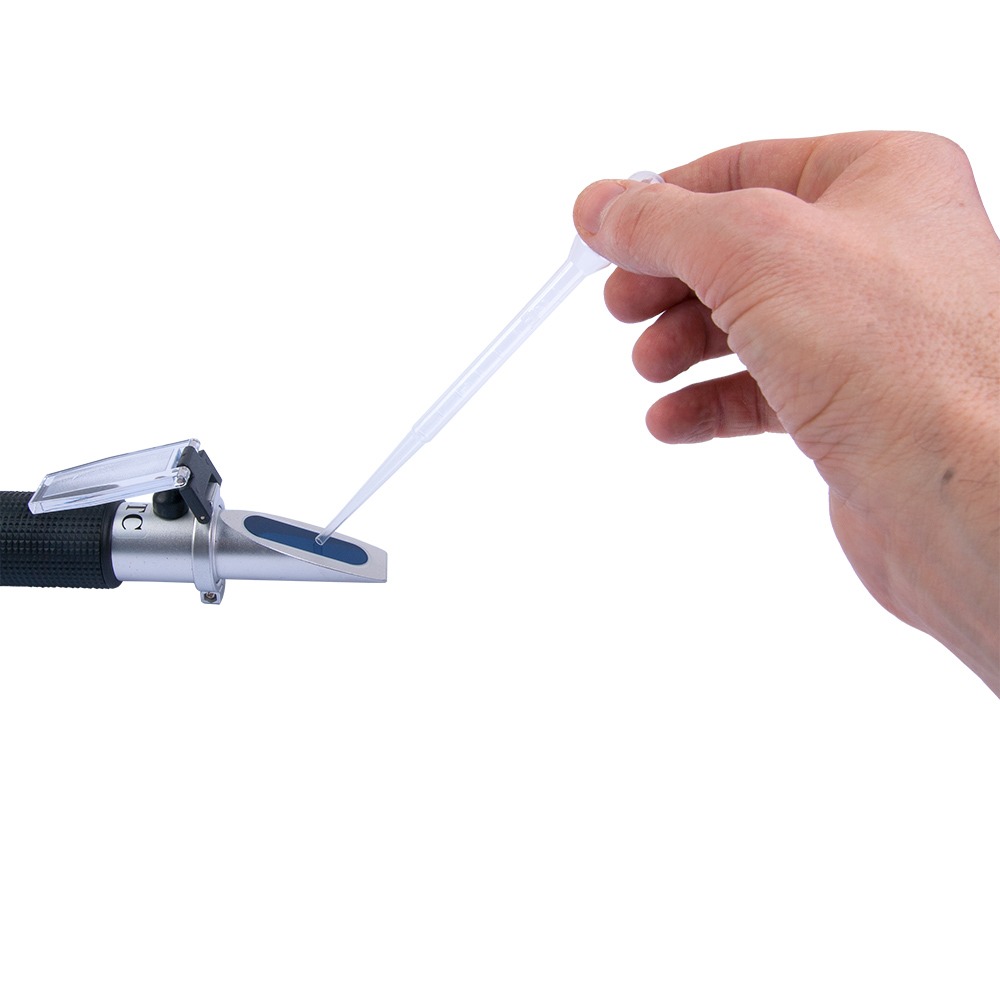
- Open the cover and apply 1–2 drops to the prism.
- Close the cover so the drop spreads evenly into a thin layer.
- Wait 10–20 seconds for the sample to reach the instrument's temperature. This is especially important even with ATC.
- Look through the eyepiece toward a light source and adjust the focus ring.
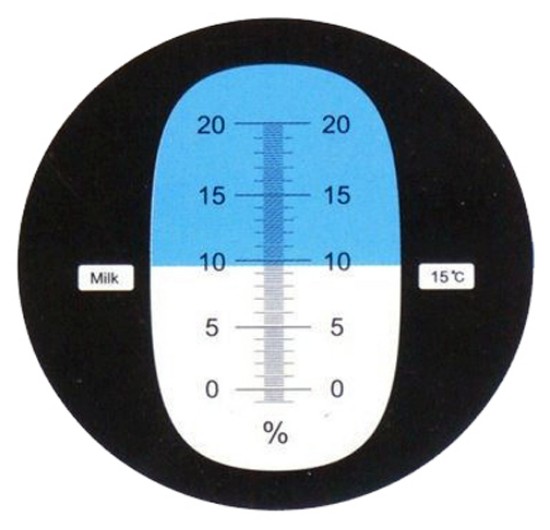
- Read the value at the boundary between the light and blue areas.
What ATC actually does
ATC (Automatic Temperature Compensation) on the HT612ATC works within 10–30 °C and adjusts readings as the temperature changes. This improves measurement repeatability in real-world conditions, where the surrounding temperature is not always an ideal 20 °C.
But ATC does not magically eliminate measurement errors. If the sample is very cold or warm, give it a couple of dozen seconds on the prism and try to measure under reasonably stable conditions.
Calibration and care for reliable readings
The refractometer needs no power, but it does benefit from a few simple habits:
- Periodically calibrate the zero point with distilled water. A screwdriver is included.
- After each measurement, wipe the prism with a soft cloth free of sand or abrasives.
- Do not scrape the prism or use harsh solvents.
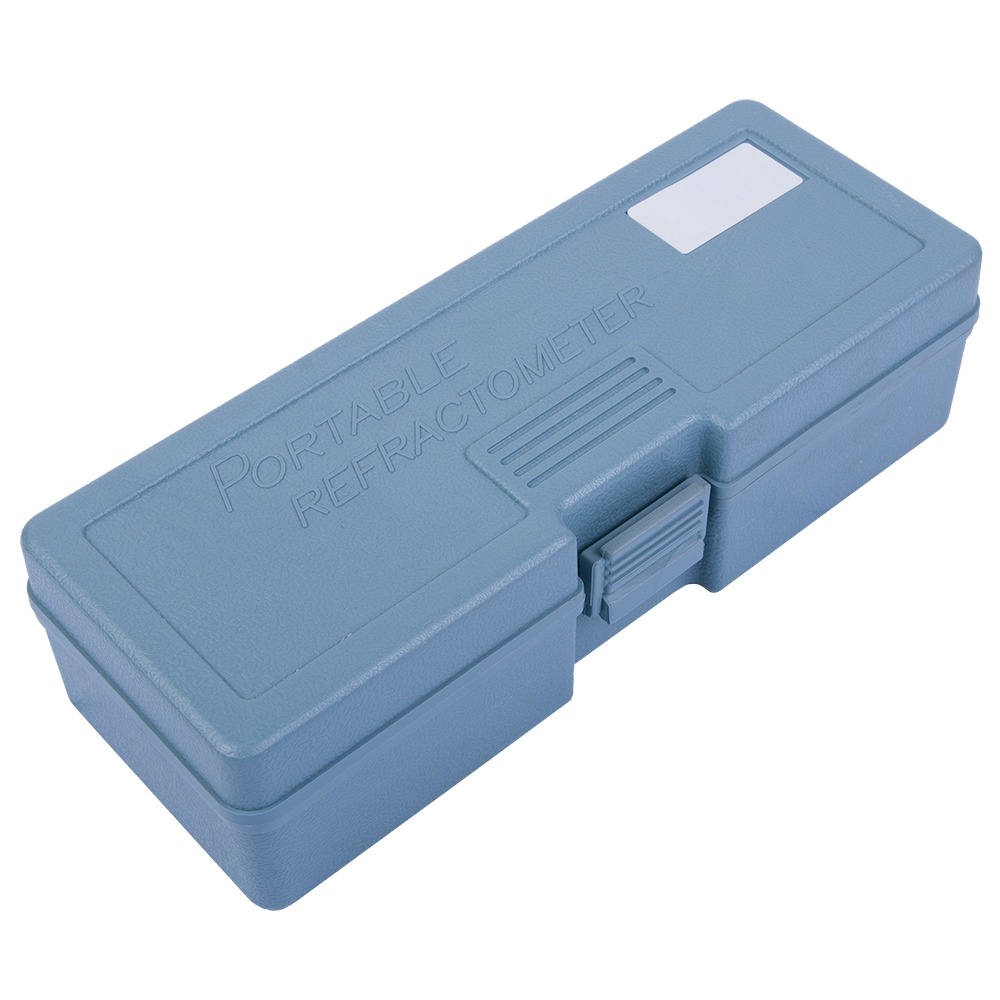
- Store it in the case to help extend the life of the optics.
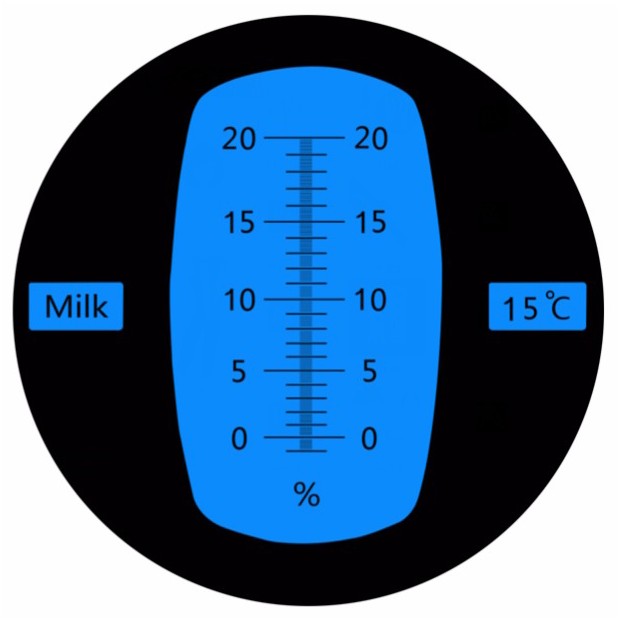
How to read the scale and what counts as normal
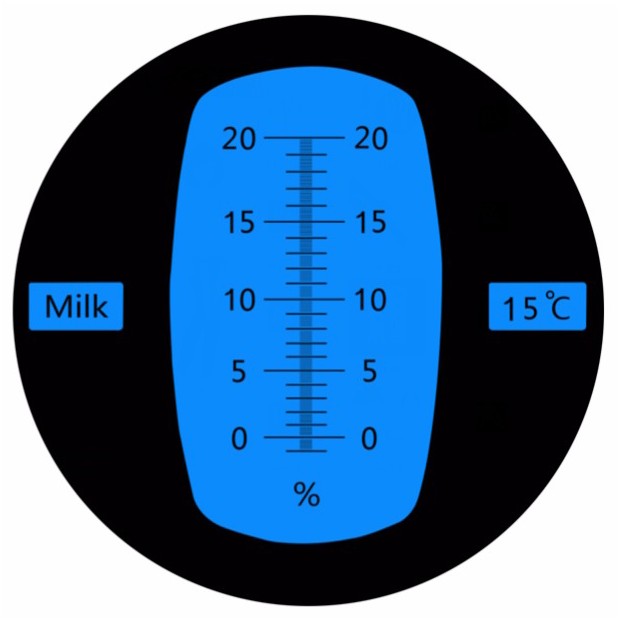
Inside, you will see a 0–20% scale and a boundary between the blue and white areas. That boundary indicates the result. Many reference sources suggest that natural milk should have an SNF level of around 8% or higher, but actual standards depend on breed, season, feed and your local requirements or standards.
A practical tip: consistency matters as much as the absolute numbers. If your usual raw milk typically reads around 8.3–8.7% but suddenly reads 7.4% today, that is a reason to ask questions and, if necessary, confirm the result in a laboratory.

Conclusion: when the HT612ATC is the right choice
The Como HT612ATC offers quick milk quality checks without electronics, extra buttons or fiddling with test tubes. It is especially useful if you receive or test milk daily and want a simple way to screen for SNF. The key is to calibrate it, keep the prism clean and remember that it is a tool for quick assessment, not a final arbiter in disputed cases.