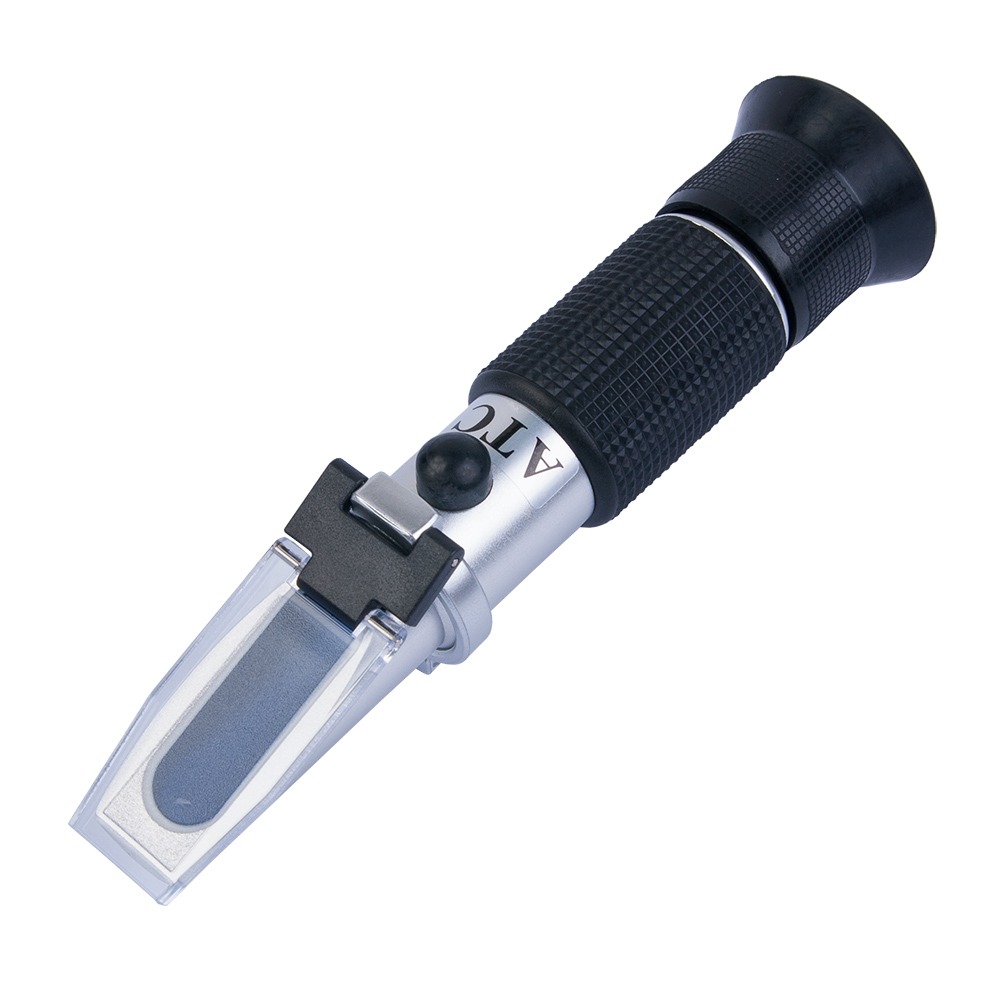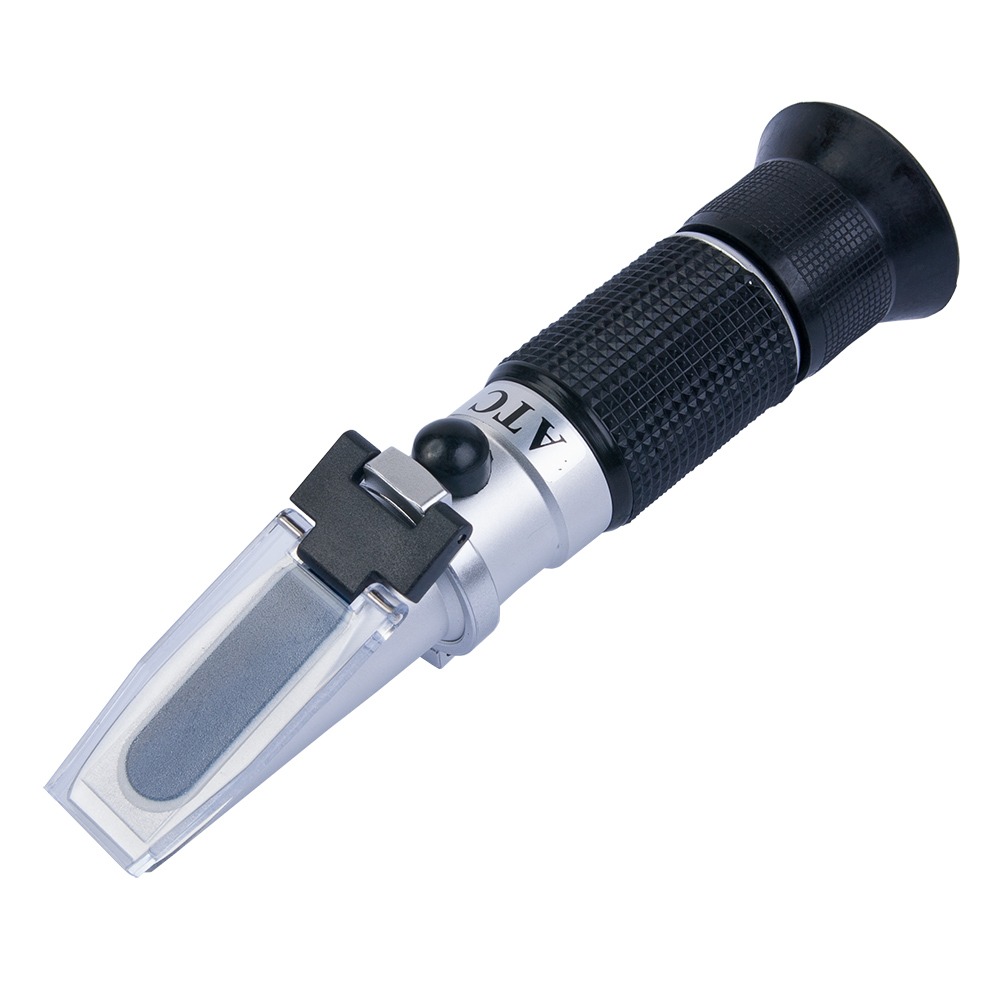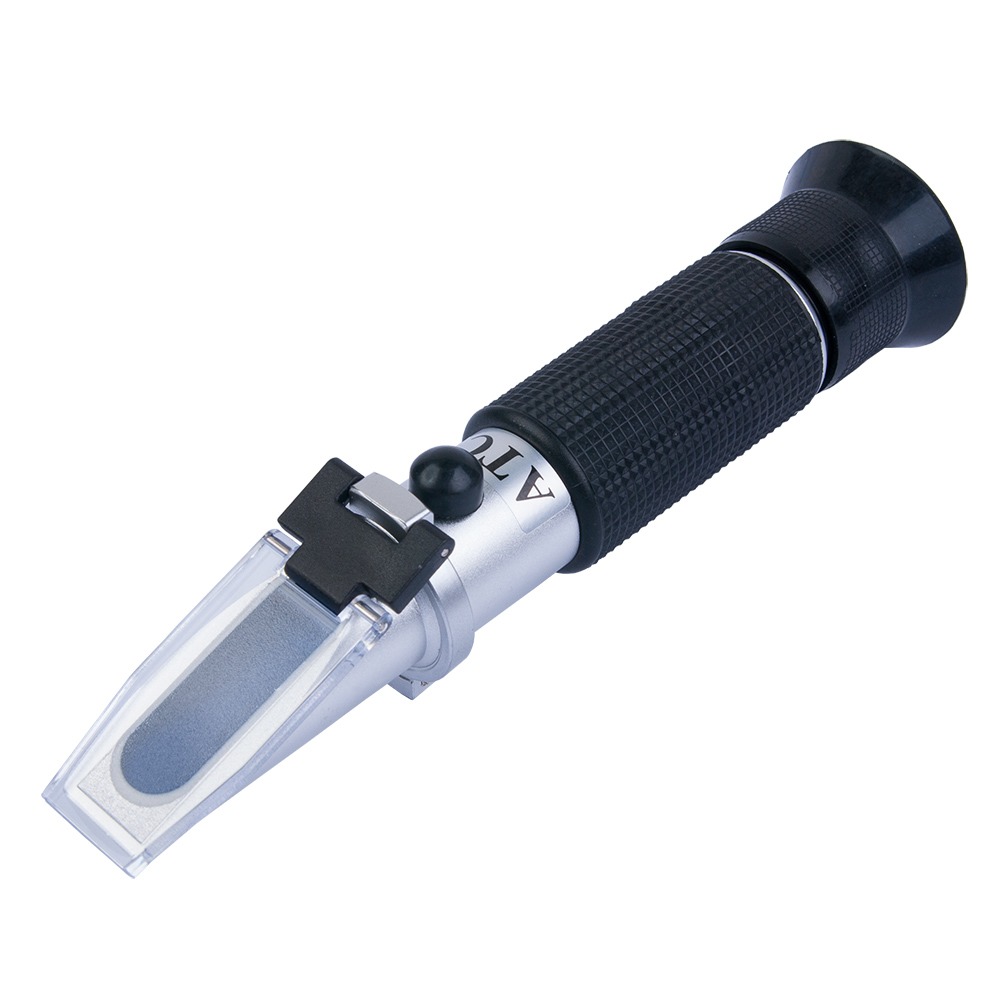
Walcom HT11x Refractometer 0–90% Brix
Delivery and payment
Choose your city or town to see the price with delivery there and when you can get it.
Pickup points
- Branch
- Parcel locker
Pros
- Works without batteries
- Quick measurement with 1 drop
- Easy calibration with water
- Comfortable rubberized grip
- Also suitable for metalworking fluids
Cons
- No ATC
- Requires a clean prism
- Not well suited to very cloudy samples
What is the HT11x and why are there two versions?
ZOR HT11x is a series of handheld optical refractometers with a Brix scale for quickly estimating the concentration of dissolved substances (primarily sugars) in water-based solutions. The series has two versions with different scale ranges: 0–80% Brix or 0–90% Brix.
In practice, both are workhorses for the kitchen, winemaking, beekeeping and the workshop. The Brix scale is also often used to check the concentration of metalworking fluids (usually by applying the specific concentrate's conversion factor afterward).
How it measures: the essentials
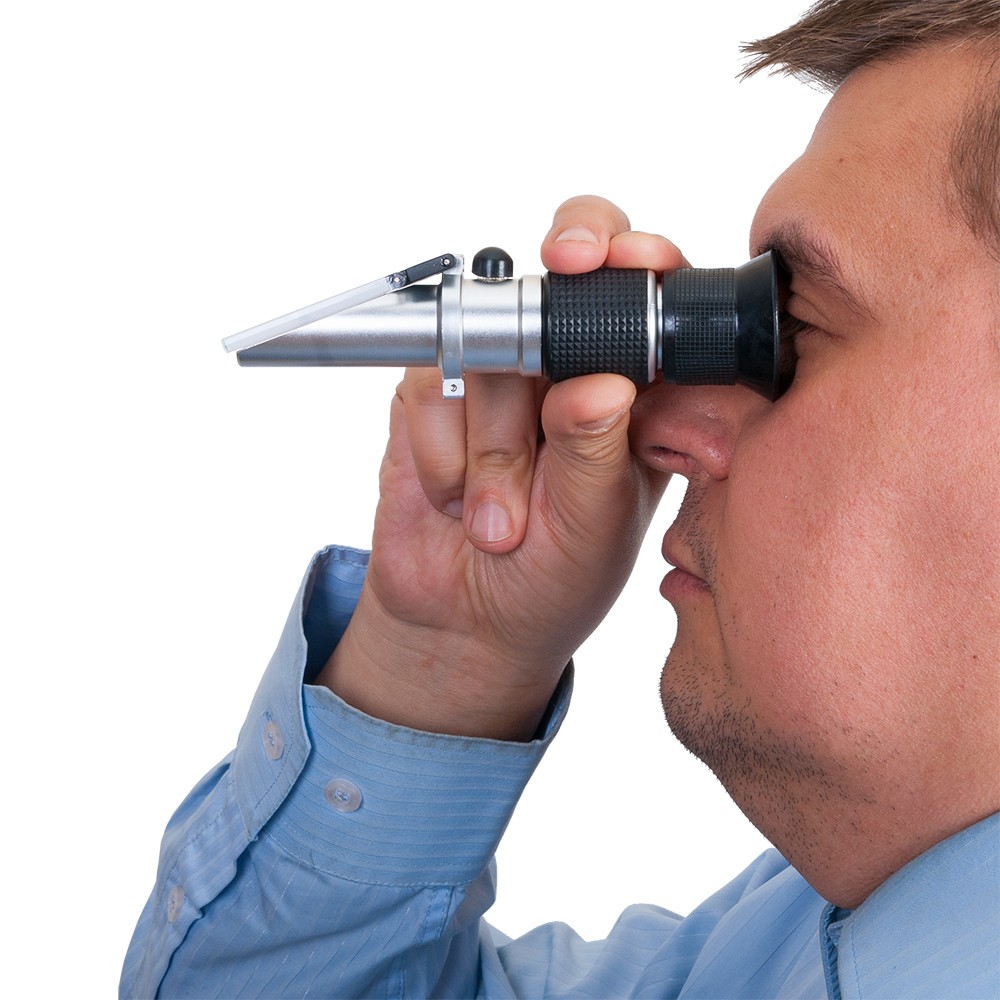
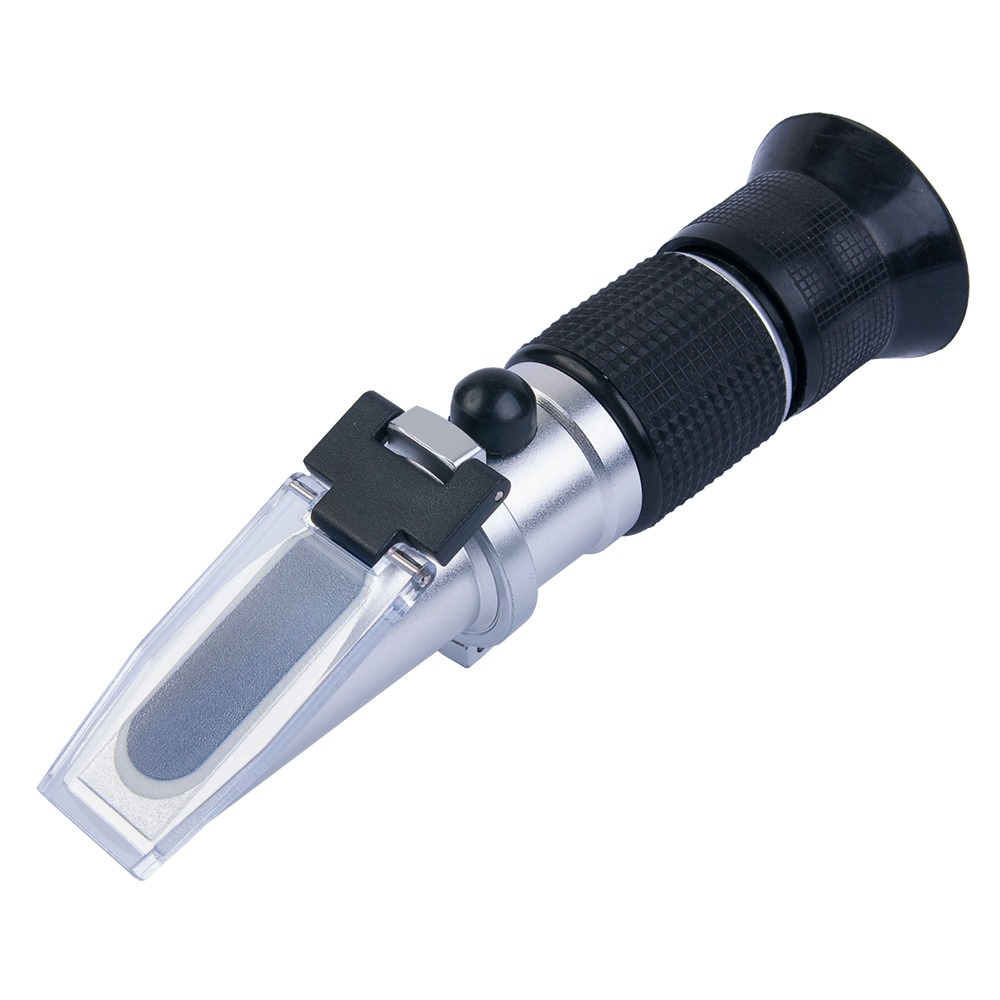
Inside is an optical system with a prism. Apply 1–2 drops of the sample to the prism, close the transparent cover and look through the eyepiece. The boundary between the blue and white fields on the scale shows the Brix reading.
The advantage of this approach is that it's very fast and requires very little liquid. The downside is that, like any optical instrument, it needs cleanliness (the prism, cover and cloth) and doesn't handle thick or cloudy samples well without preparation.
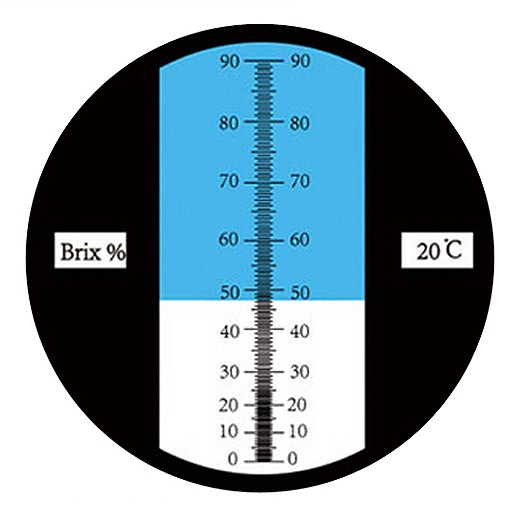
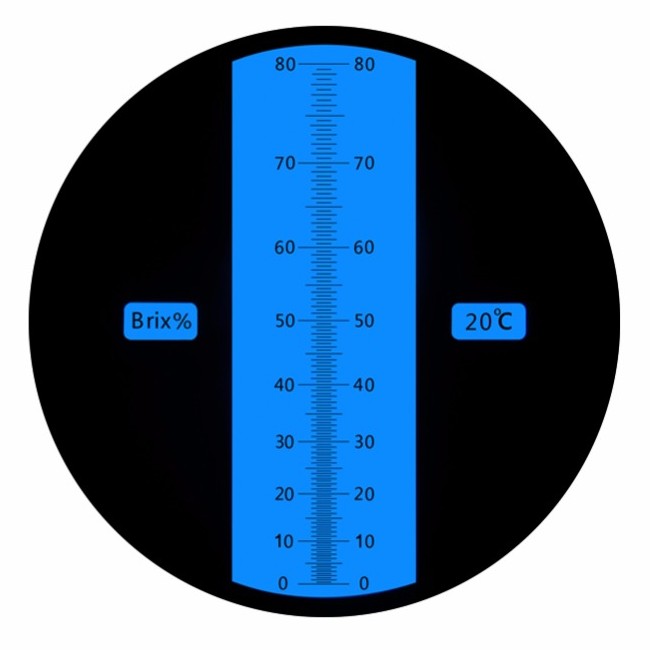
What matters most: temperature and accuracy (there's no ATC)
The HT11x series does not have Automatic Temperature Compensation (ATC). That's not a disaster, but it means following a simple rule: for the best repeatability, measure when the sample and instrument are at a similar temperature, ideally around 20 °C (the reference temperature for Brix).
If you measure hot jam straight off the stove, the number will be more of a guide than a definitive result. Let the sample cool, stir it and only then take a measurement.
How to use it: 6 straightforward steps
1) Open the prism cover and wipe the prism with a clean cloth.
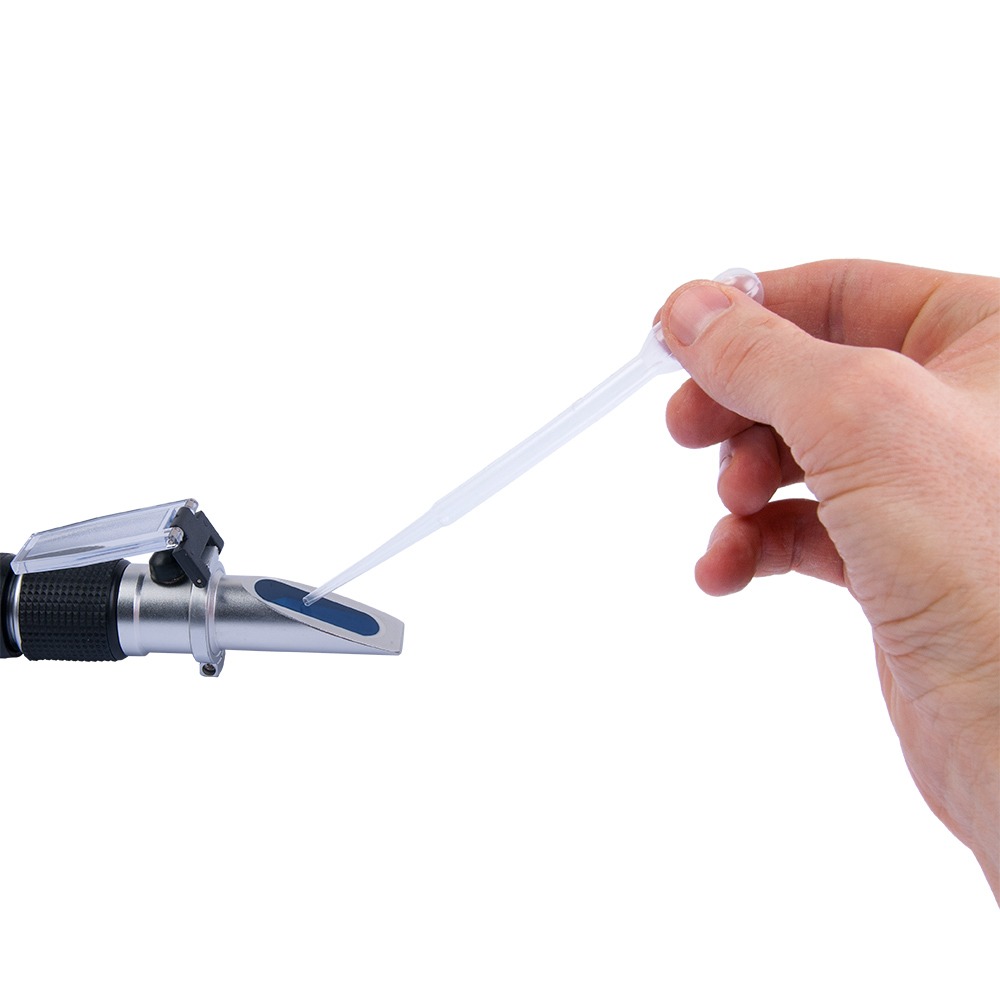
2) Use the pipette to apply 1–2 drops of the sample to the prism.
3) Close the cover so the liquid spreads into a thin layer without bubbles.
4) Point the refractometer toward a light source and adjust the focus using the eyepiece.
5) Take the reading at the boundary between the blue and white fields.
6) Clean the prism immediately after measuring, especially after syrups or honey.
Calibration: set it up for peace of mind
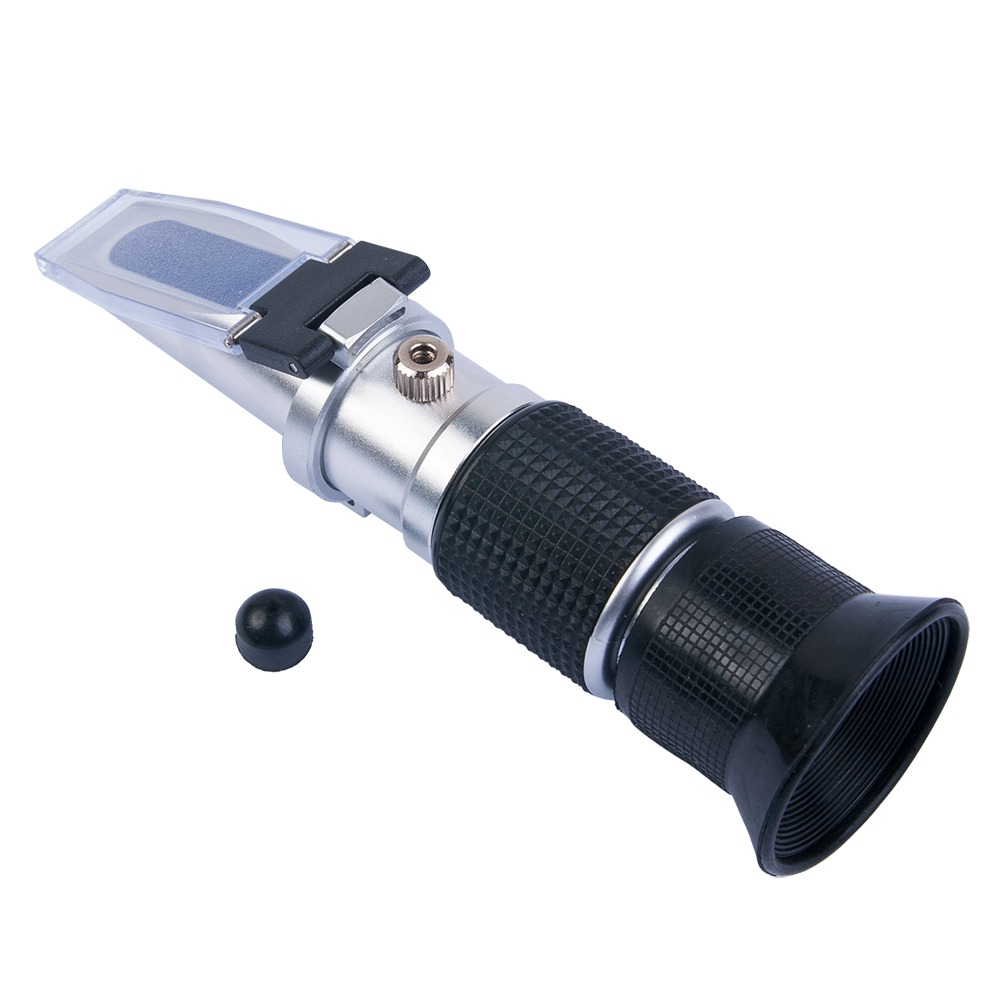
Calibration is simple: place a drop of distilled water on the clean prism, close the cover and, while looking through the eyepiece, turn the screw with the included screwdriver until the boundary lines up with 0% Brix. Then wipe off the water and you're ready to go.
It's a good habit to check the zero from time to time, especially if the instrument is frequently carried in a bag or used in the field or workshop.
Which range should you choose: 0–80 or 0–90?
0–80% Brix covers most household and food-related uses (juices, must, syrups and homemade preserves), as well as checking metalworking fluids at typical concentrations (using a conversion factor).
0–90% Brix makes sense if you regularly work with very sweet or thick products whose readings may approach the upper limit, or if you want extra room on the scale to make sure it's enough.
What's included and why people like it
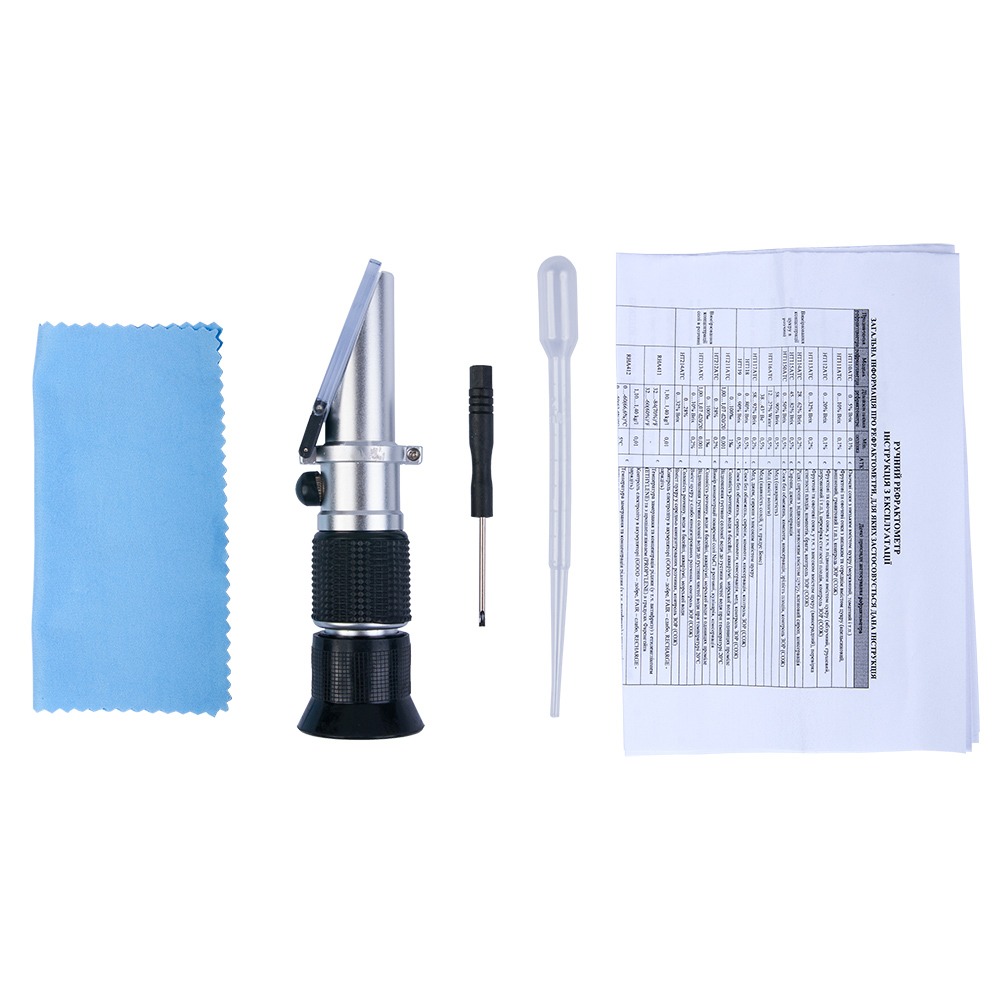
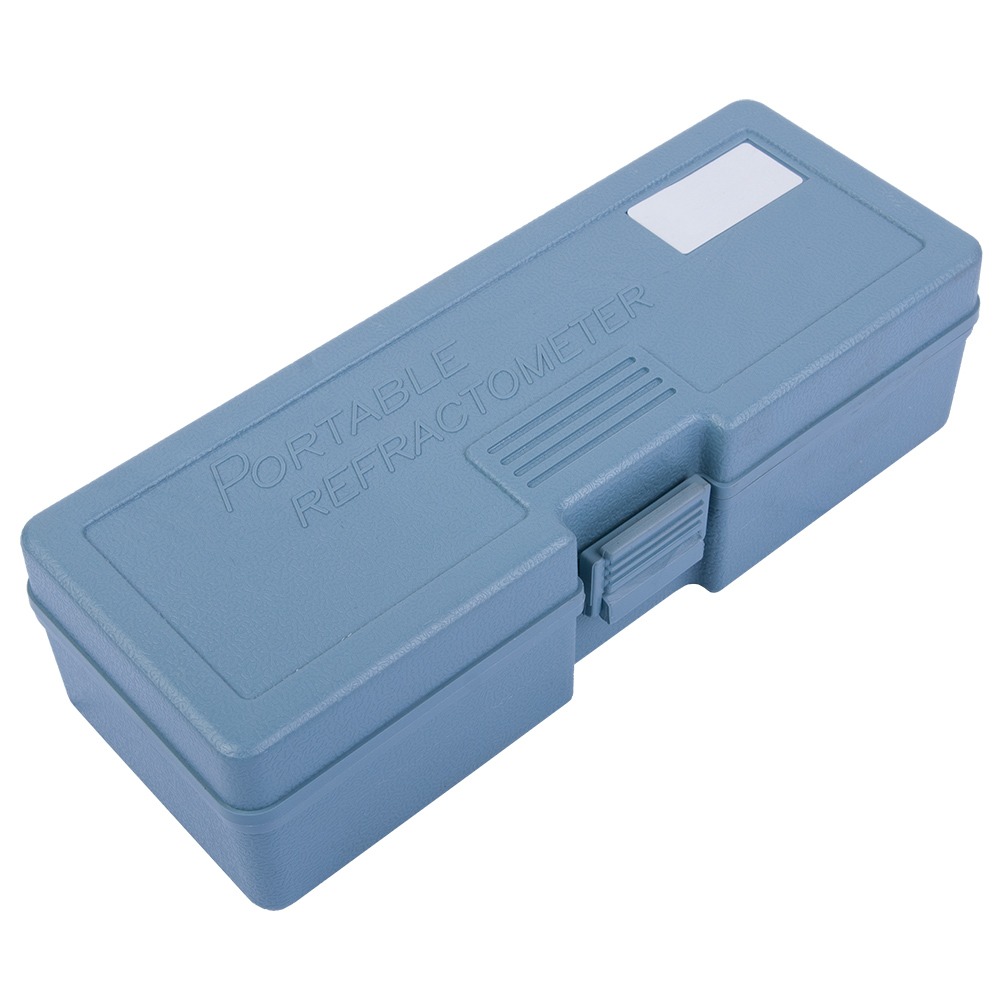
The box usually contains everything you need to get started: the refractometer, a pipette, an optical cleaning cloth, a calibration screwdriver, instructions and a case. And this is a case where analog is no insult: the instrument needs no power, works quickly and handles everyday use much better than any cheap digital model.