Farmpoint Grain Moisture Meter
Delivery and payment
Choose your city or town to see the price with delivery there and when you can get it.
Pickup points
- Branch
- Parcel locker
Pros
- Measures whole grain
- Automatic temperature compensation
- 0.1% display resolution
- Averages 3–5 measurements
- Calibration adjustment by crop
Cons
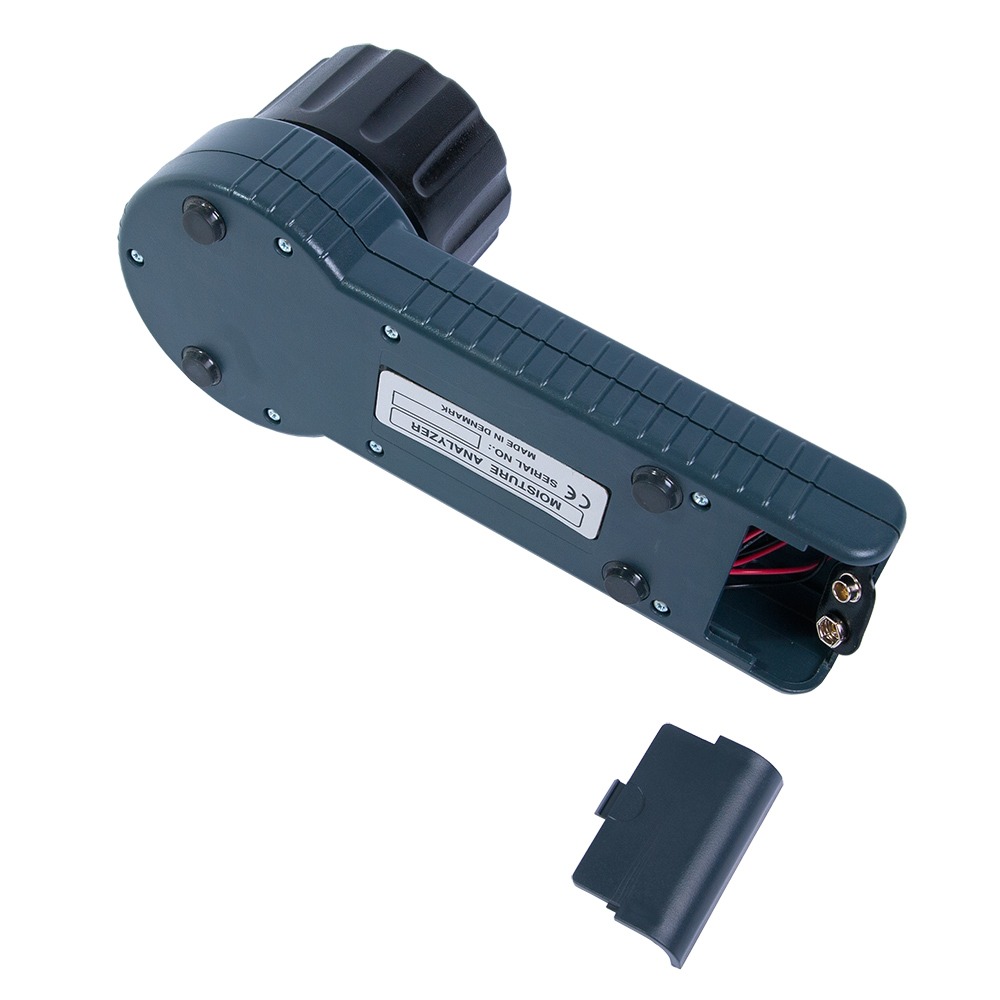
- 9V battery, not rechargeable
- Needs to be checked against a reference
- No Bluetooth or measurement log
Farmpoint is a field moisture meter that takes the stress out of grain intake
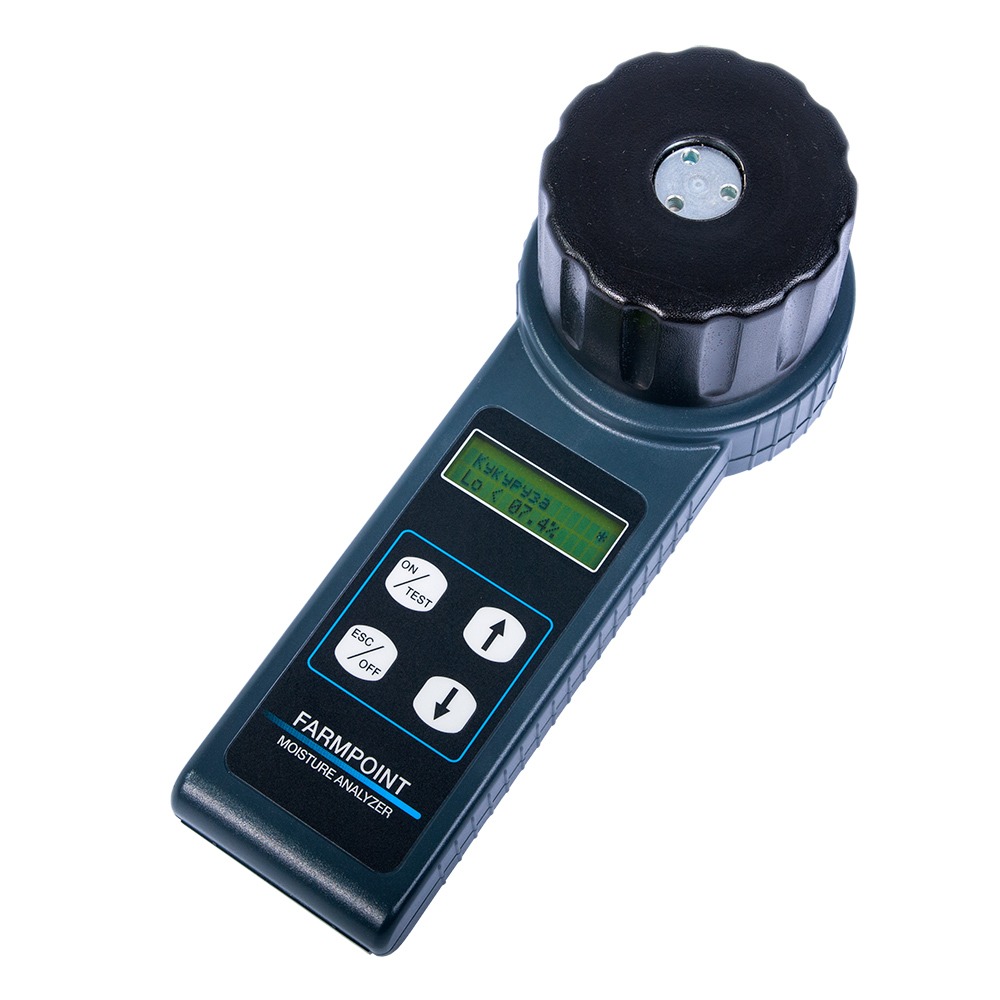
The Farmpoint (Farmpoint) grain moisture meter is a portable moisture analyzer for quick checks on the spot: in the field, by the dryer, in storage, in a truck bed, or at the grain elevator. Its main advantage is simple and practical: it works with whole grain (without grinding), which means less hassle, less time spent, and no “Where did that grinder go?” moments.

How it measures: sample compression + electrical properties + temperature
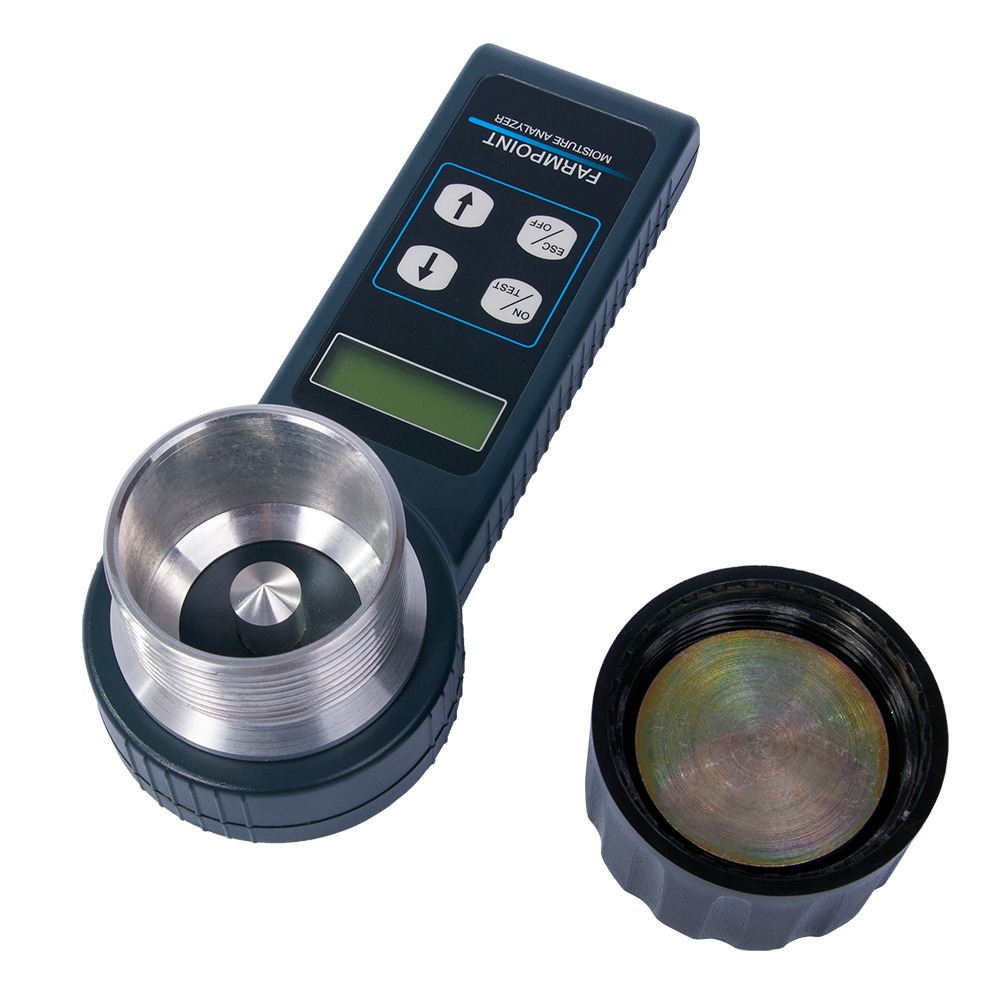
Farmpoint electronically measures the sample's properties using a dielectric/capacitive approach while accounting for temperature. But the “magic” behind its accuracy is not just in the electronics; it is also in the mechanics: the sample is compressed by the compression cap. This stabilizes the grain's packing density in the chamber, one of the factors that can cause the most trouble for any rapid moisture meter.
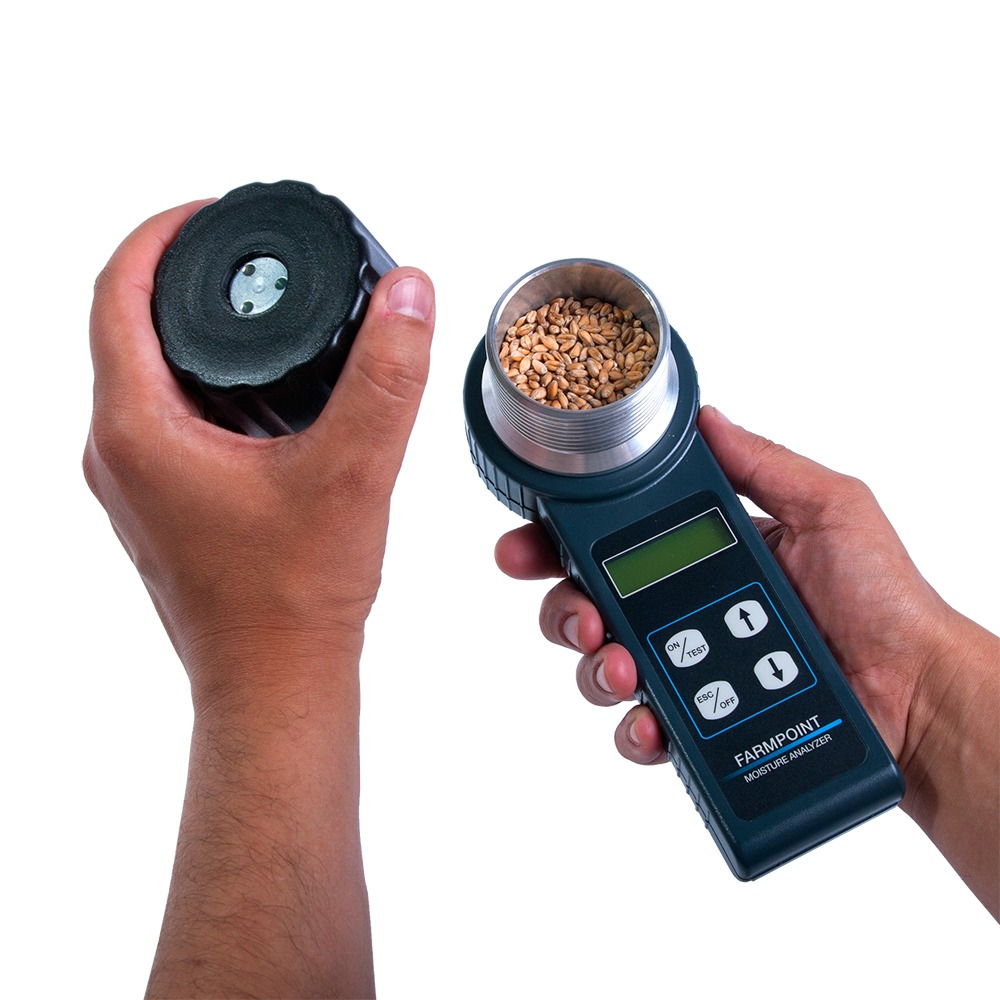
Turn the cap until the pressure indicator is flush with the top of the cap. That is your stopping point: once it is compressed, there is no need to show off your arm strength.
Speed and accuracy: what you really need to know
One measurement takes approximately 10 seconds, and the display reads in increments of 0.1%. Within the normal moisture range, the manufacturer claims accuracy of better than ±0.5%, provided you use averaging and, when needed, calibration adjustment.
The key advice here is not to take one reading and put it straight into a contract. Grain is not uniform, and compression varies slightly each time, especially with different grain sizes and varieties. Good practice is to take 3–5 measurements, pouring the sample out and back in between readings, and use the average.
How to measure correctly (a short, no-nonsense guide)
1) Make sure the chamber is clean. It is a good idea to brush it out after each measurement: dust and remnants of the previous batch can produce some very creative numbers.
2) Turn on the device (ON/TEST button) and select the crop using the arrows.
3) Fill the chamber evenly to the top.
4) Screw on the compression cap until the pressure indicator is flush.
5) Press ON/TEST and read the result.
An important temperature tip: if you take grain straight from the dryer and it is noticeably hotter than the device, allow 1–2 minutes for the temperatures to equalize. For example, pour the sample into the chamber and wait before compressing and measuring it.
Calibration: how to match grain elevator readings
Farmpoint has factory calibrations for crops, but the reality is that the year, hybrid, growing conditions, impurities, and temperature conditions all affect the electrical properties of grain. The device therefore lets you adjust the calibration for each crop within a range of -3.9% to +3.9% in increments of 0.1%.
Here's a practical approach: compare Farmpoint's readings with the device or method your buyer uses to determine the “official” moisture content. The key is to measure the same sample. Then make the adjustment and enjoy greater peace of mind.
An extra feature for those who like to dig deeper: the menu offers a “Bit/Fragment” mode (a raw reading), which is useful if you need to create your own scale for a crop not included in the standard set. That said, this is for people who love Excel as much as their harvest.
Crops (moisture scales): what's typically stored in memory
The set of scales depends on the version or batch, but the most commonly available calibrations are for popular crops such as wheat, barley, rye, oats, corn, sorghum, rapeseed/canola, peas, sunflower, soybean, buckwheat, rice, millet, and flax, as well as certain grass seeds and products such as wheat flour and semolina.
If a particular crop list is essential to you, it is best to check the list for the specific shipment before buying.
Ergonomics, power, and care
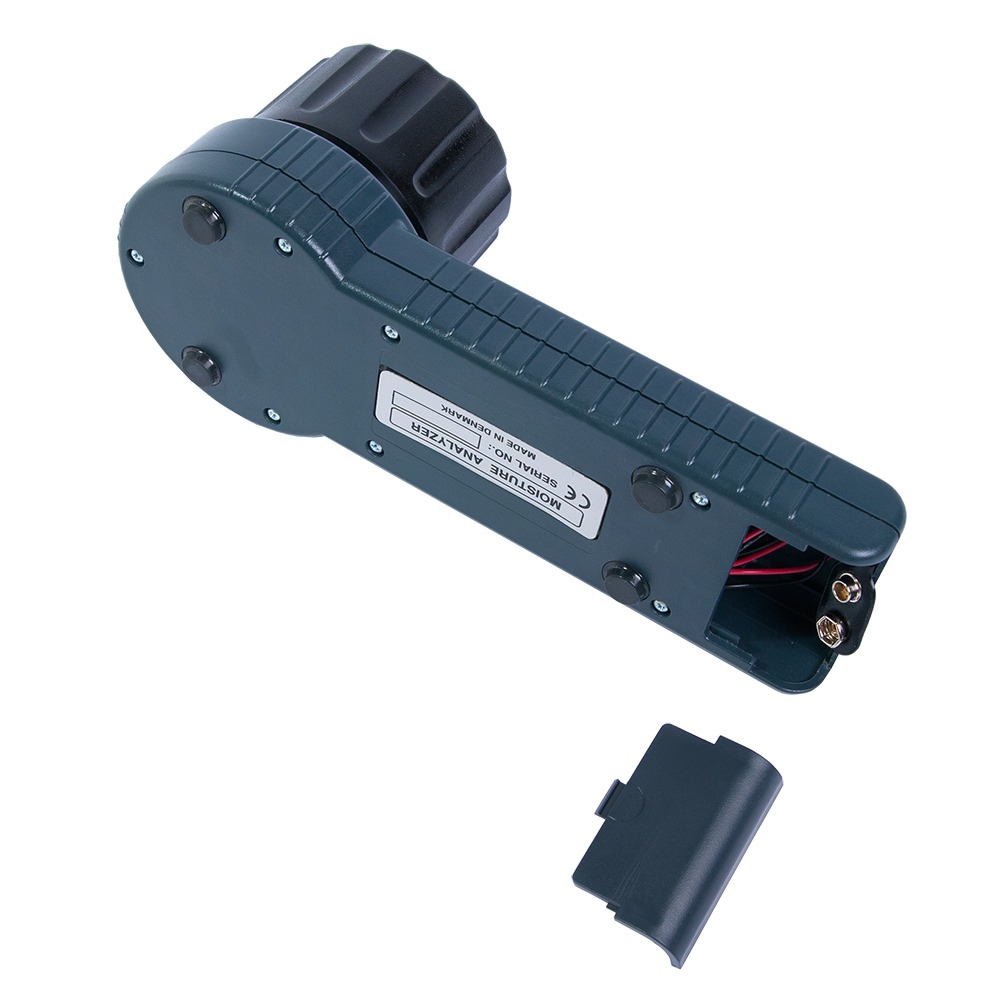
The device runs on a 9V alkaline battery. Data and settings are retained when the battery is removed. It also shuts off automatically after approximately 90 seconds of inactivity, which is useful when you are called away “for a minute” and return half an hour later.
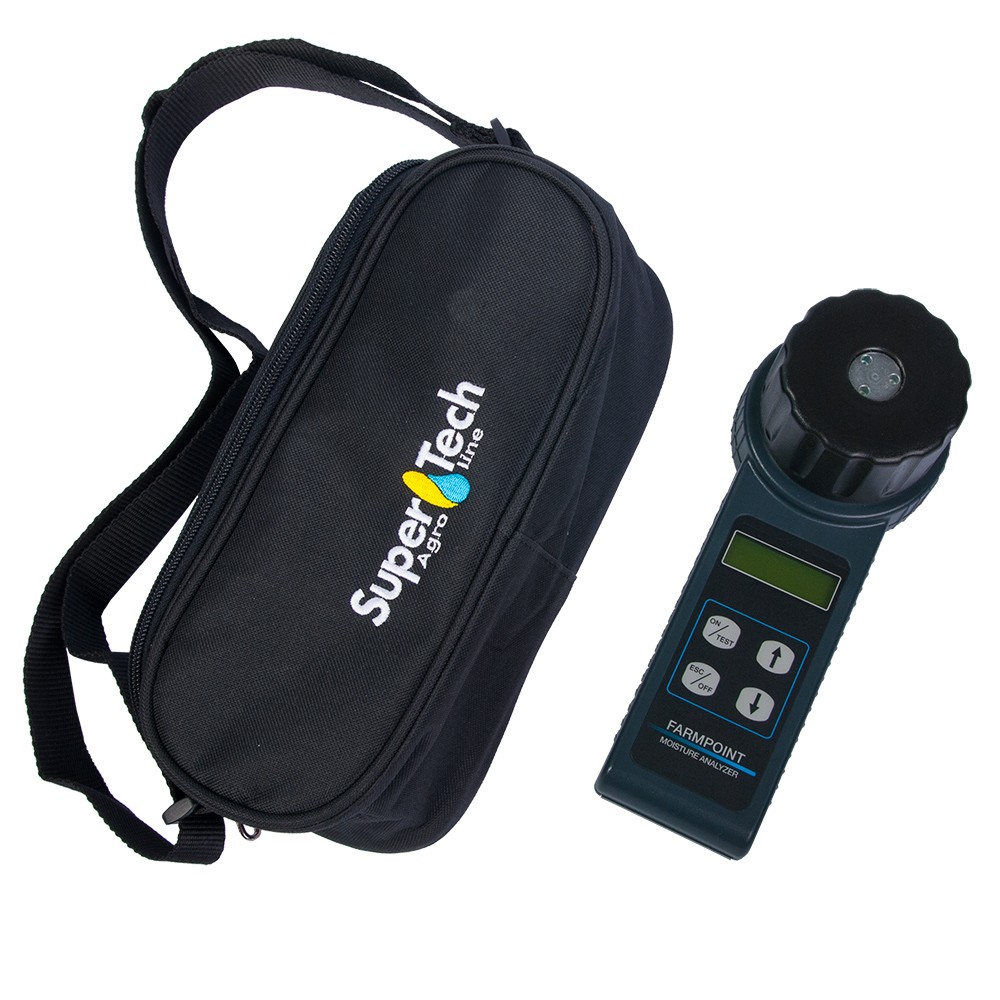
The chamber is made of polished aluminum, while the housing and case are made of impact-resistant ABS. To help extend the device's life, store it in its case, avoid condensation, wipe down the housing at the end of the season, and, if possible, remove the battery before long-term storage.

Where to find the official manual
If you would rather read the original source than a summary of a summary, the manufacturer offers manuals in several languages. Useful links: the Farmpoint page and the Ukrainian manual (PDF).
Who is Farmpoint best suited for?
It is a good choice if you need a reliable field moisture meter for quick decisions: “Should we take it for drying or can it wait?”, “Can we put it in storage?”, or “Are we overpaying for excess ‘water’?” Farmpoint does not replace a laboratory, but it handles the everyday need for quick checks when decisions need to be made now, not after lunch.