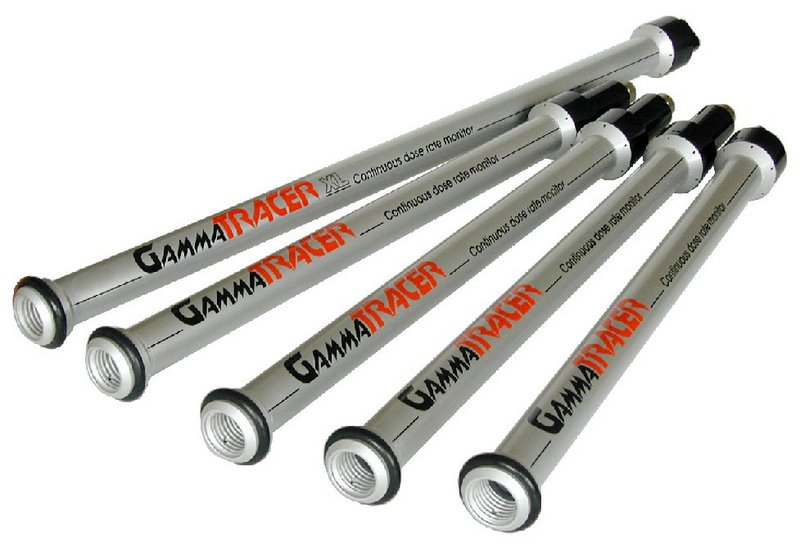
Ecotest BDBG-09 Smart Gamma Radiation Detection Module
Pros
- Range up to 10^7 µSv/h
- RS-485 for monitoring systems
- IP67: dust and water protection
- Self-test + statistical error calculation
- Two G-M detectors
Cons
- Requires an external controller/display
- No built-in display
- Integration requires RS-485
What is the BDBG-09 and why is it “smart”?
The BDBG-09 is a stationary (or semi-stationary) gamma radiation detection module that measures ambient dose equivalent rate H*(10) (often called “background radiation level” or “dose rate” in everyday language). “Smart” here isn't a marketing claim: the module has a microcontroller that processes pulses from the detectors, calculates statistical error, continuously performs self-tests, and outputs the result digitally via RS-485.
One important point: this is not a “home dosimeter.” The BDBG-09 is a sensor for monitoring systems, including displays, control panels, automated radiation monitoring systems, SCADA/telemetry, and more.

Detectors: why there are two (and why that's a good thing)
In its standard configuration, the BDBG-09 uses two Geiger-Muller tubes: a high-sensitivity tube (SBM-20) and a low-sensitivity tube (SI 3BG). This pairing is a classic way to cover a wide range: one detector reliably picks up low background levels, while the other isn't overwhelmed at high levels.
The result is a very wide operating range, from levels close to natural background radiation to the high levels encountered in emergencies or industrial processes.
Measurement: range, energy, and orientation
The module measures gamma ambient dose equivalent rate/dose rate over a range up to 10^7 µSv/h (that is, up to 10 Sv/h). It detects gamma photons in the energy range of 0.05–3 MeV.
A “+” mark on the housing indicates the principal measurement direction used when specifying anisotropy (the dependence of readings on the angle at which gamma radiation arrives).
Warm-up and obtaining a valid result take up to 3 minutes. If you need “instant” numbers every second, this isn't that class of device: it's designed to provide reliable, stable measurements for a monitoring system.
Communication and integration: RS-485 without surprises (but with a few details)
Data is exchanged via RS-485. The module transmits a frame containing the current ambient dose equivalent rate/dose rate, the maximum statistical measurement error, and the results of detector functionality checks. Addressing is supported, so several modules can be networked on a single RS-485 line.
The physical connection uses a circular Hirschmann interface connector. The manual provides the pinout: RS-485 A/B lines, power, common, and shield.
In practice, this means you need (1) a 7–13.5 V power supply and (2) a device capable of polling RS-485, such as a display, controller, or USB/RS-232 converter. If you want a “ready-to-use setup with numbers on a screen,” explore the manufacturer's ecosystem, for example the IT-09 information display.
Protection and service life: when outdoor installation is the norm
The BDBG-09 has an IP67 rating, meaning its housing is dust-tight and withstands water exposure according to the “67” rating. Its stated operating temperature range is −40…+75 °C, and its average service life is at least 10 years. This device is designed not to sit in a drawer, but to work in a system for years.
If needed, versions are available with different housing materials (duralumin or stainless steel), as well as special versions for use in bodies of water or tanks. If that's your application, rather than trying to adapt the standard version, it's better to select the right variant from the start.
What to check before buying (so you don't buy a “sensor without a head”)
1) How you will read the RS-485 data (display/controller/USB adapter).
2) Your power supply (7–13.5 V, regulated).
3) Line length and cable: the manufacturer specifically recommends shielded Belden 8102 for making the connection cable.
4) Metrology requirements: for official monitoring, plan verification/calibration and the necessary equipment kit in advance.
Documentation, including the operating manual, is available on the official product page: BDBG-09 on the ECOTEST website.
Conclusion
The BDBG-09 is a good choice if you need a reliable, sealed sensor for gamma background radiation and ambient dose equivalent rate in a system, with a digital interface, self-testing, and a wide range. If you're looking for a device “for home, in a backpack, and with a screen,” that's a different category: consider personal dosimeters rather than industrial detection modules.