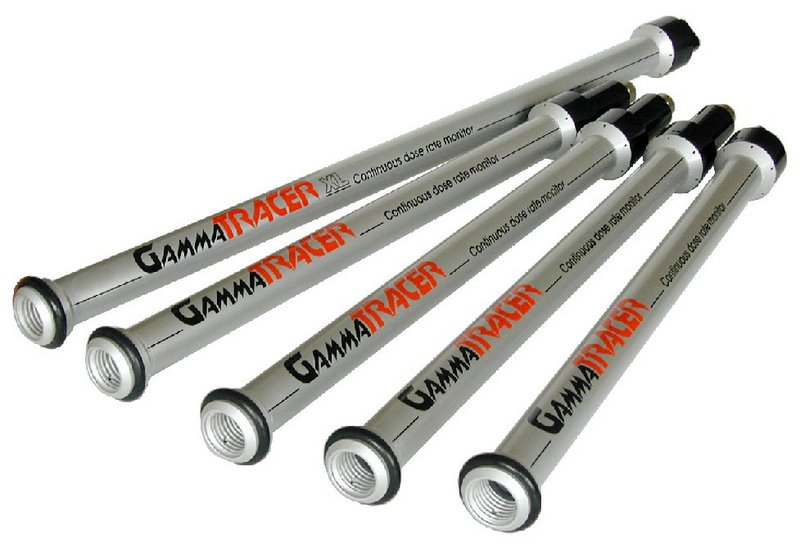
Ecotest BDBG-09 Gamma Radiation Detector
Pros
- Ultra-wide ambient dose equivalent rate range
- IP67-sealed housing
- RS-485 for long cable runs
- Self-testing and statistical error reporting
- Low 30 mA current consumption
Cons
- Requires an external display
- Proprietary communication protocol
- Requires periodic verification
What is the BDBG-09 and why isn't it a household dosimeter?
The BDBG-09 is an intelligent gamma radiation detection unit, a sensor module for radiation monitoring systems. It has no screen, buttons, or “mushroom-hunting mode.” Instead, it uses an industrial approach: it measures ambient dose equivalent rate, calculates statistical error, runs self-diagnostics, and sends data over RS-485.
In a typical setup, the BDBG-09 is mounted outdoors or indoors, with readings shown on a display, controller, or PC, or sent to a supervisory system.

How it works: two Geiger-Muller tubes and a “brain” inside
Inside the BDBG-09 are high-sensitivity and low-sensitivity Geiger-Muller tubes to cover a wide range. A microcontroller processes the pulse stream, applies calibration coefficients, calculates the ambient dose equivalent rate, and adds diagnostic information: the maximum statistical error and detector self-test results.
This matters in 24/7 field systems: you get more than a number; you can also tell whether that number is currently reliable.
Range, energy response, and time to stable readings
The unit measures gamma radiation ambient dose equivalent rate over a range of 0.04…107 µSv/h (up to 10 Sv/h; an extension to 100 Sv/h is available on request or in certain versions). The detection energy range is 0.05…3 MeV, and energy dependence over 0.05…1.25 MeV is ±25%.
Readings are not magically instantaneous: at background levels, the unit may integrate or average measurements for longer, up to several minutes, to reduce statistical error. As radiation levels rise, the integration time decreases because more pulses mean statistics accumulate faster.
Connections: 7–13.5 V power and straightforward RS-485
The BDBG-09 runs on an external regulated 7…13.5 V power supply and draws up to 30 mA for the unit itself. Data is exchanged via RS-485. Typical line settings are 19200 bit/s, 8N1 (8 data bits, no parity, 1 stop bit).
In practice, this means the module can be installed where it is best for radiation monitoring, rather than where it is convenient for someone to stand with a handheld instrument. Keep in mind, however, that the communication protocol is specialized, not simply Modbus out of the box, so integration into a third-party system should be planned in advance.
Installation and durability: IP67 protection in demanding conditions
The housing has an IP67 rating, protecting against dust, rain, splashes, and temporary immersion when the connector and cable are correctly assembled. The operating temperature range is -40 to +75 °C, permissible relative humidity is up to 100% at +40 °C and below (with condensation), and atmospheric pressure is 84…106.7 kPa.
The unit is designed for mounting on a vertical surface, with a bracket included. A “+” mark on the housing indicates the primary measurement direction, a small but useful detail when sensors need to be positioned consistently at different monitoring stations.
Small features that matter in a 24/7 system
The unit performs continuous self-testing and sends detector health check results over the line. It also provides an estimate of statistical error, a useful feature for monitoring systems that can automatically flag “data still integrating” or “suspicious channel.”
Some versions provide temperature readings via RS-485. These are useful for logging conditions at the monitoring station and troubleshooting, for example, when readings drift because of icing or an overheated cabinet.
Who is the BDBG-09 for?
It is a good choice when you need stationary measurements and integration into existing infrastructure:
- automated radiation monitoring systems for sites, facilities, and perimeters;
- radiation background information displays;
- radiological laboratories and monitoring stations;
- industrial facilities, warehouses, and sites with radiation safety requirements;
- locations where telemetry and logging are important.
As the only instrument for home use, it is likely overkill: the module is excellent, but it requires a system to read and display its data and proper integration.
What to check before buying
- Which housing version (stainless steel or duralumin) and mounting type you need.
- Whether you need temperature readings and whether they are available in your version.
- What you will use to read RS-485 data (display, controller, or PC) and whether a compatible driver or software is available for your setup.
- Whether you need a calibration or verification kit if official measurements are planned.
You can find the official product description and documentation on the manufacturer's page: ECOTEST: BDBG-09.