SARAD RTM2200 Radon/Thoron Monitor
Pros
- Measures radon and thoron separately
- Alpha spectrum in every record
- No drying cartridge required
- Modular: sensors/chambers/actuators
- DAkkS calibration (ISO 17025)
Cons
- Somewhat heavy: about 6 kg
- Not ATEX-rated for hazardous areas
- Requires careful sampling practices
RTM2200 (RTM 2200): a professional radon/thoron monitor built on physics, not “magic”
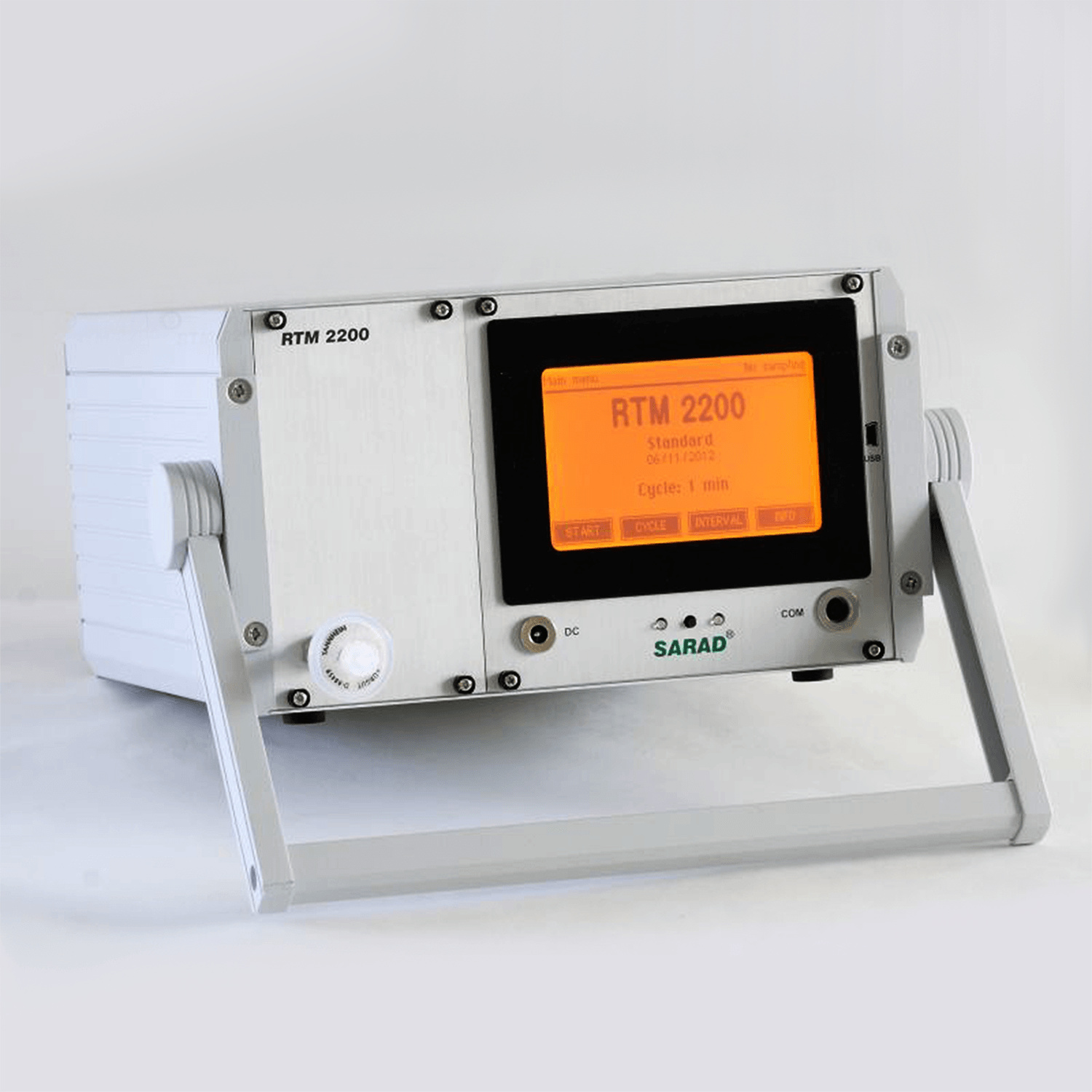
The RTM 2200 from SARAD is not a “home gadget with a pretty scale,” but a field and laboratory instrument for measuring the activity of radon-222 and thoron-220 in air. It also handles tasks such as environmental monitoring, geophysics (volcanology and seismic precursors), workplace monitoring (including underground workplaces), and even radon analysis in water (using accessories).
The key feature: radon and thoron are measured separately, without one interfering with the other
In many situations, thoron causes confusion: it has a very short lifetime, its contribution to measurements depends on sampling and geometry, and it can easily create “interference.” The RTM 2200 uses alpha spectrometry with semiconductor detectors and high-voltage deposition of decay products in the measurement chamber. This allows it to separate the contributions of radon and thoron by the energies of their alpha lines and determine their concentrations separately.
A practical bonus: the instrument saves the alpha spectrum for every record. That means you get more than “just a number”; you also have a trace to help verify that the measurement was valid, which is useful for QA/QC, reports, and investigating unusual results.
Fast and slow modes: when response matters and when statistics matter
The RTM 2200 has two main concentration measurement modes that differ in sensitivity and response time. In simple terms, the choice is between “seeing a change sooner” and “getting a more precise average.” In practice, this means you want a fast response when looking for a source or leak or taking field profiles, and stable statistics for long monitoring series.
Internal circuit with pump: careful sampling without overdoing it
Inside is a closed, small-volume air circuit (approximately 250 cm³) with a diaphragm pump and processor-controlled flow. Low airflow is not just about saving air; it is useful in some applications, such as when aggressively drawing out soil gas is undesirable.
There is also an important rule: when measuring soil gas or water samples, the instrument must be protected from water and condensation. Suitable accessories and protection against water ingress are available for this purpose. It is better to get it right from the start than to explain later why a measurement series became invalid.
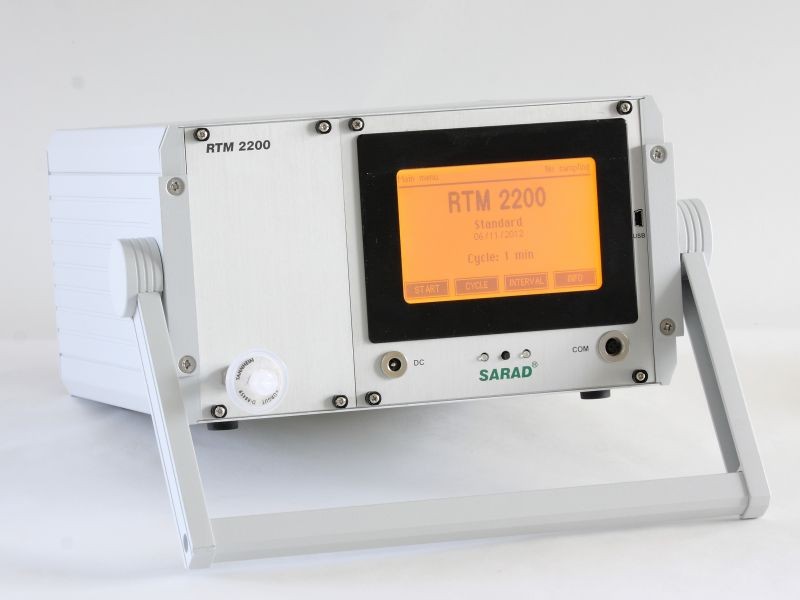
RTM 2200 as a modular system for complex measurements
This instrument is valued not only for radon/thoron measurements, but also because it can serve as the core of a multiparameter station. It can connect to additional radon chambers (such as a soil probe or room sensor) and external sensors, and control actuators (valves, pumps, sampling line switching, and more). For field work, that means fewer separate boxes and more control from one central unit.
Data and control: SD card, touchscreen, dVISION/dCONFIG
The RTM 2200 has a touchscreen, SD card logging, and interfaces for connecting to a PC. Proprietary tools handle data and settings: dVISION for control, visualization, and data export, and dCONFIG for configuration and creating/editing cycles. Optional communication and GPS modules are available for linking results to coordinates and creating GIS-compatible tracks and points.
Options that can turn the RTM 2200 into a multipurpose system
If your work goes beyond radon, the RTM 2200 can be expanded with options: a NaI(Tl) gamma probe for spectrometry/dose rate, gas analysis modules (CO, CO2, CH4, and more, depending on configuration), water analysis (pH, conductivity, and more), and kits for measuring radon in water and soil gas. The idea is simple: buy the base unit, then expand it to suit your specific method.
Who it's for
The RTM 2200 is for radiometric engineers, laboratories, environmental services, industrial monitoring, geophysics, and building inspection when radon/thoron separation, repeatability, logging with spectra, and the ability to build a system around a specific sampling protocol are important.
The official datasheet (in English) is useful to keep on hand for technical specifications and tenders: RTM 2200 Datasheet (SARAD).