SARAD RTM1688-2 Radon/Thoron Monitor
Pros
- Measures radon and thoron simultaneously
- Alpha spectrum for every interval
- Fast mode for speed and Slow mode for accuracy
- Built-in pump + “sniffing”
- Works without a dryer
Cons
- Somewhat heavy (3.5 kg)
- Professional-grade price
- Kits required for water/soil measurements
What is the RTM1688-2 and why would you need it?
The RTM1688-2 is a professional monitor (radiometer) for measuring radon (Rn-222) and thoron (Rn-220) in air simultaneously. Its standout feature is alpha spectroscopy: rather than simply counting pulses, it records the energy spectrum of alpha particles and uses it to calculate radon and thoron concentrations separately. The focus is on measurement quality, not just getting a rough reading.
Who is it for?
This tool is suited to tasks where a fast response and separation of radon and thoron matter: building surveys (locating entry routes), basement and mechanical floor audits, workplace monitoring, soil gas studies, radon measurements in water (with accessories), and material exhalation/emanation studies.
How it measures: the essentials
Inside are a high-voltage chamber and semiconductor detectors. The device electrostatically collects short-lived decay products on the detector and registers their alpha decay. Spectral analysis then makes it possible to:
1) respond quickly to changes in concentration (especially in Fast mode);
2) improve sensitivity in Slow mode (at the expense of time);
3) distinguish between radon and thoron, which is often critical for field measurements.
Fast / Slow: which mode should you choose?
The RTM1688-2 offers two approaches to calculating radon concentrations:
Fast: for the quickest initial reading and for finding changes or sources when minutes matter.
Slow: for better statistics (lower error) and a more reliable reading when you can wait.
The practical rule is simple: use Fast to find where radon is getting in. For a measurement record or report, or when detecting low levels, use Slow and a longer interval.
Sniffing: a mode for finding entry points
The RTM1688-2 has a “sniffing” mode: the device gives audible signals to help you quickly scan potential radon entry points (seams, utility penetrations, cracks, pits, slab-to-wall joints, and so on). It isn't magic, just a very convenient field technique that saves you from running between rooms with a notebook and waiting an hour each time.
Built-in pump and field applications
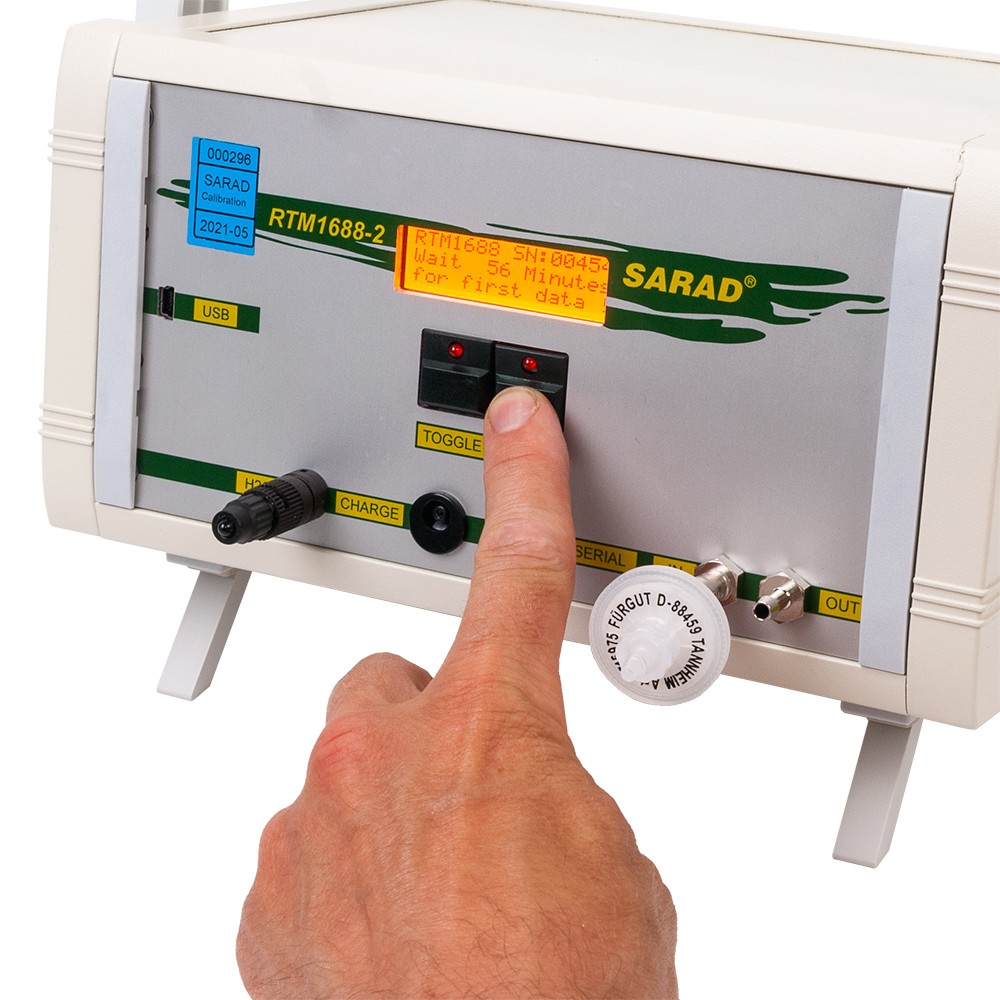
The built-in diaphragm pump makes the RTM1688-2 versatile: it can measure indoor air or take samples (soil gas and water sampling circuits, with the appropriate kits). The front panel has an air inlet/outlet, PC interfaces, and a power connection. Everything is labeled and designed with engineering practicality in mind, without unnecessary decoration.
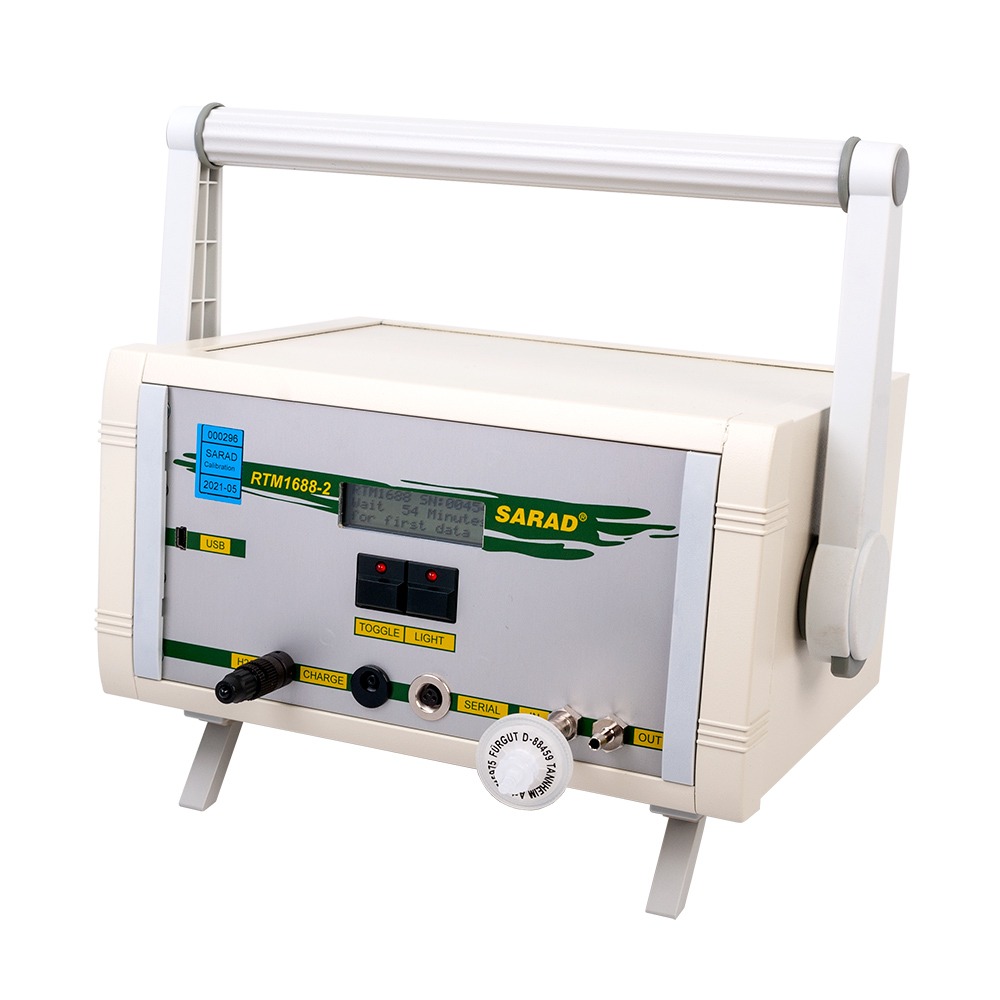
Humidity that won't disrupt your measurements
Many radon monitors in this class require the air stream to be dried (with a dryer or desiccant); otherwise, readings drift. The RTM1688-2 takes a different approach: its chamber and measurement method are designed so that humidity fluctuations do not affect readings. This can save a lot of frustration during long measurements in basements, wells, utility rooms, and humid seasons.
Memory, interfaces, and Radon Vision software
The device stores results in its internal memory and, importantly, records the full alpha spectrum for each interval. Data can be read on a PC (USB/RS232). The proprietary Radon Vision software (usually included) is used for setup, downloads, and analysis.
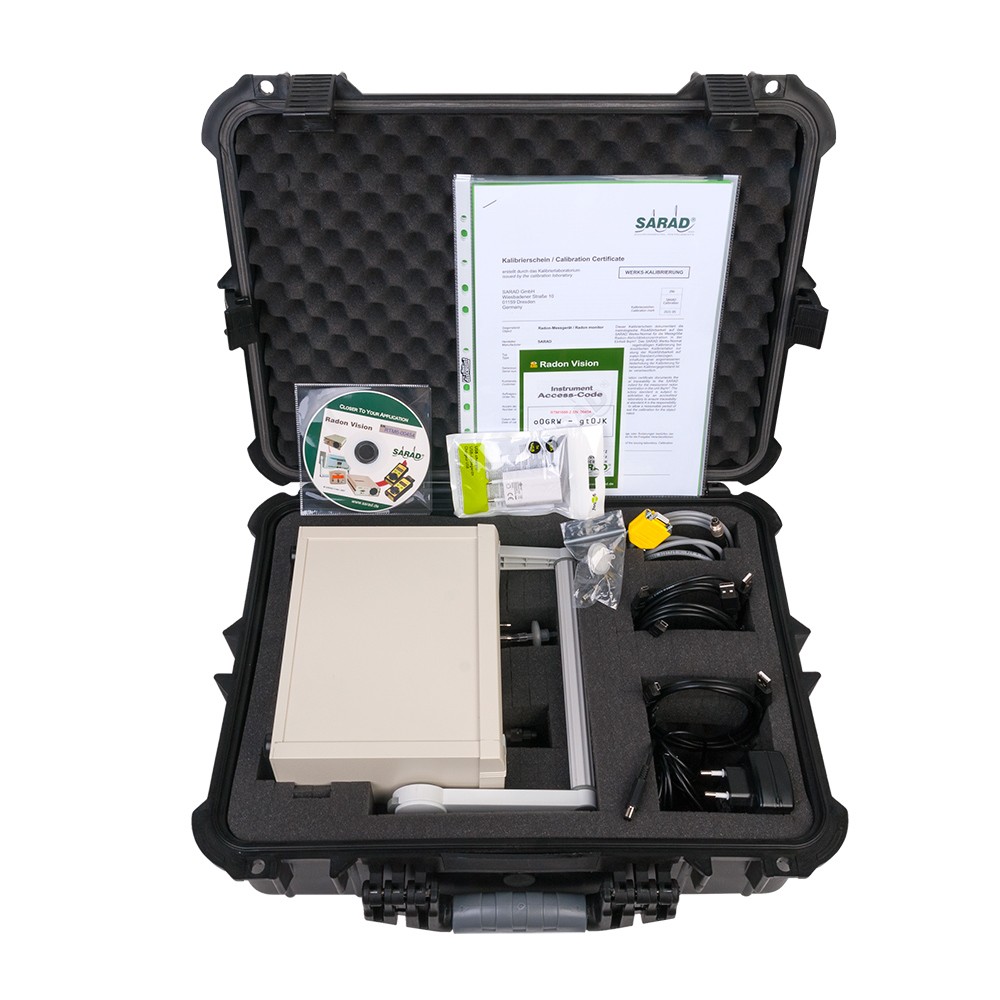
Quick checklist before measuring (to keep your day on track)
1) Check the inlet filters (dust is the enemy of any measuring chamber).
2) Choose an interval: a short one for locating sources or tracking changes, and a longer one for accuracy.
3) Give the device time to collect enough data: in radiometry, error depends directly on the number of events recorded, so time is your ally.
4) If you need a measurement record or official report, make sure the calibration and certificate are up to date.